Welcome!
You'll find over 470 of my favorite recipes here, including ideas for Quick meals, Cooking for 2, Feasting on Leftovers, and cooking with 5 Ingredients or Less. I'm adding new posts regularly; you can subscribe by email or RSS feed if you'd like to receive the latest recipes. Bon appétit!
Cauliflower Salad with Green Olives and Capers
By Kath Dedon
Yesterday afternoon I picked up some celery because I knew I needed it to make Deborah Madison’s Cauliflower Salad with Green Olives and Capers.
Fast forward to 6:00…I pulled out Vegetarian Cooking for Everyone and realized that I didn’t have at least half of the other ingredients. Missing in my refrigerator were watercress, a hard-cooked egg, green onions, a bell pepper, a cucumber, and parsley. So I made a much simpler version. It was still quite tasty and was a good accompaniment to our leftover Neapolitan Pork Ribs.
Deborah says the secret is to slice the cauliflower as thinly as possible.
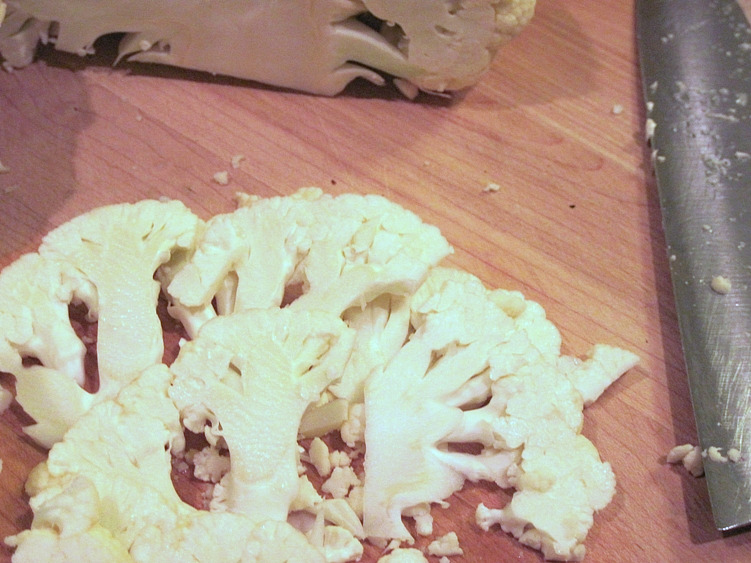
Cauliflower Salad with Green Olives and Capers
(Inspired by a recipe in Deborah Madison’s Vegetarian Cooking for Everyone)
.
.
Serves 2
~~~
½ small cauliflower (about 8 ounces)
1 cup diced celery
½ cup diced onions (red onions would have been prettier)
7 olives (I used marinated ones from Metropolitan Market)
1 heaping teaspoon capers, rinsed
~~~
For the dressing:
(I didn’t measure anything for the dressing.)
About 2 tablespoons red wine vinegar
About 1 tablespoon Dijon mustard
1 clove garlic, pressed
About 3 tablespoons olive oil
~~~
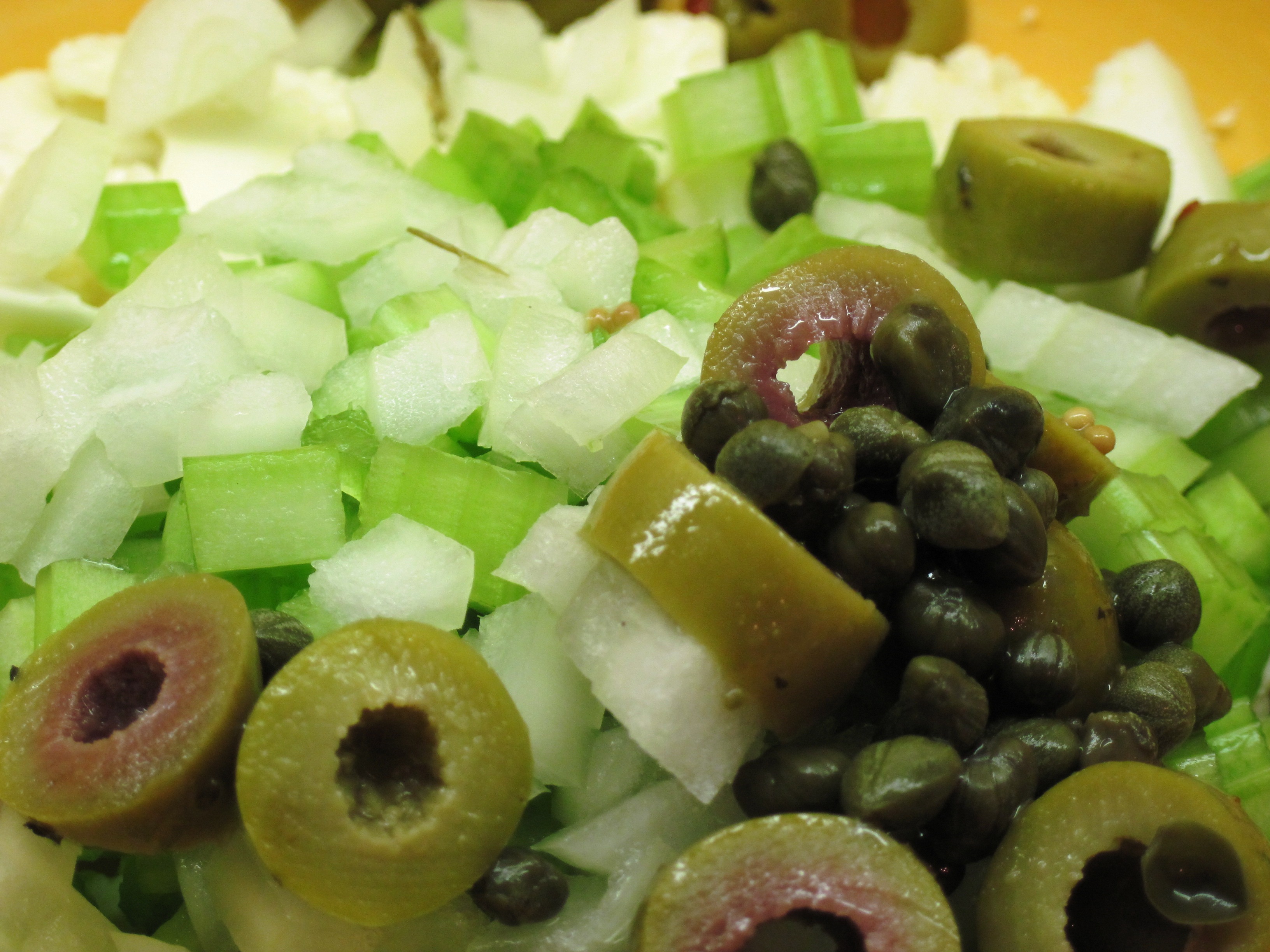
.
Slice the cauliflower into thin slices and put in a bowl. Add the celery, onions, olives and capers.
Pour the vinegar in a small bowl. Add the mustard and garlic and stir.
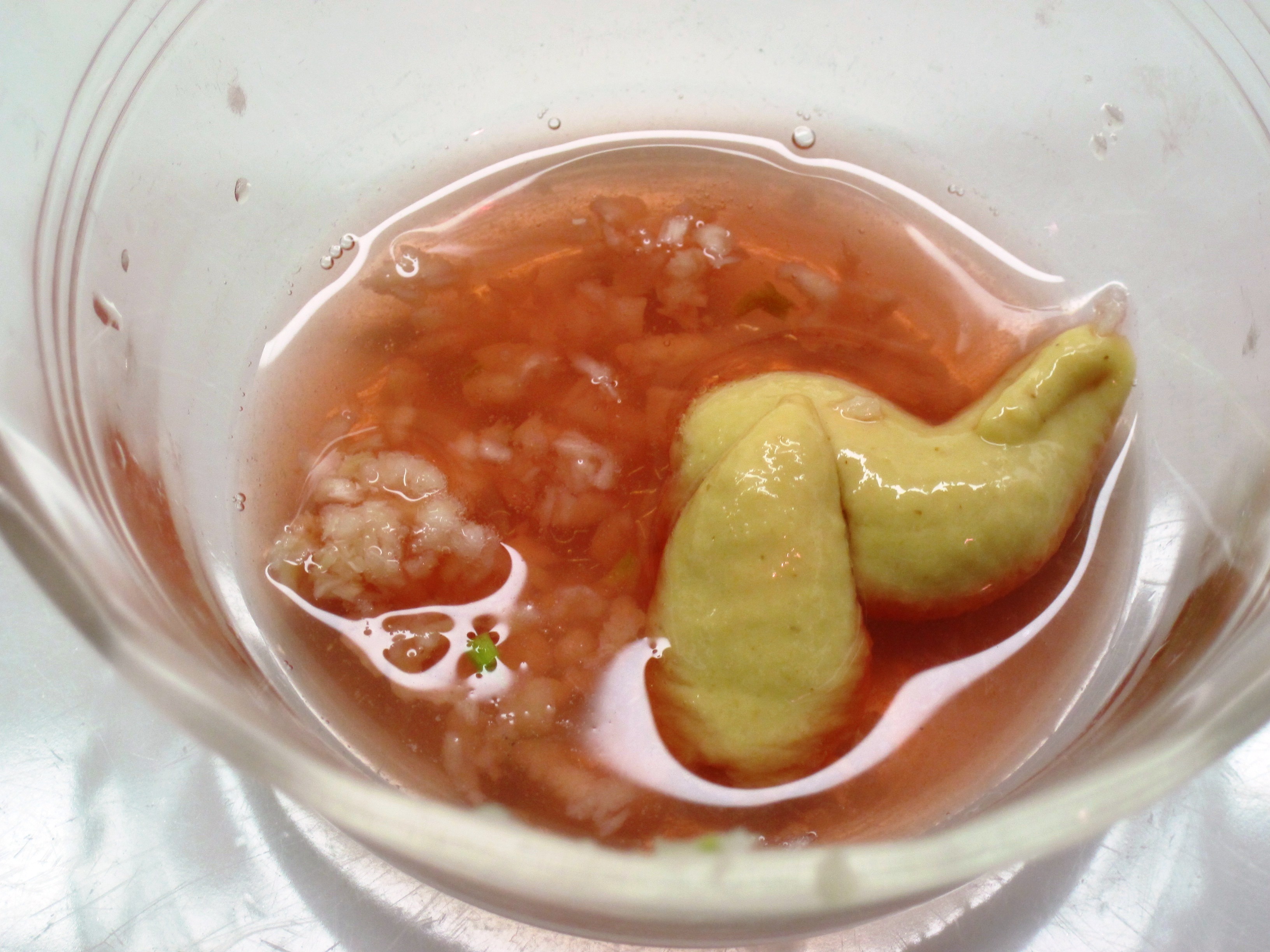
.
Toss the salad with the olive oil. Add salt and pepper to taste. Then toss with the vinegar mixture.

Share this:

Sugar Cookies…aka Million Dollar Cookies
By Kath Dedon
.
I made sugar cookies twice last December. The first time I used un-dyed sugar for rolling the cookies. The second time, at Carrie’s urging, I dyed sugar red and green to make them more Christmassy. I do not recommend dying the sugar unless you really must have colored sugar cookies. It was quite a bit messier, and they really didn’t look better. I preferred the un-dyed ones.
These are just like the cookies my mom used to make. She called them Million Dollar Cookies. (And she used red and green sugar for Christmas cookies. ;-))
I have her recipe, and it’s almost identical to this one. However, her recipe used Crisco which was a common ingredient in the ‘60s. This recipe, adapted from the one in the 1999 edition of Cook’s Illustrated The Best Recipe, uses butter, which makes it even better.
These are really, really, really good sugar cookies! (I guess that’s why they were called Million Dollar Cookies.)
Here’s a tip about cookie sheets for this recipe. I used insulated cookie sheets for the first batch, and they did not turn out well. The cookies were very crumbly. When I used regular cookie sheets they were perfect.
I took pictures when I made the red and green ones, but never got around to putting them in the blog. So here they are now, in case you want a batch of spring sugar cookies.
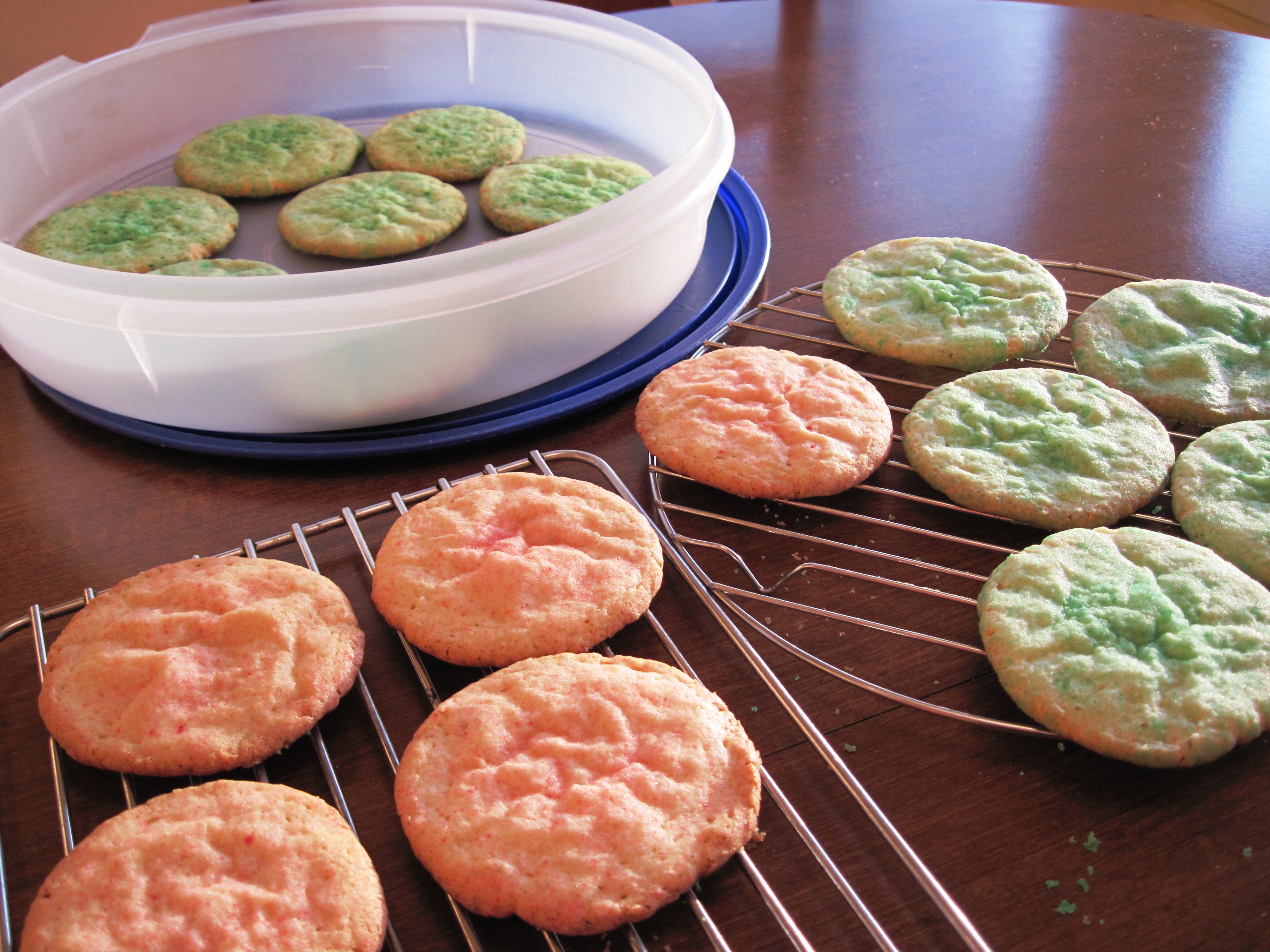
.
Sugar Cookies…aka Million Dollar Cookies
(Adapted from the recipe in America’s Test Kitchen The Best Recipe)
.
.
Makes about 30 cookies
~~~
2 cups (240 g) flour
1 teaspoon baking powder
½ teaspoon salt
½ pound (2 sticks) unsalted butter, softened
1 cup (192g) granulated sugar, plus ¼ cup for rolling cookies
1 large egg
2 teaspoons vanilla extract
~~~
1. Preheat oven to 375˚.
2. Cream the butter and 1 cup sugar until light and fluffy. This takes about 3 – 4 minutes with an electric mixer. (Be sure to cream it really well. It makes a difference.)

.
3. Add the egg and vanilla extract and beat for about 30 seconds.
4. Stir the flour, baking powder and salt together and add to the butter/sugar/egg mixture. Beat until just combined.
5. Put ¼ cup sugar in a small bowl. Form the dough into 1½ inch balls. Roll them in the sugar and place them about 2 inches apart on an ungreased regular cookie sheet (not an insulated one).
6. Butter the bottom of a glass and dip it in the sugar. Use the glass to flatten the balls of dough.
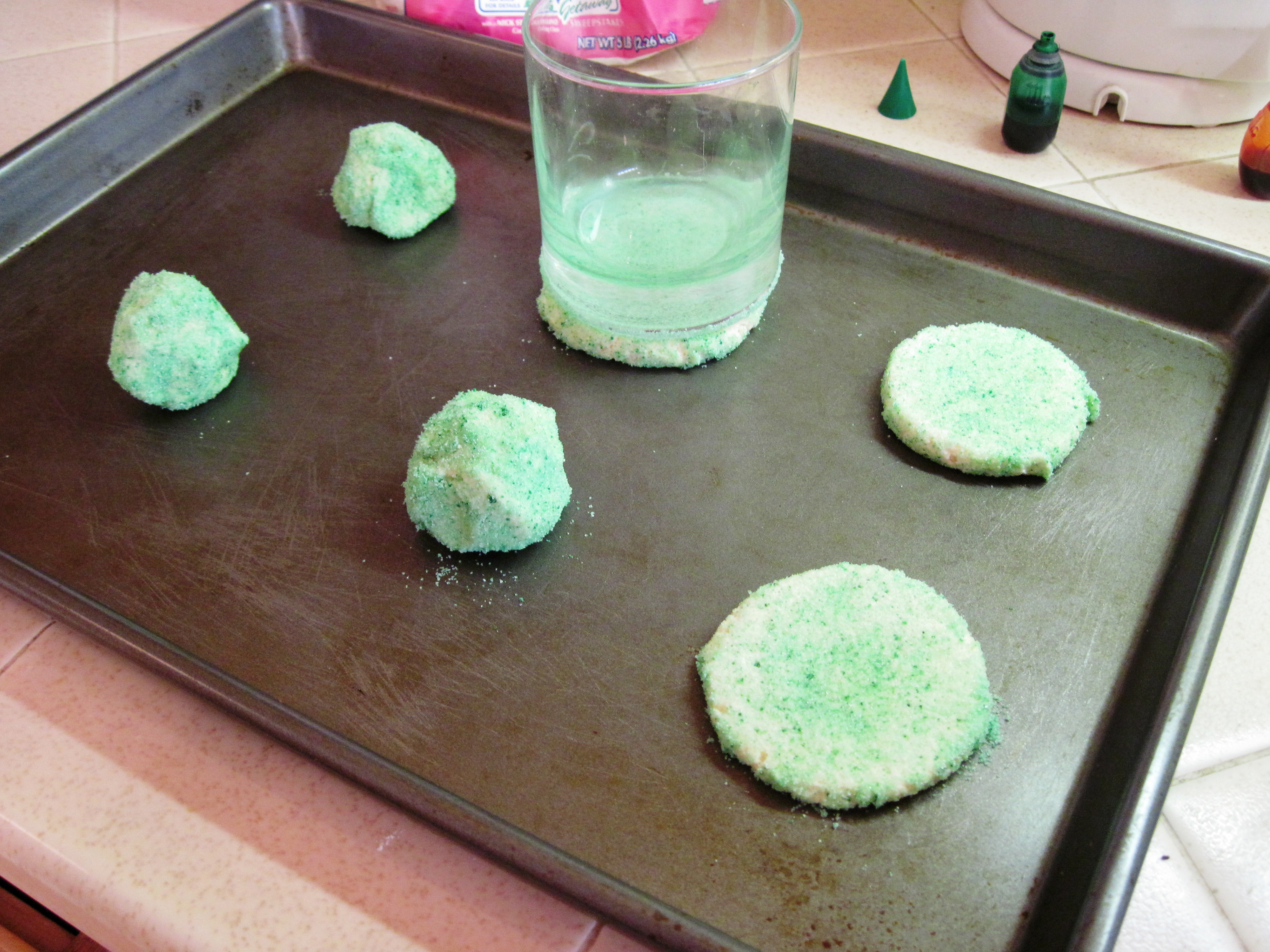
.
7. Bake for 10 – 11 minutes. Cool on the cookie sheet for a couple of minutes before moving them to a cooling rack.
Mmmmm….YUM!
Share this:

Neapolitan Pork Ribs with Pasta (Costolette di Maiale Arriganata)
In Naples at Table, a cookbook highlighting the foods of Naples, Arthur Schwartz says that this is a very common recipe in the Campania region. (I really like this cookbook. It’s out of print, but still available used.) When pork is used, it’s often a cut very similar to our “country-style” spare ribs. Lamb, goat, or beef are also roasted in this manner. Arthur recommends a 400˚ for lamb chops or lamb steaks, and 350˚ for pork or beef chuck steak.
When the meat is done, a Neapolitan cook will not let the caramelized tomatoes, onions, herbs and juices go to waste. Typically, the excess fat is removed, the pan is deglazed with a bit of water, and then the juices are used to insaporire (flavor) pasta. In Italy the pasta would be served as a first course. I served it with the pork. You could also skip the pasta and just use the sauce on the meat.
I used canned San Marzano tomatoes, since the fresh ones are so sad this time of year. The canned ones were perfect!
It’s most convenient to use a pan that can be used in the oven and on the stove-top.
Costolette di Maiale Arriganata
(Neapolitan Pork Ribs with Pasta)
(Adapted from a recipe in Naples at Table)
Serves 4

~~~
3 pounds bone-in country-style pork ribs
Salt
Pepper
1 medium onion, cut in half through the root end and thinly sliced
1 rounded tablespoon dried oregano
4 – 5 sprigs of rosemary, each about 3 or 4 inches, leaves removed from the stems
5 fresh or canned plum tomatoes, cut into 6 or 8 pieces each
2 tablespoons olive oil
8 oz. pasta (optional – rice pasta can be used for gluten free)
~~~
1. Heat the oven to 350˚.
2. Put the meat in a pan (A large oven-proof skillet is ideal, but you can use a baking pan.). Salt and pepper all sides of the meat.
3. Put the sliced onion on top of the meat. Sprinkle the oregano and rosemary over the onions and then top with the tomato slices. Drizzle the olive oil over everything.
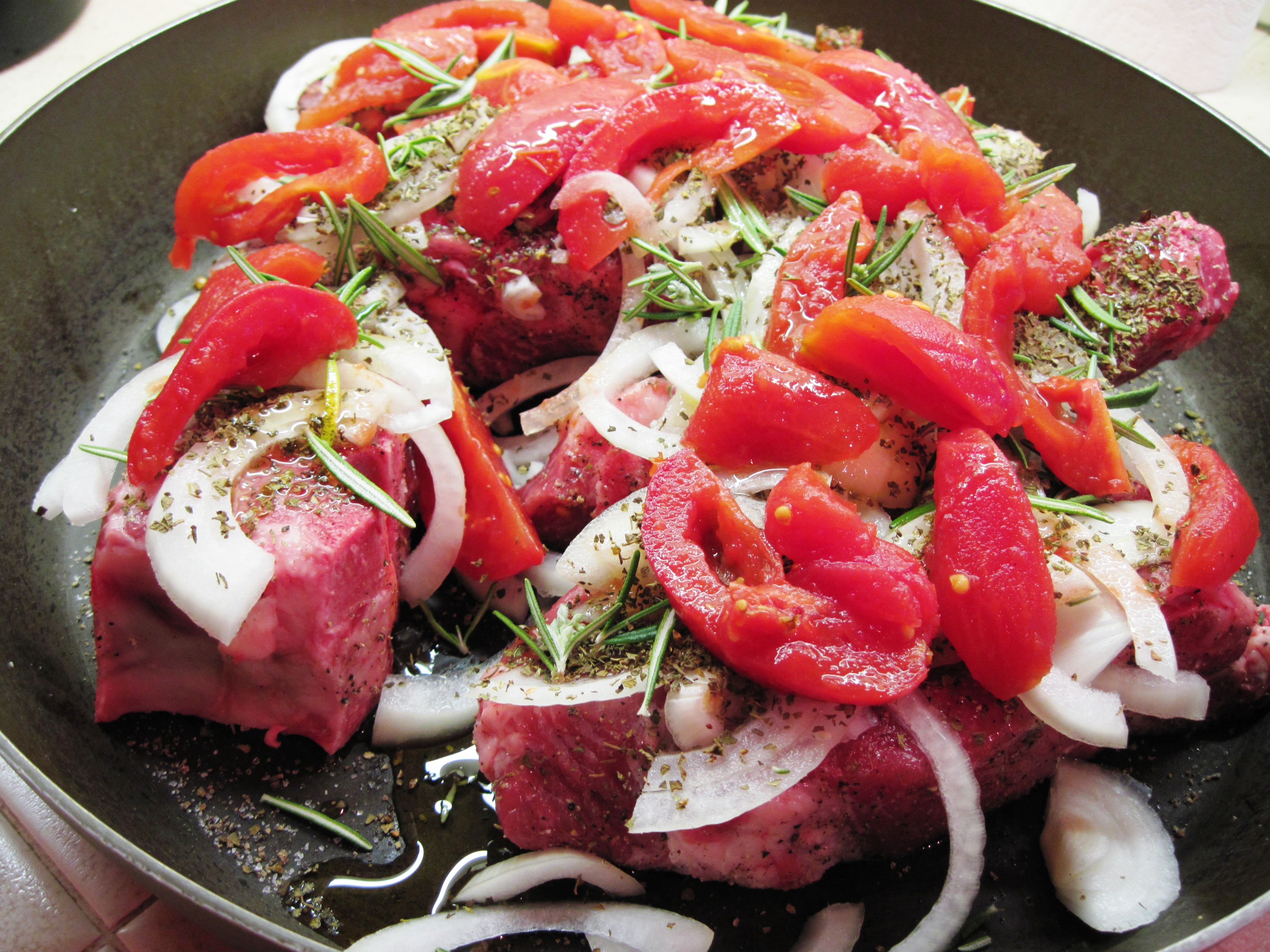
4. Bake uncovered for 1 hour. Turn the meat over. (Now the tomatoes and onions will be on the bottom.) Bake for another 30 minutes.
5. If using pasta, bring a large pot of water to boil just before the meat is done. Add a tablespoon of salt and the pasta. Cook the pasta according to package directions (usually about 10 minutes).
6. Drain the pasta, reserving some of the cooking water.
7. Remove the meat from the pan. Spoon out the excess fat. (Transfer the sauce from the baking pan to a skillet that can be used on the stovetop, if necessary.) Heat over medium heat, stirring to bring up all of the flavorful bits. Add the pasta and stir so it will absorb the flavors. Add some of the reserved pasta cooking water if the pasta seems to dry.
Share this:

Classic Martini…not “Shaken” or “Stirred”
Everyone seems to like the way I make a martini. It’s so simple!
First, you must use a good quality gin. Bob likes Tanqueray.
Then (and here’s the “secret” part) keep the gin in the freezer. Alcohol doesn’t freeze, but it will be very cold–perfect for a martini. Gin that’s been in the freezer doesn’t need to be “shaken” or “stirred” with ice.
Bob likes cocktail onions and a lemon twist. Of course, you can use olives if you prefer.

Extra Dry Martini
~~~
Gin that has been in the freezer
Lemon
Cocktail onions, and/or olives
Extra dry Vermouth
~~~
Pour the gin into a martini glass. Cut a lemon twist from the lemon. Rub the rim of the glass with the lemon twist, and then drop it in the gin. Pour just a very few drops of Vermouth in. Garnish with cocktail onions and/or olives. Give it a quick stir to blend the Vermouth and gin. Serve.

Share this:

Ebelskivers
Years ago Bob gave me an ebelskiver pan. It’s a special pan used to make Danish ebelskivers. I love having it, even though I only use it a few times a year. Ebelskivers are just so much fun to eat. They’re little-buttermilk-pancake-balls-of-goodness.

Ebelskivers demand a leisurely breakfast. The pan makes 7 ebelskivers at a time. Everyone gathers at the table and each person has to wait for his or her turn to get a plate of hot ebelskivers. Hopefully the table is in the kitchen so the cook can join in the conversation.
If you don’t mind lugging along the pan, ebelskivers make a fun breakfast when you’re boating or camping. (Truth be told, I have made them on a boat, but I have never made them camping. But they would work on a camp stove.)
I like them plain with maple syrup, but they are often filled with fruit, like berries or applesauce.
Usually I use buttermilk, but I have used sour cream when we’re on a boat.
The recipe below makes about 7 pans, 49 ebelskivers, serving three or four. For just Bob and me, I cut the recipe in half. It also multiplies easily if you’re feeding a crowd.
Ebelskivers
Serves 3 – 4
~~~
1½ cups flour (180 g)
1 tsp. baking powder
½ tsp. baking soda
¼ tsp. salt
2 eggs, beaten
2 cups buttermilk or sour cream
Melted butter, for the pan
~~~
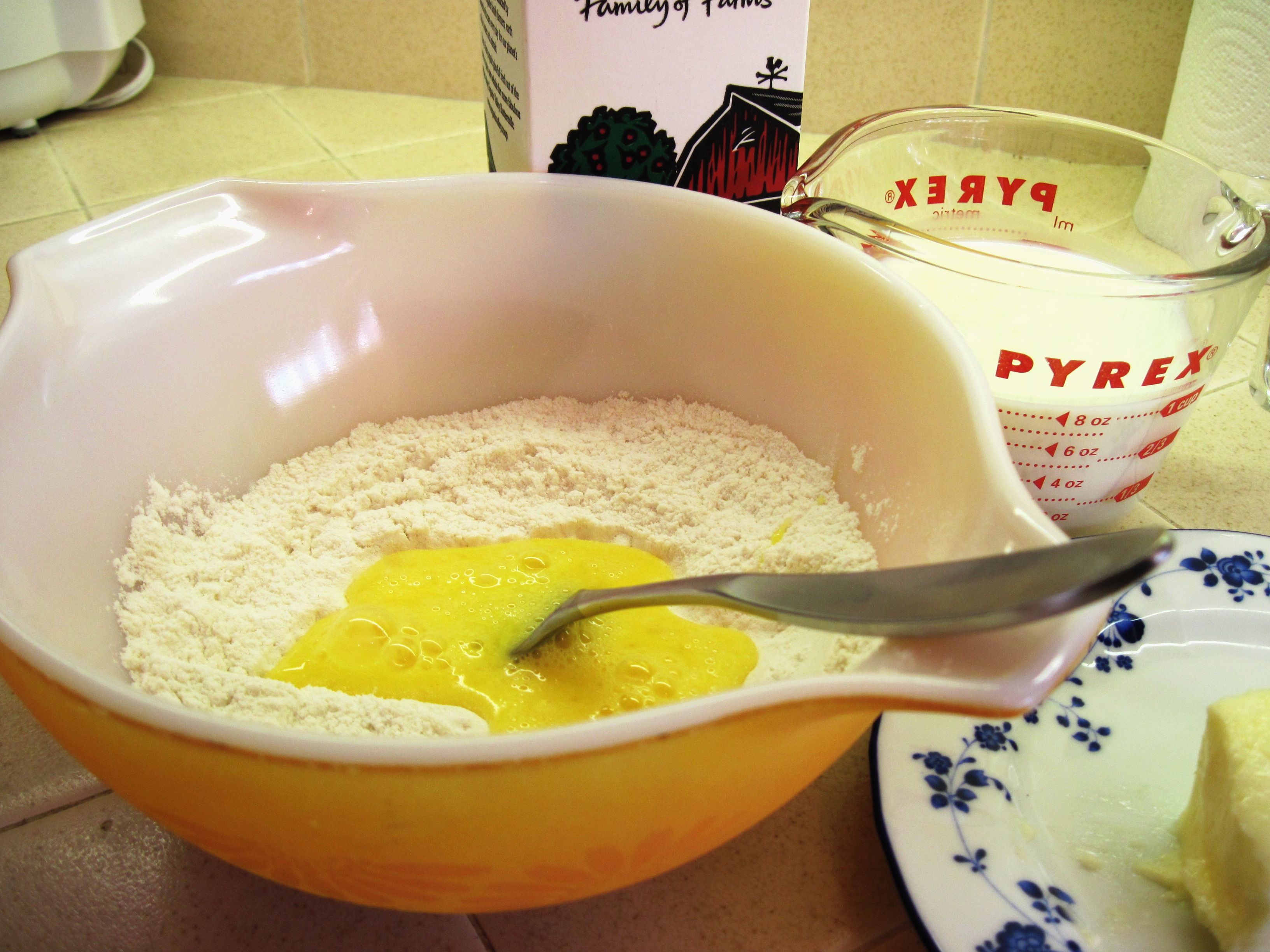
1. Stir the dry ingredients together in a bowl.
2. Add the eggs and buttermilk and stir well until smooth.
3. Heat an ebelskiver pan over medium heat until it is hot. (A bit of butter will sizzle when it’s hot enough.)
4. Put just a bit of melted butter in each hole.

5. Put a spoonful of batter in each hole so they are a little more than half full.

If you’re going to fill the ebelskivers with berries or applesauce, put a berry (raspberries are good) or about ½ teaspoon of chunky applesauce on the batter and then top with another small spoonful of batter.
I filled one with a bit of raspberry jam for demonstration purposes. Here’s how it looked:
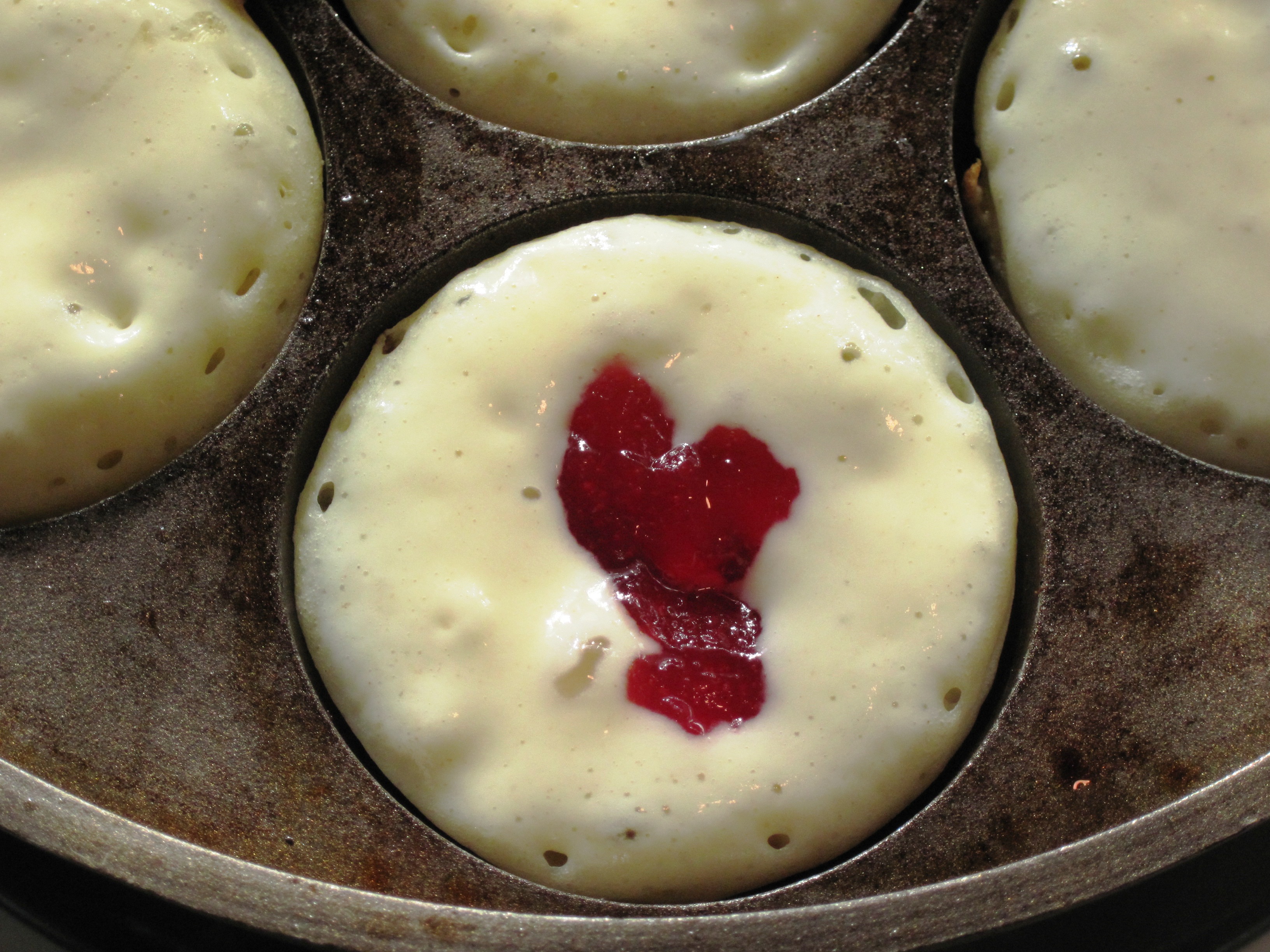
6. When the edges of the ebelskivers are dry and the surface is a bit bubbly (very much like regular pancakes), use a fork or a skewer to grab the edges of the ebelskivers, lifting them up and turning them over.
7. Let them cook for a minute or so more until they are nicely browned on all sides.
8. Serve with powdered sugar, jam, honey, or maple syrup.

Share this:

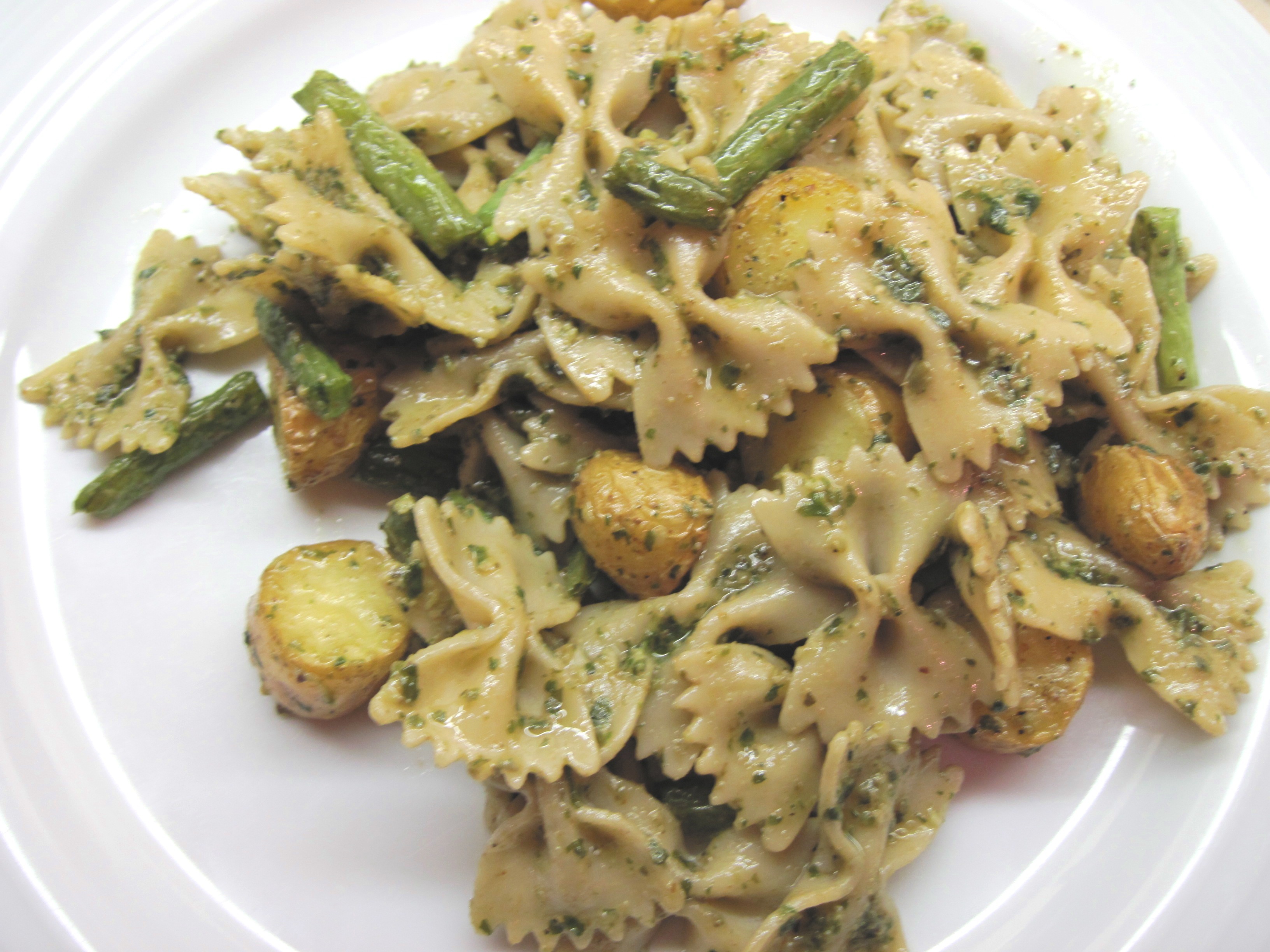
Pasta with Pesto and Roasted Vegetables

Pasta with Pesto and Roasted Vegetables has long been a family favorite. The Seattle Times published the recipe years ago and reported that the idea came from The Pink Door restaurant in Seattle.
I have never made homemade pesto; the recipe would undoubtedly be infinitely better if I did. I use Cibo Naturals Classic Basil Pesto; it’s quite good and makes this recipe “quick and easy”.

I used Russian Banana Fingerling potatoes last night, but you can use any small new potato. I cut each potato into 2 or 3 pieces. (You can also use larger red or Yukon Gold potatoes; just cut them in small pieces.)

Pasta with Pesto and Roasted Vegetables
(Serves 4)
~~~
10 oz. small new potatoes, cut in small pieces
¼ pound green beans cut in 1-inch pieces
2 tablespoons olive oil
Salt
Pepper
8 oz. (about 3 cups) pasta (I chose farfalle)
½ cup pesto
~~~
1. Heat the oven to 400˚.
2. Put the potatoes and olive oil in a baking dish and toss to coat the potatoes well. Sprinkle with salt and pepper and roast for 15 minutes.
3. Add the green beans to the potatoes. Stir them all together and roast for about 20 minutes more.
4. About 10 minutes before the potatoes and beans are done, cook the pasta.
5. Combine the roasted vegetables, pasta and pesto. Add salt and pepper to taste.
Share this:

Chickpea Salad
There were about 2 cups of leftover chickpeas in the refrigerator from the day I made Chana Masala. They seemed perfect for a chickpea salad!
You could use a can of chickpeas, but it really is better with ones that you cook.
I happened to have some marinated green olives, so I used those. You could use any kind of olives in this salad.

Chickpea Salad
Served 2. (This should have served 3 – 4. I was hoping for some leftovers for my lunch.)
~~~
About 2 cups of cooked chickpeas (or canned)
A bit of red onion, chopped into small pieces
A bit of olives, chopped into small pieces
¼ – ½ of a red pepper chopped
About 2 tablespoons olive oil
The juice of 1 small lemon
~~~
Mix all of the salad ingredients with the olive oil and lemon juice. Season to taste with salt and pepper.
Share this:

Asparagus with Sage Butter
This post is really more of an idea than a recipe. I have some dried sage from our garden that I love to use with asparagus.
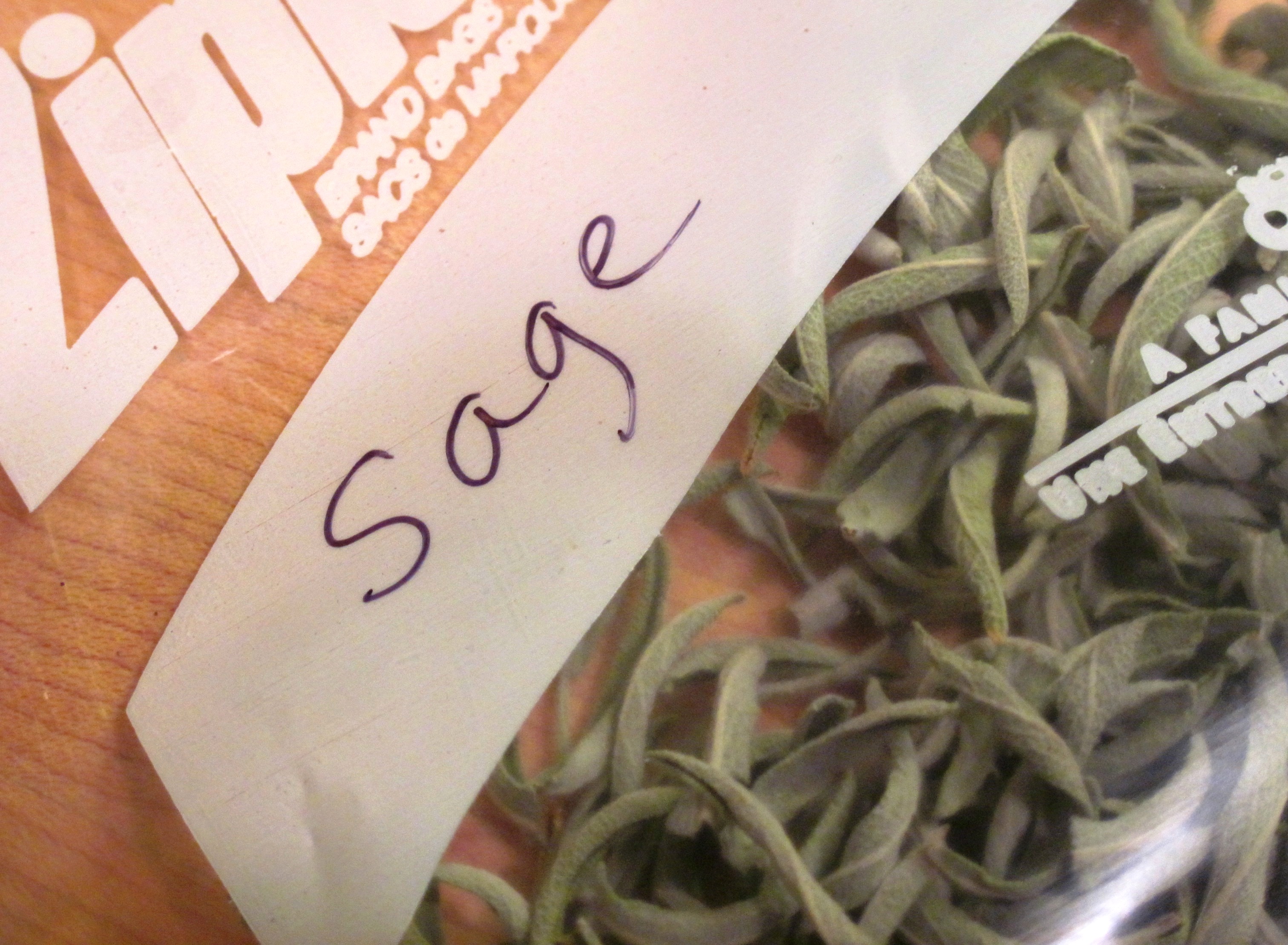
Steam some asparagus until it is just tender. While it is steaming, add some sage to a bit of butter in a pan to melt the butter and cook the sage.

Serve the asparagus with the sage butter.

Share this:

Quick and Easy Black Bean Soup
Moosewood Restaurant Cooks at Home is a collection of fast and easy recipes, most of which are vegetarian. (There is a chapter on fish.) I really like the Black Bean Soup recipe in the book. It uses canned black beans, canned tomatoes, and sun-dried tomatoes to produce a flavorful soup that can be ready very quickly. It’s a great weeknight soup.
The recipe suggests blending half of the finished soup and adding it back to the pot. If you do that, be sure the blender is only half-full and hold the lid on with a pot holder. Hot soup will shoot up when you blend it and can pop the lid off if it’s too full.
Instead of using my blender, I use my immersion blender. It is so much easier! Just put it in your pot of soup and blend away, leaving some beans and tomatoes unblended for texture.

Black Bean Soup
(Adapted from a recipe in Moosewood Restaurant Cooks at Home)
Serves 2 (doubles easily)
~~~

5 sun-dried tomatoes (not packed in oil)
½ cup boiling water
1 tablespoons oil
¾ cup finely chopped onions
¼ teaspoon cayenne pepper, or to taste
2 cloves garlic, minced or pressed
1 teaspoon ground cumin
3 tablespoons water
1 (14.5 oz) can diced tomatoes, undrained
1 (15 oz) can black beans, undrained
2 tablespoons chopped fresh cilantro
Additional water, if necessary
Yogurt or sour cream (optional)
In a small bowl, cover the sun-dried tomatoes with the boiling water and set aside.
Sauté the onions and cayenne in the oil for about 5 minutes. Add the garlic and sauté for about 1 minute more.
Add the cumin, water, and tomatoes with their juice. Simmer, covered, for another 5 minutes.
Add the black beans with their liquid. Simmer, covered, for an additional 5 minutes. Stir occasionally to keep from sticking.
Drain the sun-dried tomatoes. Chop them and add them to the soup. Simmer for 5 – 10 minutes. Add the cilantro and remove from the heat.
Using an immersion blender, blend the soup right in the pot until about half of the beans and tomatoes are blended. (Or carefully blend half of the soup in a blender and then add it back to the pot.)
If the soup is too thick, add a little bit of additional water and reheat.
Serve with a bit of plain yogurt or sour cream, if you want.

Share this:

Barbecue Shrimp for Mardi Gras
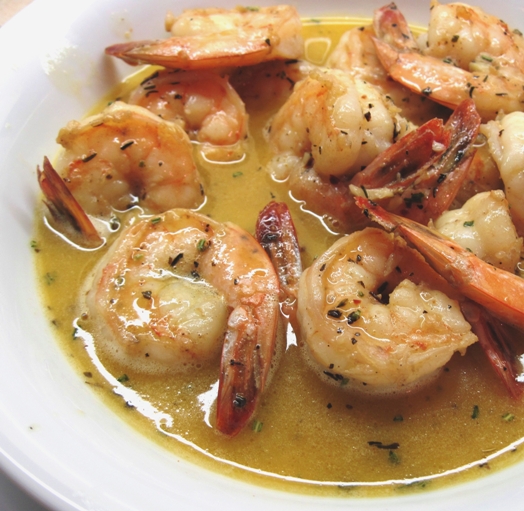
Pascal’s Manale in New Orleans claims to be the “Home of the Original Barbecue Shrimp”. Barbecue Shrimp New Orleans-style doesn’t involve a grill. It’s basically shrimp, spices, and butter—lots of butter—quickly cooked in a pan. You’ll find Barbecue Shrimp on the menu in a lot of restaurants in New Orleans, but we always enjoy going to Pascal’s Manale when we’re in town.
I decided to make Barbecue Shrimp for our Mardi Gras dinner last night. I like the version in Chef Paul Prudhomme’s Louisiana Kitchen, although I use less cayenne pepper and red pepper flakes than he recommends. His recipe serves 2. If you want to make more, he suggests making separate batches because the shrimp need room in the pan.
You really should use shrimp with their shells. Yes, it’s messy to eat, but the shells add a lot of flavor. Unfortunately, I found I came home with shrimp that had already been shelled. They were still very good.
I serve Barbecue Shrimp in shallow bowls. You can serve them with a small mound of white rice in the bowl, or with French bread to soak up the delicious buttery sauce. I chose to use the French Batard made by Metropolitan Market’s bakery. It’s a light French bread similar to the breads found in New Orleans. It was perfect!
Don’t skimp on the butter. It’s what makes this dish special. Mardi Gras only comes once a year. Laissez les bons temps rouler!
Barbecue Shrimp
(Adapted from a recipe in Chef Paul Prudhomme’s Louisiana Kitchen)
Serves 2
~~~
Seasoning mix:
½ teaspoon cayenne pepper
1 teaspoon freshly ground black pepper
½ teaspoon salt
¼ teaspoon red pepper flakes
½ teaspoon dried thyme leaves
½ teaspoon dried rosemary leaves, minced
1/8 teaspoon dried oregano leaves
~~~
2 dozen shrimp with their shells (about 1 pound) (If you have shelled shrimp make this anyway. It will still be delicious!)
¼ pound (1 stick) plus 5 tablespoons unsalted butter
1½ teaspoons minced garlic
1 teaspoon Worcestershire sauce
½ cup shrimp stock (or chicken broth)
¼ cup beer at room temperature
~~~
Rinse and clean the shrimp.
In a small bowl, combine the seasoning mix ingredients.

In a large skillet, melt 1 stick of butter with the seasoning mix, garlic and Worcestershire sauce.

When the butter is melted, add the shrimp and cooking, shaking the pan or gently stirring, for 2 minutes. Add the 5 tablespoons butter and the stock and cook, shaking and/or stirring for 2 more minutes. Add the beer and shake and cook for 1 more minute.
Serve in shallow soup bowls with plenty of French bread.
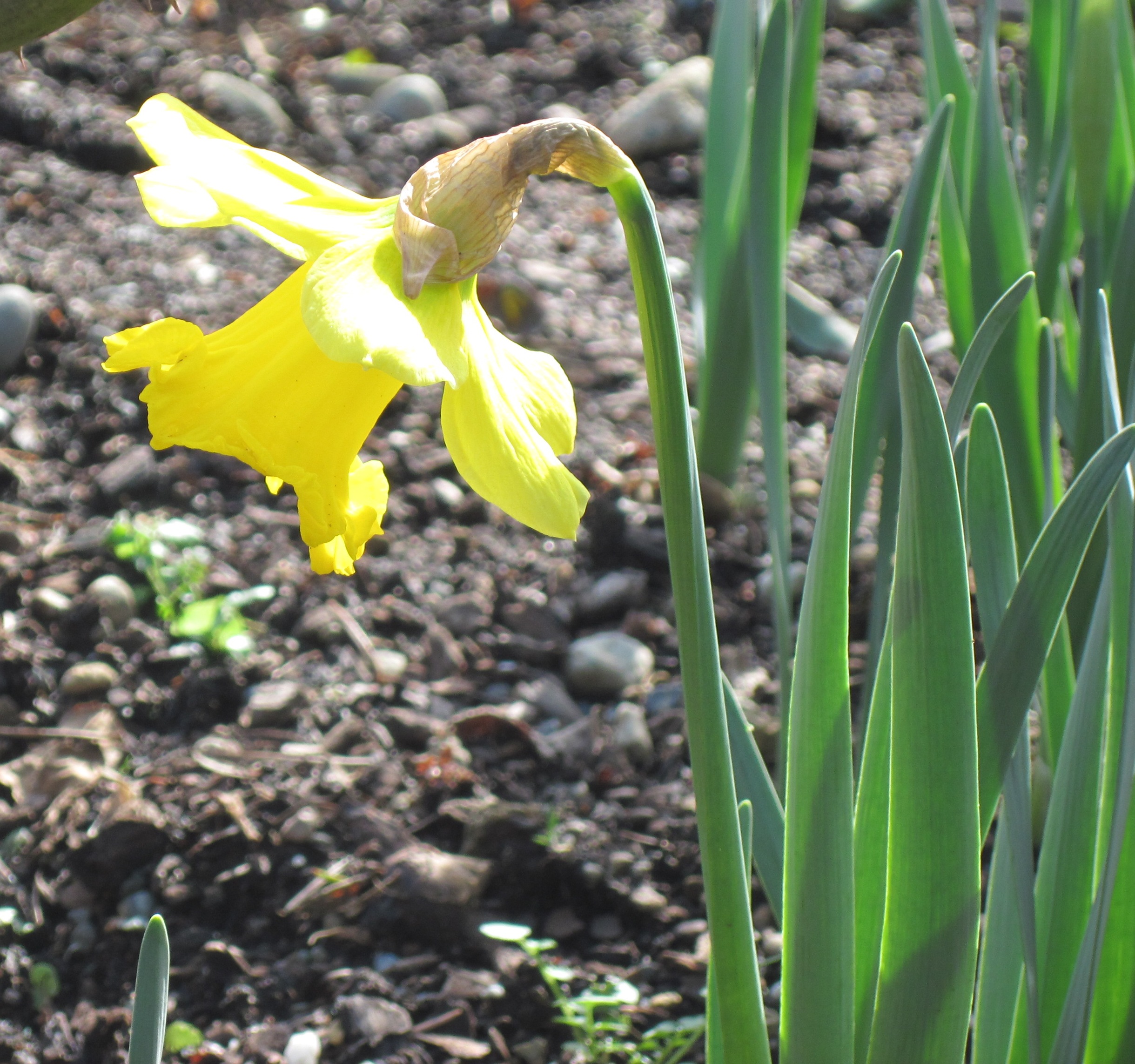
(The first daffodil of spring bloomed today!)


 In the kitchen with Kath


