Welcome!
You'll find over 470 of my favorite recipes here, including ideas for Quick meals, Cooking for 2, Feasting on Leftovers, and cooking with 5 Ingredients or Less. I'm adding new posts regularly; you can subscribe by email or RSS feed if you'd like to receive the latest recipes. Bon appétit!
Steamed Cauliflower for 2
I learned something new from Deborah Madison’s Vegetarian Cooking for Everyone. I have often used this book for fresh ideas for vegetables. Last night was the first time I noticed this tidbit about cauliflower: you can eat the leaves and stems!
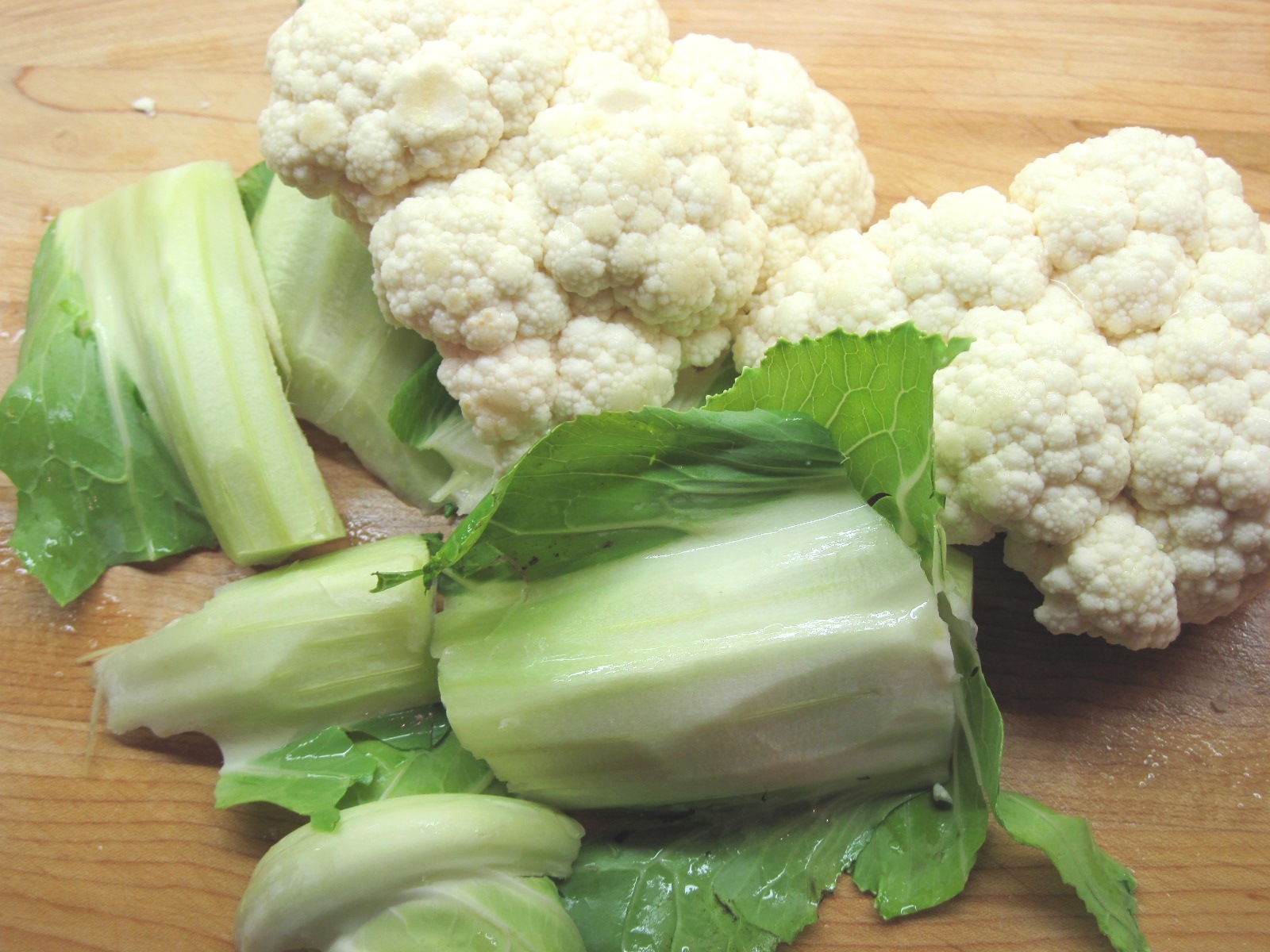
The cauliflower that I had bought was particularly fresh-looking, with lovely leaves and stems. So I included them with the florets to make steamed cauliflower. It did make for a much more interesting presentation.
(I only used about a teaspoon of tarragon because my new tarragon plant is still really tiny and I didn’t want to decimate it. For two servings of cauliflower, you could use up to a tablespoon of fresh tarragon.)
Steamed Cauliflower for 2
(Adapted from the recipe in Vegetarian Cooking for Everyone)
Serves 2 (double, using a whole head of cauliflower, for 4 servings)
~~~~~~~~~~~~~~~~~
½ of a 2 pound head of cauliflower
2 tablespoons of butter
1 teaspoon chopped fresh tarragon
Salt
Pepper
1. Remove the leaves and stems from the cauliflower and wash all of it well.
2. Peel the tough part off of the stems and cut them in small pieces. Chop the leaves. Break the cauliflower into small florets.
3. Put all in a vegetable steamer.

4. Steam for 6 – 8 minutes until tender.
5. Heat the butter in a large skillet. Add the cauliflower and tarragon and cook for a minute or so, stirring, until the cauliflower is well-coated with the butter.
6. Season to taste with salt and pepper and serve.

(Personally, I thought this was a delicious way to prepare cauliflower. Bob’s comment? He likes cauliflower better just steamed without any embellishment. So if you agree with Bob, just steam it. But do try including the leaves and stems!)
Share this:

Pecan Pie
Pecan Pie is one of our family’s holiday favorites. It wouldn’t be Thanksgiving without it, and we sometimes have it again during the Christmas holidays. I developed this pie using honey and pure maple syrup instead of sugar and corn syrup. It’s definitely sweet, but not as cloyingly sweet as a traditional pecan pie.
Today is Pi Day (3.14) so I decided to celebrate with Pecan Pie!

~
Pecan Pie
(Adapted from Better Homes and Gardens New Cook Book)
Pie crust ready to be filled:

~
Easy Pie Crust for a Single Crust Pie
3 eggs
½ cup honey
1/3 cup pure maple syrup
Pinch of salt
1/3 cup melted butter
1½ cups pecan halves (it’s OK if they’re broken)
Below: eggs, maple syrup, honey, melted butter and pecans

1. Place a large baking sheet (larger than the pie plate) in the oven and preheat to 350˚.
2. Make the Easy Pie Crust for a Single Crust Pie.
3. In a mixing bowl, beat the eggs slightly with a fork.
4. Add the honey, syrup and salt and stir until well-blended. (A tip: If you measure the honey in the measuring cup that you used for the oil for the pie crust it will slide out more easily.)
5. While stirring constantly, pour in the melted butter; mix well.
6. Stir in the pecan halves. Pour the pecan filling into the prepared pie crust.

7. Place the pie on the baking sheet that has preheated in the oven (350˚). Bake for 45 minutes, or until a knife inserted off-center comes out clean. (If you have an instant-read thermometer, it should read 185°.) Cool on a wire rack.
Because pecan pie is made with eggs, leftover pie should be store, covered, in the refrigerator.

Share this:

Rolled Fillets of Chicken with Pork and Rosemary Filling
The library is a great source of cookbooks for me. When I hear of one that sounds interesting, I request it from the library so I can give it a “test run”. I recently checked out Essentials of Classic Italian Cooking, by Marcella Hazan. After making her wonderful Roast Chicken with Lemons, I decided I really wanted to add the book to my collection so I could explore it more thoroughly. Bob, who appreciates the results of my cooking adventures, bought the book for me! (Thank you, sweetheart!)
With a half pound of ground pork in my freezer (left from making Classic Meatloaf), I was drawn to Marcella’s recipe for Rolled Fillets of Breast of Chicken with Pork and Rosemary Filling.
It looked simple enough.
Well…I learned that I need more practice in filleting chicken breasts into even pieces. And it took longer than I expected to get the fillets rolled up and toothpicked together. (I promised Bob it would be worth the wait.) The recipe took me about 1¼ hours start to finish; I’m sure I could reduce that time with practice.
Marcella said it would take about a minute, altogether, to cook the chicken rolls. No way! Maybe my fillets were too thick. Maybe my pan wasn’t hot enough. It took 15 – 20 minutes for my fillets to lose their pinkness and reach the USDA approved temperature of 165˚. About 15 minutes for the smaller ones and 20 minutes for the larger ones.
It was definitely worth the wait! It was delicious and it was fun to try something new.
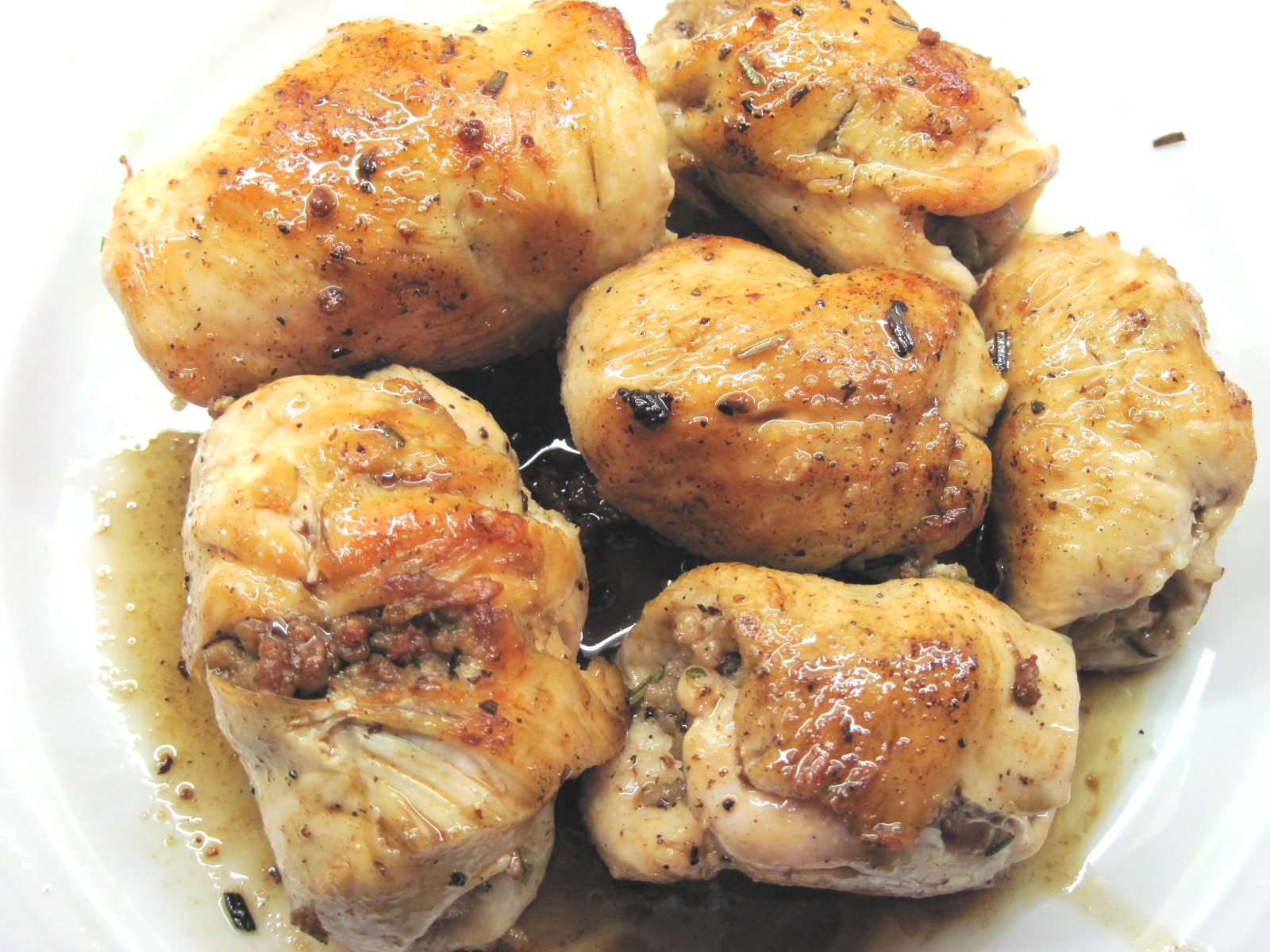
Rolled Fillets of Chicken with Pork and Rosemary Filling
(Adapted from Marcella Hazan’s recipe in Essentials of Classic Italian Cooking)
Serves 4 – 6
2 cloves garlic
2 tablespoons olive oil
½ pound ground pork
Salt
Pepper
2 teaspoons fresh rosemary leaves, minced (or 1 teaspoon dried)
2 boneless, skinless chicken breast halves, filleted*
2 tablespoons butter
Sturdy round toothpicks
½ cup dry white wine
* To fillet a chicken breast, hold it down firmly with the palm of your hand while you slice it in half horizontally with a sharp knife. (Don’t worry if they aren’t perfect. Mine came out uneven. I had a couple of small pieces and 2 large pieces. I cut the large ones in half again so I ended up with 6 pieces of varying sizes. It all worked out in the end.)
~~~~~~~~~~~~~~~~~~~~~~~~~~~~~~~~~~~~~~~~~~~~~~~~~~~~~~~~~
1. Peel the garlic and use a heavy knife handle to smash it just a bit.
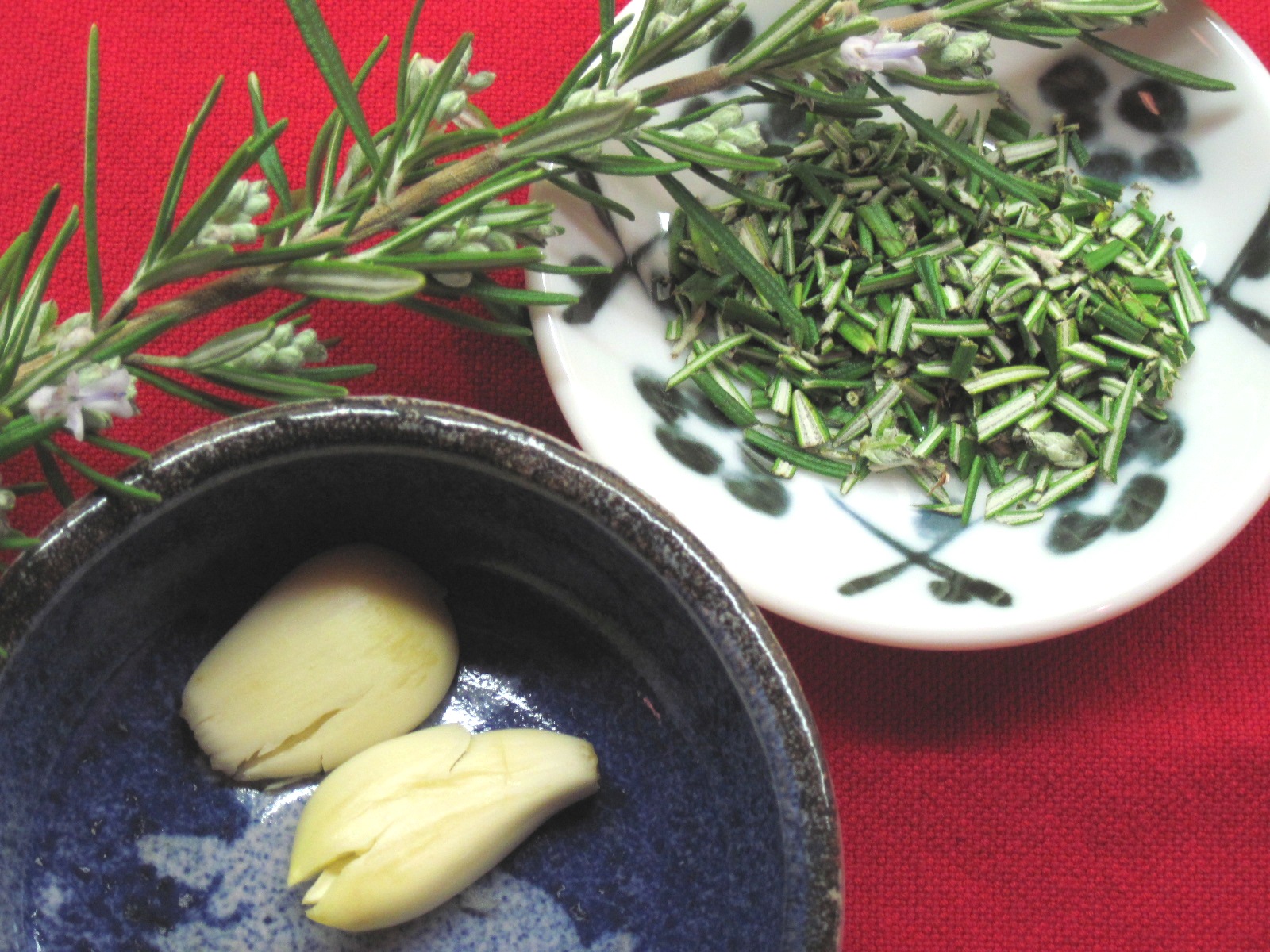
2. Put the garlic and oil in a large skillet and cook until the garlic is golden. Add the pork, the rosemary, a good sprinkling of salt, and a good grind of pepper. Cook, stirring occasionally, until the pork is done. (Marcella suggested discarding the garlic, but we found it was a delicious little tidbit to serve with the dinner.)
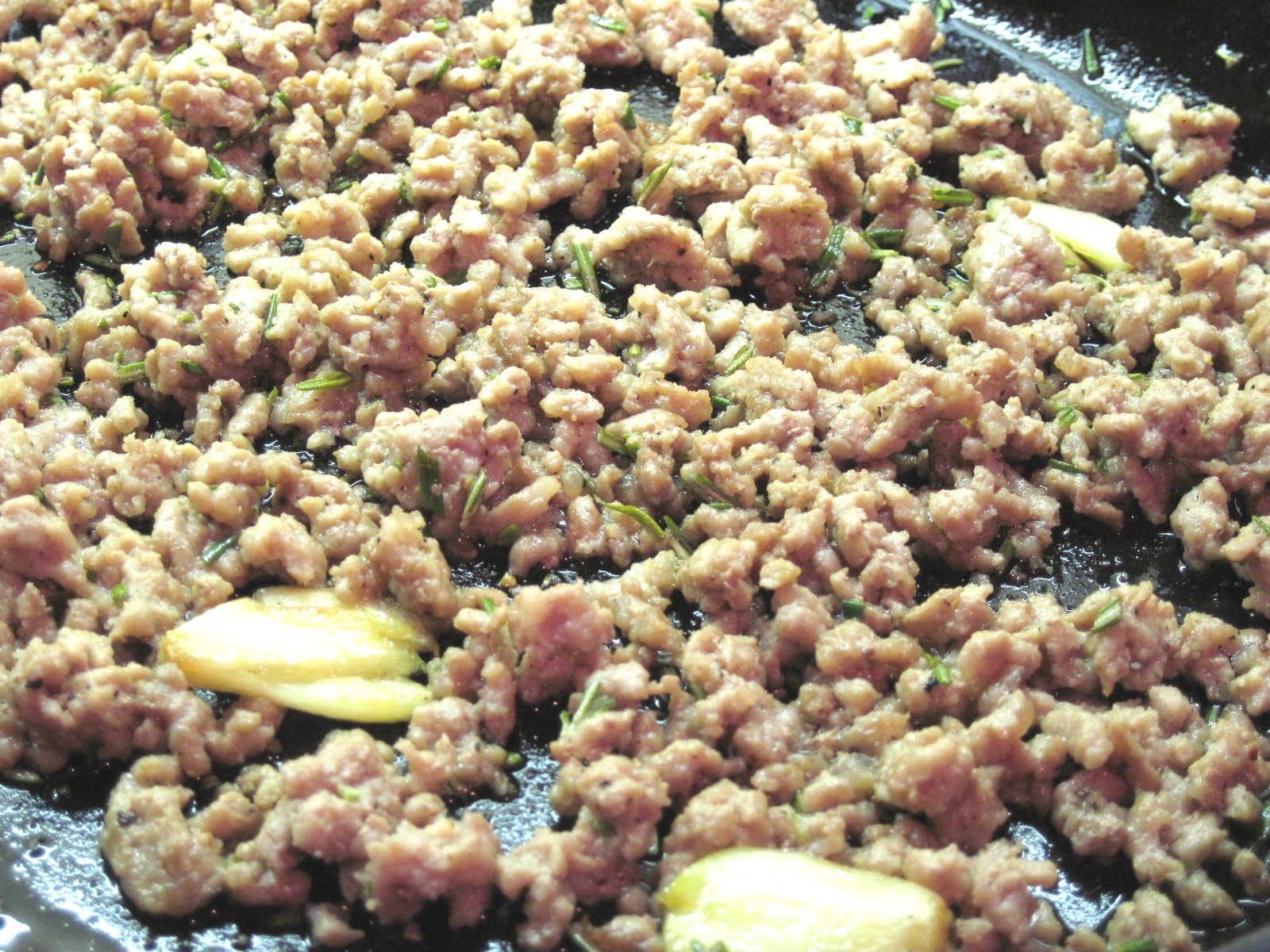
3. Remove the pork from the pan and put it on a plate.
4. Sprinkle the chicken fillets with salt and pepper. Put the pork on the fillets; spread it out and press it down with the palm of your hand.
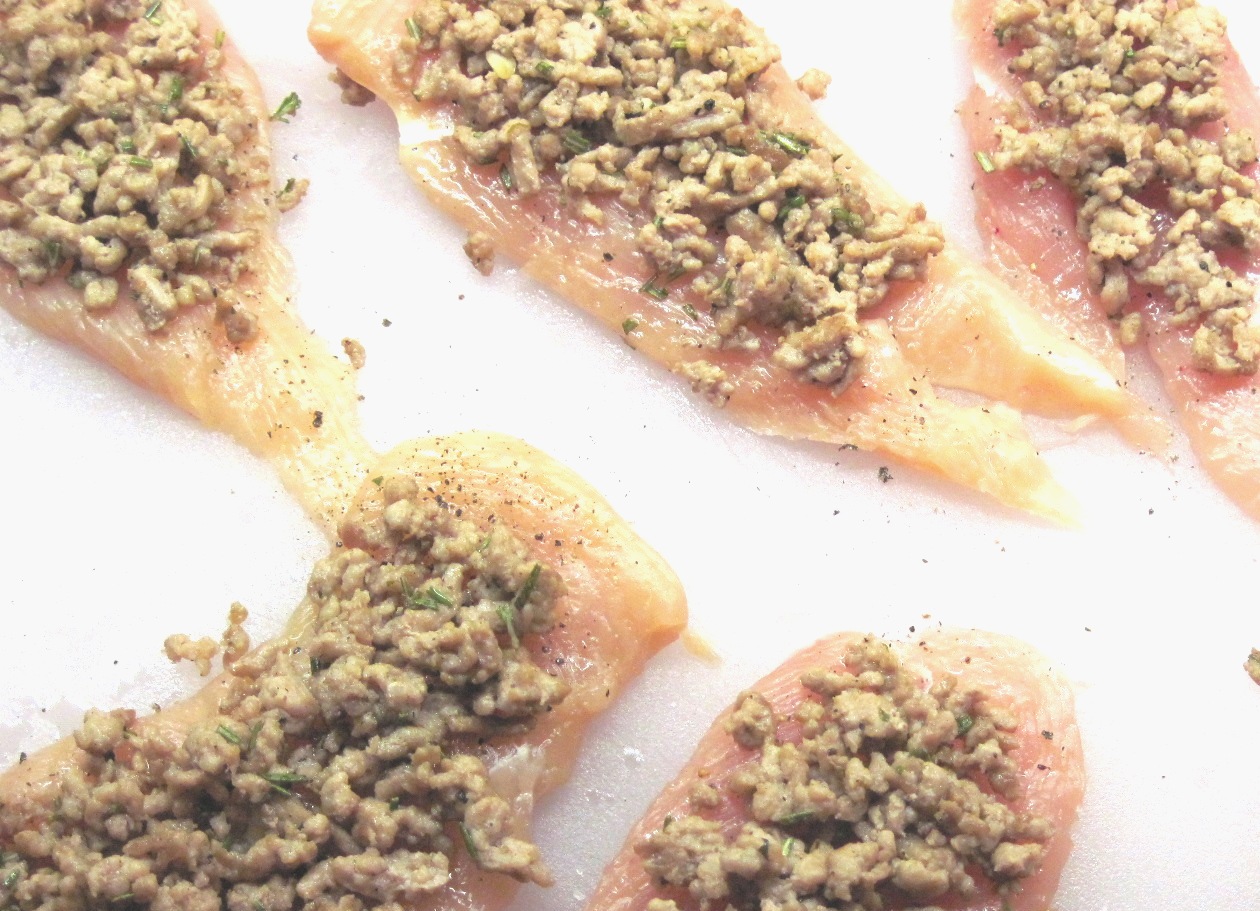
5. Roll the fillets up tightly and secure with a toothpick.

6. Turn the oven on Warm and put a plate in the oven to warm for the chicken. (You could put your dinner plates in, too.)
7. Remove as much of the fat as you can from the skillet. Add the butter and heat the skillet over medium-high heat.
8. When the butter has stopped foaming, add the chicken fillets.
9. Cook, turning occasionally with tongs, until the chicken is done and nicely browned all over. An instant read thermometer should read 165˚ when the chicken is done. If your rolls are different sizes, as mine were, the smaller ones will be done sooner than the larger ones. Remove them as they get done to the warm plate in the oven while the larger ones finish cooking.
10. Add the wine to the pan and cook, stirring, for a few minutes until it is well blended and reduced a bit.
11. Remove the toothpicks from the rolled fillets, pour the juice over them and serve.
Share this:

Pan-Fried Oysters
Pan-fried oysters are not battered and deep-fried (like THE very best fried oysters are at Sunfish on Alki in West Seattle). My version has just a very light seasoned flour dusting; then I pan fry them in just a bit of olive oil.
I buy local shucked oysters that are sold in 10-oz. jars. Minterbrook and Hama Hama are good local brands. They’re available at most grocery stores in the seafood department. The jars indicate whether the oysters are Extra Small, Small, or Medium. I prefer Small, but that is just my personal preference.
Pan-Fried Oysters served with roasted asparagus and Whole-Wheat Irish Soda Bread:

Pan-Fried Oysters
(Serves 2…but barely for real oyster lovers!)
a
1 10-oz jar of fresh oysters
About ¼ cup flour
½ teaspoon salt
A good shake of cayenne pepper, or to taste
Olive oil
Tartar sauce for serving (optional)
a
1. Combine the flour, salt, and cayenne pepper.
2. Drain the oysters in a strainer.
3. Dredge the oysters in the flour mixture and put them on a rack for a few minutes.

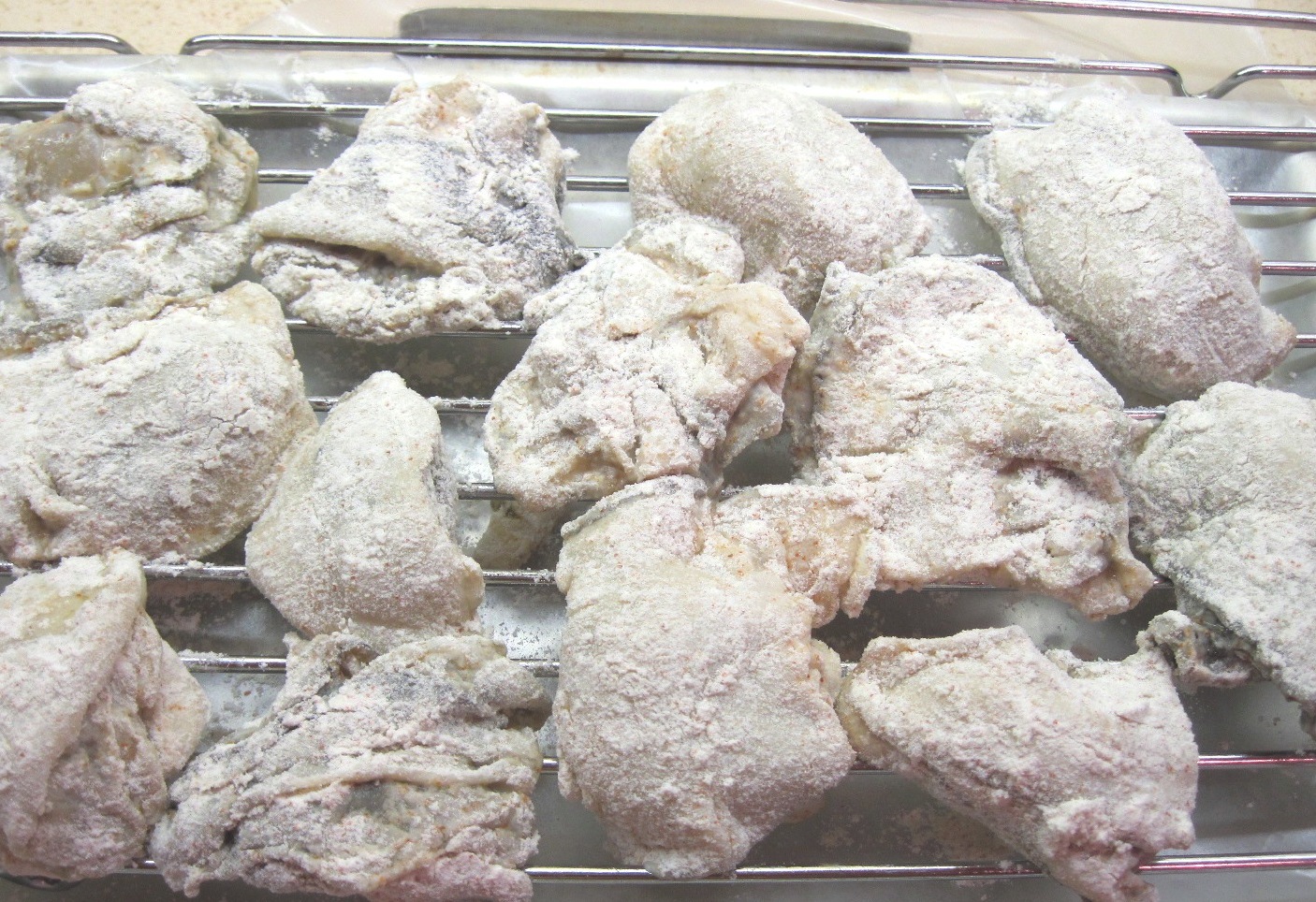
4. Put just enough olive oil in a large skillet to cover the bottom. Heat the oil over medium heat until it’s hot.
5. Put the oysters in the hot pan. Cook for just a few minutes until they plump up a bit. Gently turn them over to brown the other side. The timing will depend on the size of your oysters.

6. Serve with tartar sauce.
Edited March 20, 2010–Same recipe, new photos because I had much better-looking oysters this time.
Share this:

Maple Glazed Carrots
Adding just a bit of sweetener to carrots really brings out their own natural sweetness. A lot of recipes for glazed carrots call for 2 or 3 times as much sweetener or butter, but you really don’t need to use that much.
Maple syrup is a good choice to use because it’s not overly sweet. You could substitute honey or sugar.
It’s such a simple method; there’s not much to say in the way of an introduction. Try it – you’ll like it!

Maple Glazed Carrots
(Serves 2, multiplies easily)
½ – ¾ pound carrots
About 2 teaspoons butter
About 2 teaspoons pure maple syrup
~~~
Wash and peel the carrots. Cut them diagonally into bite-sized pieces.
Put the carrots in a pan and fill it with water until they are almost covered. Add the butter.
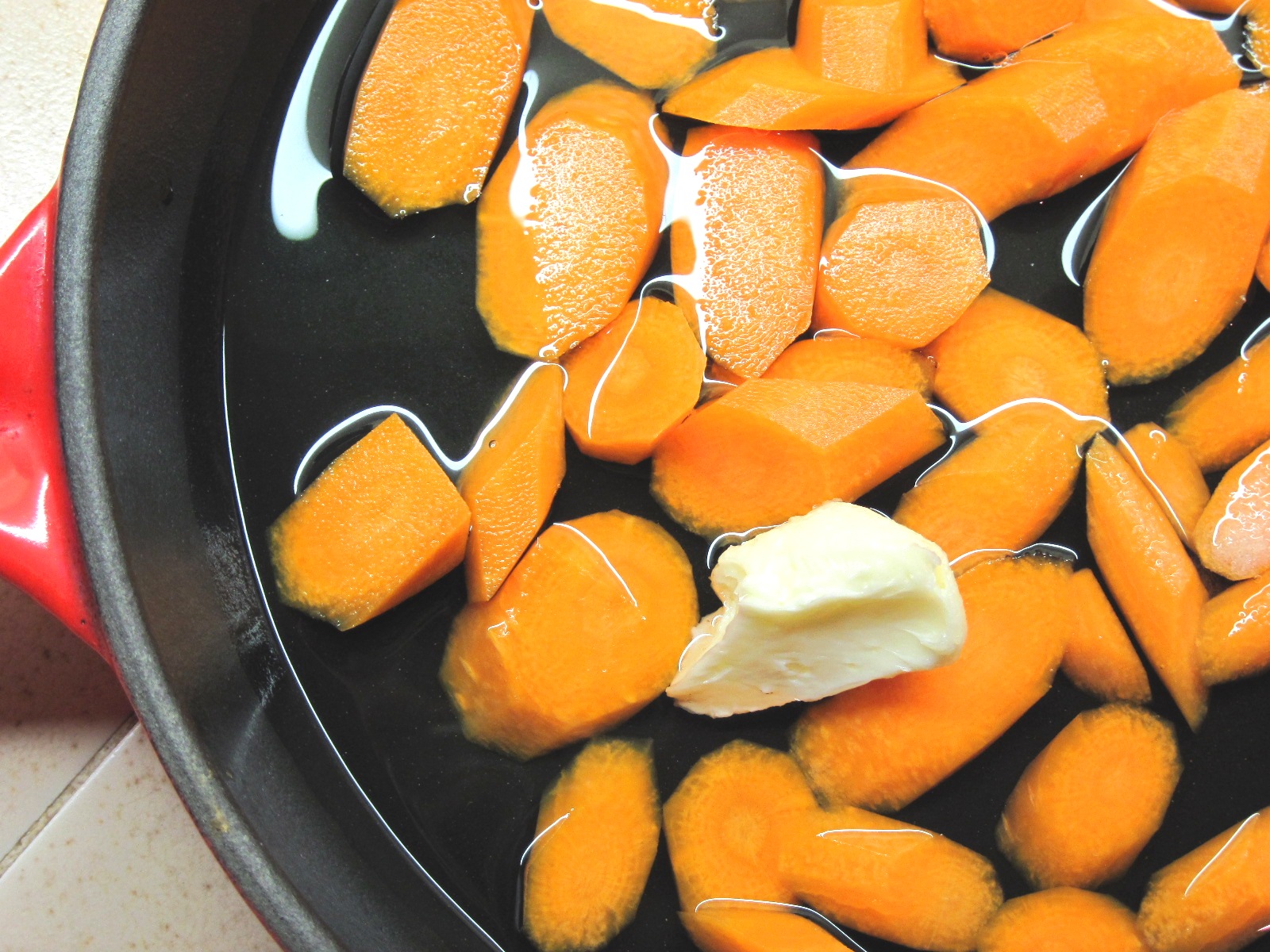
Heat, uncovered, over medium-high heat until the water is boiling. Reduce the heat so the water is simmering and continue to cook the carrots uncovered. The idea is to have the water evaporate; if it all evaporates before the carrots a done, add a bit more water.

When the carrots are just about done, add the maple syrup and stir.
Cook until the carrots are done, the water has evaporated, and the carrots have a nice glaze.
Share this:

Thyme-Coated Pork Tenderloin
Pork tenderloin is a very lean cut of pork that can be prepared many ways. Last night I tried a new recipe from Cooking Light for “Thyme-Coated Pork Tenderloin”. It was quite good, but I think the recipe needs some “tweaking”.
Next time I might try using a small amount of mustard instead of the egg whites to give a flavor boost. I’d use fewer bread crumbs. Or I might skip the bread crumbs altogether and use a flavorful rub. This is a recipe you can play with.
Many people end up overcooking pork “to be safe”. The only way to really know if pork is done is to use an accurate meat thermometer. The USDA says it should be 160˚ for safe eating; they also say that the meat could be pink and still be done. My pork tenderloin reached a temperature of 165˚ so it was done, even though it remained slightly pink. For tender, delicious pork use a meat thermometer. If you cook it until it is grey throughout you’ll have tough, overcooked meat.
Update 9/18/11: The USDA has revised the recommended cooking temperature for all whole cuts of meat, including pork, to 145 °F. They now advise cooking whole cuts of meat to 145 °F, and then giving them a 3 minute rest period. All poultry and all ground meats should still be cooked to 165°F. You can read the update here.
On the platter, ready to serve:

Thyme-Coated Pork Tenderloin
(Adapted from a Cooking Light recipe)
Serves 4
1 teaspoon dried thyme
2 teaspoons minced onion
1 slice hearty white bread, torn (I actually used some leftover toasted bread crumbs)
2 large egg whites, lightly beaten (or try substituting a thin coating of mustard)
1 (1-pound) pork tenderloin, trimmed
Salt
Pepper
~~~~~~~~~~~~~~~~~~~~~~~~~~~~~~~~~~~~~~~~~~~~~~~~~~~~~~~~
Preheat oven to 400˚.

Put the bread, thyme and onion in a food processor and pulse until you have fine bread crumbs. Put the bread crumbs on a plate. Sprinkle the pork with salt and pepper and dip it in the egg whites (or cover it with a thin coating of mustard). Press it in the breadcrumbs. Put a light coating of oil on a broiler pan or a rack in a baking sheet; place the coated tenderloin on the broiler pan or rack.
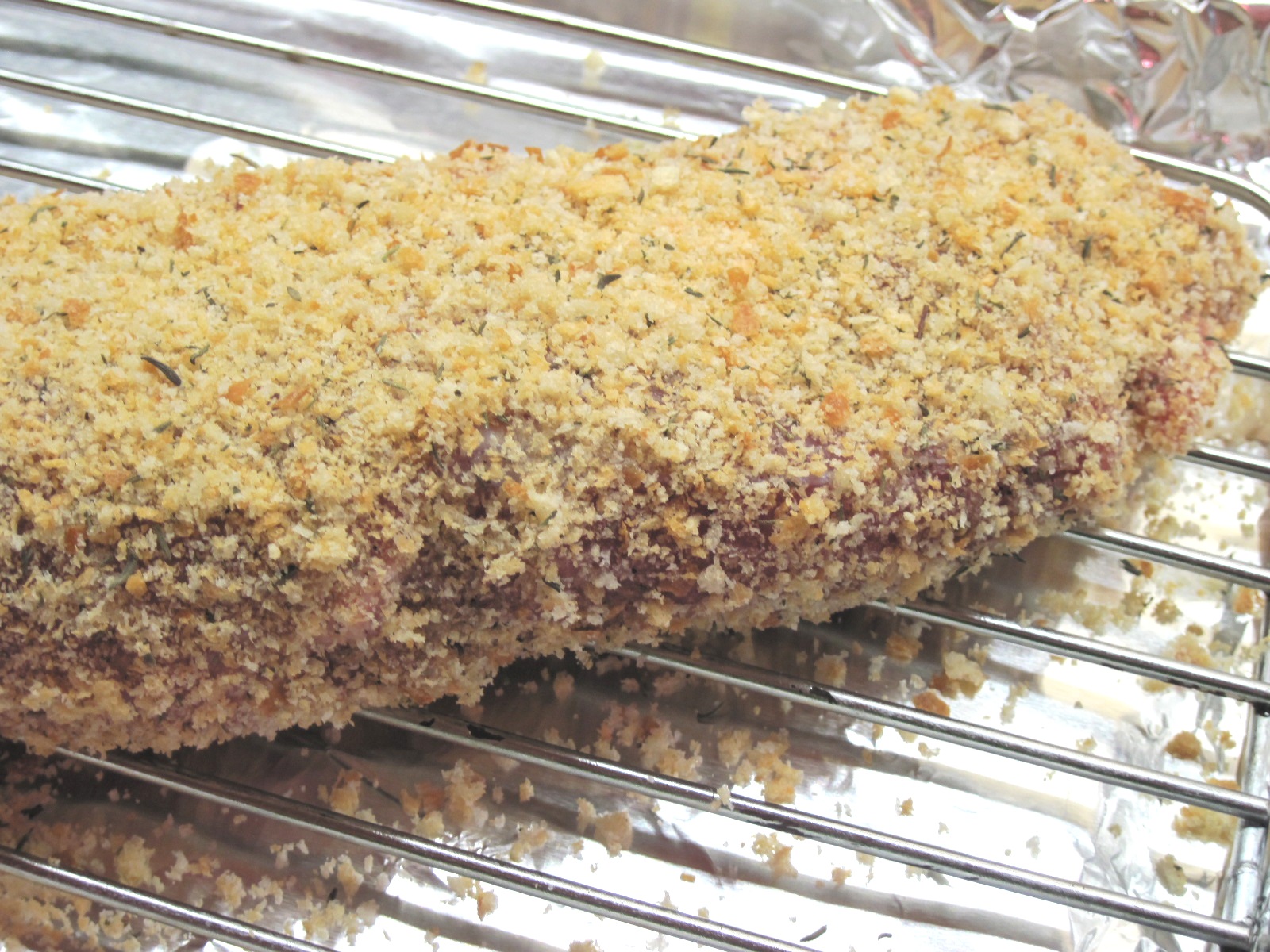
Bake at 400˚ for 30 – 40 minutes, or until internal temperature at the thickest part is 160˚. Let stand 5 minutes. Cut into ¼-inch slices and serve.
Share this:

Filo’s Gattò di Patate

Filo, Carrie’s house mom when she was studying in Florence, makes a delicious Gattò di Patate. She wrote down the recipe in Italian for Carrie, and Carrie translated it for me. It’s interesting to note that Filo, who is from Naples, uses a recipe almost identical to Arthur Schwartz’ recipe in Naples at Table. (This is a great cookbook if you want authentic Neapolitan recipes. It’s out of print, but still available used.) The main difference between the two is that Filo uses 3 whole eggs plus 1 egg yolk, and Arthur uses just 1 egg. Filo also uses a combination of Parmesan and Romano cheeses; Arthur uses just Parmesan. I went with Filo’s version.
I have made Gattò di Patate with salami, but this time I used prosciutto which I think I prefer.
There is one thing puzzling to me about both of the recipes. Both Filo and Arthur say to use a 10-inch round pan, but the quantity of ingredients that they use makes enough to fill two 10-inch pans! The first time I made it I ended up using my largest 10×15 inch Pyrex baking dish and it barely fit. This time I made half of the recipe and it perfectly filled my pie dish.
Arthur states that this is Campania’s most elaborate potato dish and it has become famous outside of the region. Because it is so rich, it is usually served with a simple grilled meat; Arthur suggested roast chicken. I put some chicken thighs in the oven with the Gattò di Patate and made a salad while they were baking.

Here’s my version of half of the recipe. It will easily serve 6 – 8 people. Just double it if you want to make a large pan or two 10-inch round pans. If you double it and want to make Filo’s version, use 3 eggs plus 1 egg white.
Gattò di Patate
(Inspired by Filo’s delicious recipe)
Serves 6 – 8
~~~~~~~~~~~~~~~~~~~~~~~~~~~~~~~~~~~~~~~~~~~~~~~~~
1 lb. 10 oz. potatoes
3½ tablespoons butter
2 oz. grated Parmesan cheese
1 oz. grated Romano cheese
2 eggs
2 oz. prosciutto (or salami), cut into small pieces
1 tablespoon minced Italian (flat leaf) parsley
½ teaspoon salt
Pepper
½ cup milk
Butter to grease the pan
Toasted bread crumbs (plain, not seasoned)*
2 oz. provolone cheese, cut into small cubes
3½ oz. mozzarella, cut into small cubes
(Pictured below: prosciutto ready to be cut in small pieces)

Preheat oven to 425˚.
Boil the potatoes and then peel them. (This is Filo’s method; I didn’t want to work with hot potatoes, so I peeled them before boiling them.)
Put the potatoes through a potato ricer. (Both Filo and Arthur use a potato ricer. If you don’t have one, you’ll have to just mash them. Even though Arthur says, “Do not mash.”)
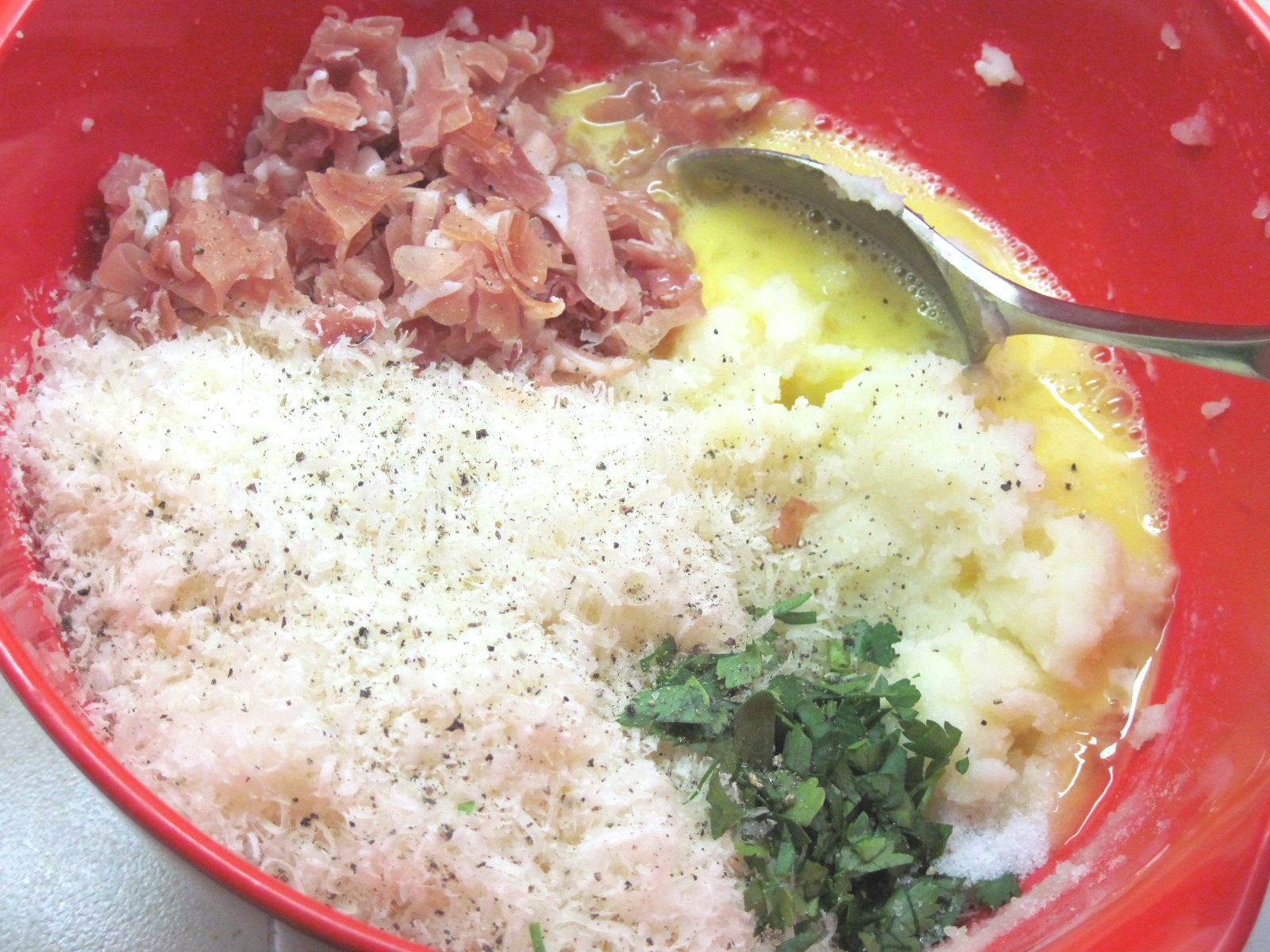
Blend in the butter, parmesan, Romano, eggs, prosciutto or salami, the parsley, salt and a couple of grinds of black pepper. Add the milk and stir it well.
Grease a 10-inch pie plate or cake pan with butter and cover with bread crumbs.
Gently put about half of the potato mixture in the pan, spreading it over the crumbs. Put the 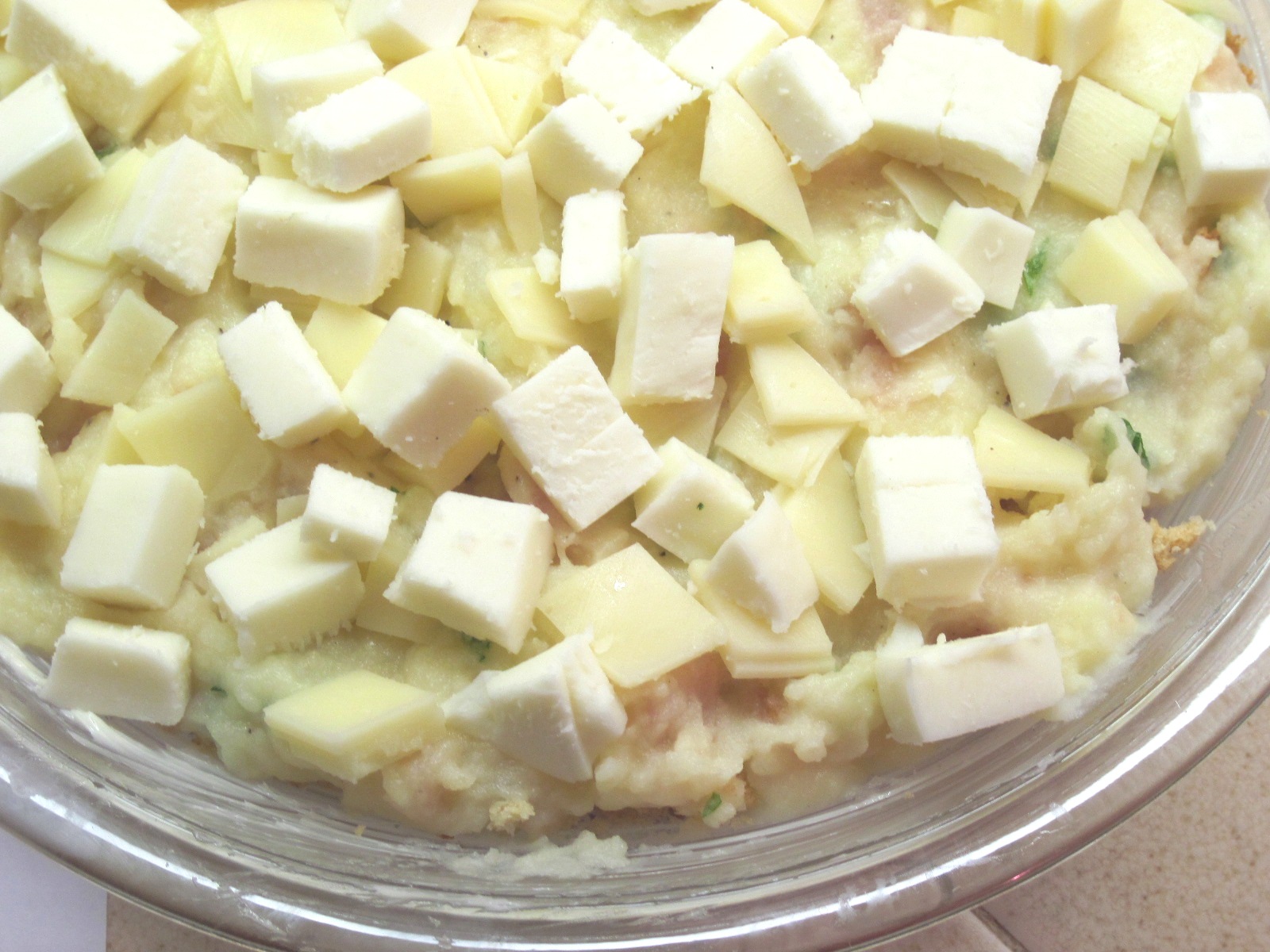 provolone and mozzarella over the potatoes (seen left); cover with the rest of the potato mixture. Smooth the surface, cover with breadcrumbs, add some slices of butter, and put in the oven until the gattò is browned. It takes 30 to 45 minutes.
(I forgot to add the “slices of butter”, which is just as well. It was still delicious. It took 40 minutes in my oven. The photo below shows my gattò ready for the oven. )
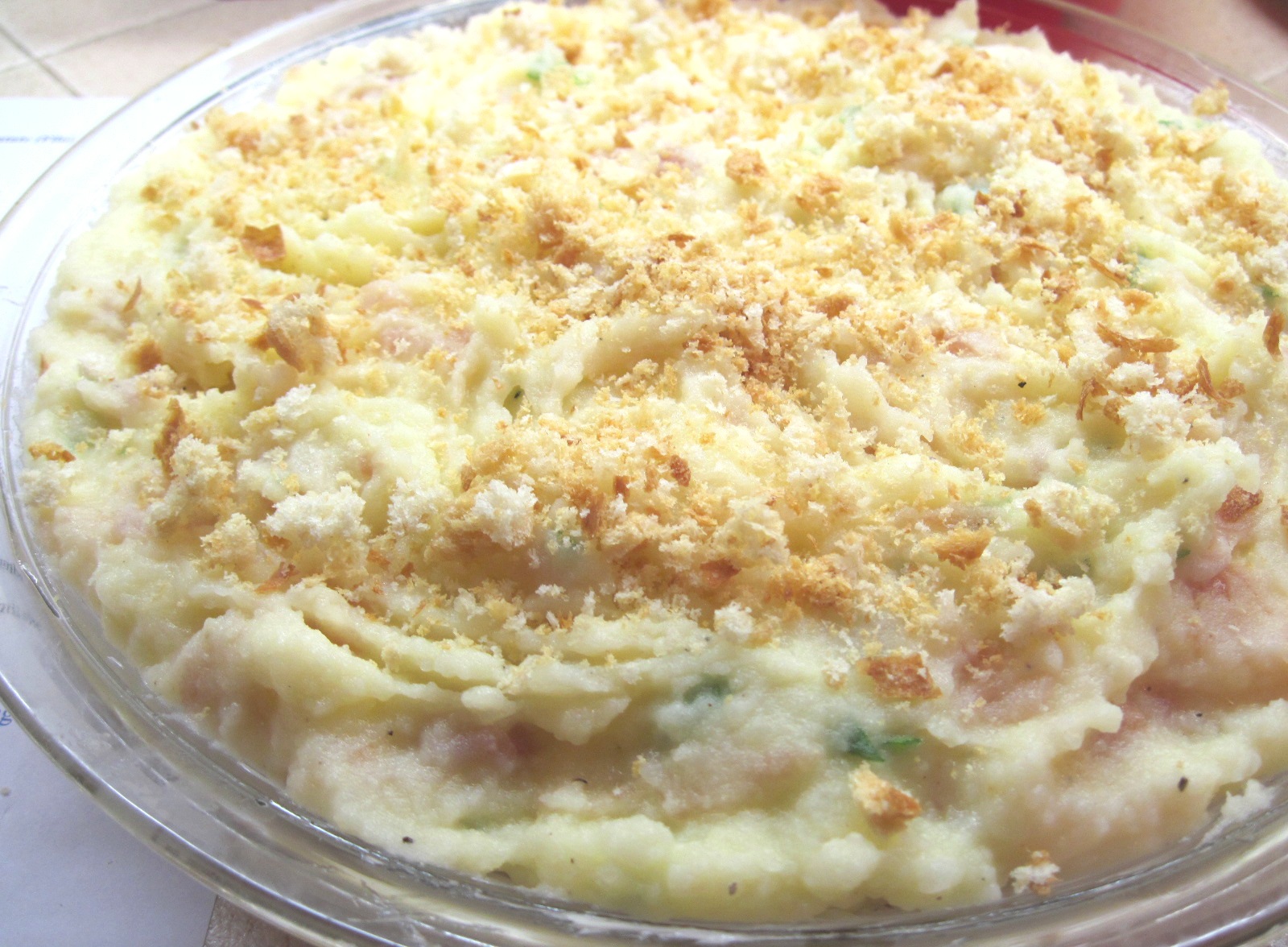
Let the gattò rest for 15 minutes; Filo says it will be too hot to eat right out of the oven. She also said it can be eaten cold. (But I wonder if that’s true only for people who also like cold left-over pizza for breakfast.)
Filo noted that some people put a thin layer of béchamel sauce over the mozzarella, but that seems a bit excessive to me.

Share this:

Linguine con le Vongole (Linguine with Clam Sauce)

This is an excellent recipe for Linguine con le Vongole (Linguine with Clam Sauce). I found it at epicurious.com where it is credited to Mario Batali.
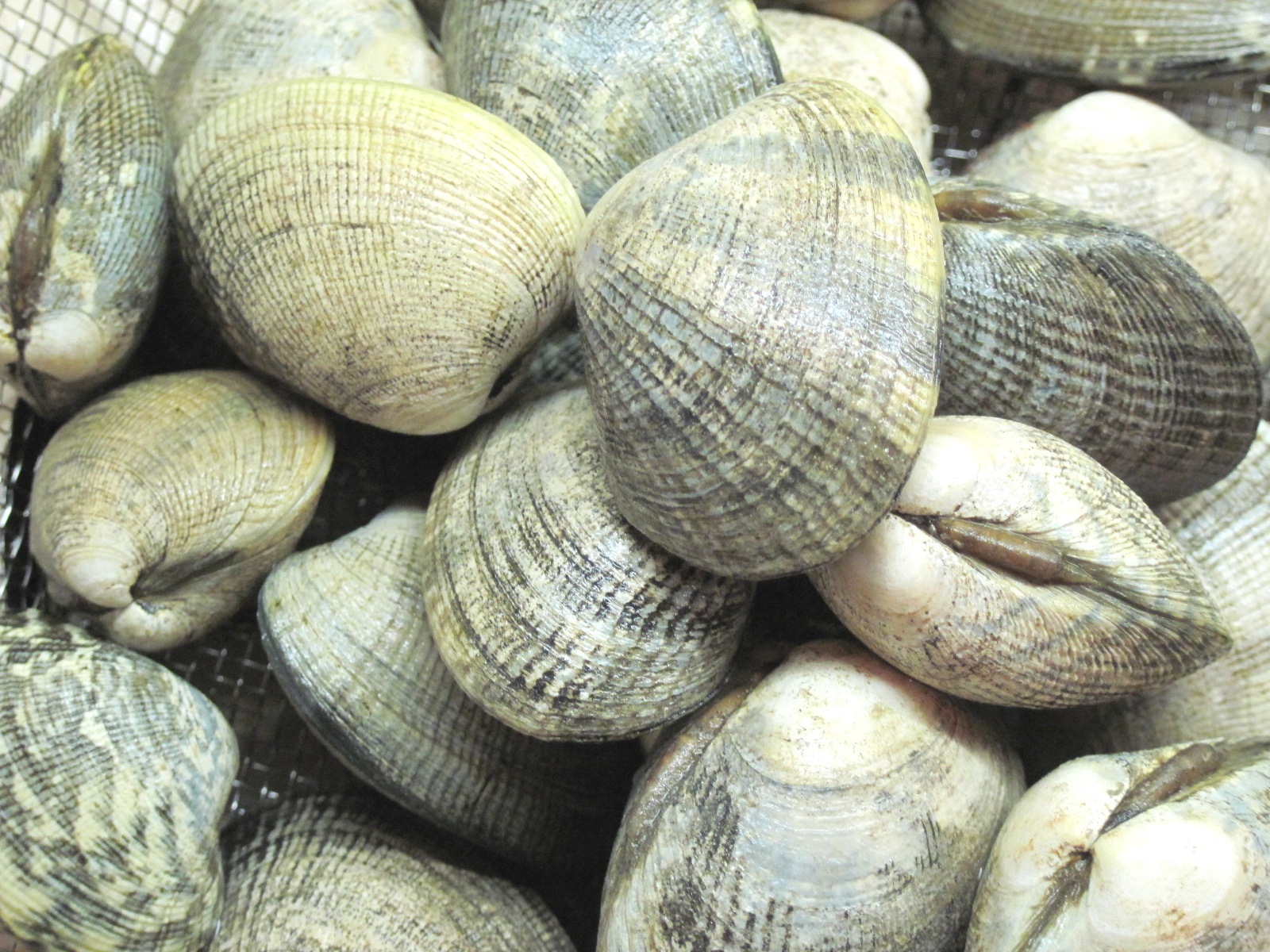
Mario calls for only 1 pound of clams for 4 – 6 servings. That may be fine if you’re serving this as a first course pasta dish, but for a main dish I double the clams.
You can successfully cut the recipe in half for 2 – 3 servings, as I did last night. Just cut the ingredients in half. For the tomatoes, use half of a 14-ounce can of tomatoes; freeze the rest for next time.
Some of the reviewers at epicurious thought a tablespoon of red pepper flakes made it too spicy. They must have spicier red pepper flakes than I have; I thought it was perfect and really not all that spicy.

A key component to this recipe is undercooking the pasta so it finishes in the sauce. It will soak up a lot of flavor in the last minute or so. The actual cooking goes very quickly, so get all of your ingredients ready to go before you put the pasta in the boiling water.
You’ll be really happy if you have this linguine with a good bread to soak up the yummy sauce!
Linguine con le Vongole
(Adapted from Mario Batali’s recipe via epicurious.com)
Serves 4 – 6
2 tablespoons kosher or sea salt
1 pound linguine
12 tablespoons olive oil
4 cloves garlic, thinly sliced
2 pounds clams
1 tablespoon plus 1 teaspoon red pepper flakes
1 cup dry white wine (you can substitute a good quality clam juice)
1 (14-ounce) can diced tomatoes and their juice
½ cup plus 2 tablespoons fresh flat-leaf (Italian) parsley, coarsely chopped

~~~~~~~~~~~~~~~~~~~~~~~~~~~~~~~~~~~~~~~~~~~~~~
Heat 8 quarts of water for the pasta.
While the water is heating, get the other ingredients ready. Scrub the clams. Slice the garlic. Chop the parsley. Measure out the pepper flakes and wine. Chop the tomatoes if they’re whole.
When the pasta water is ready, add the salt and the pasta. My linguine said to cook for 10 minutes, so I set the timer for 9 minutes.
In a large pan, heat 6 tablespoons of the olive oil. Add the garlic and cook, stirring for about 30 seconds. Add the clams and red pepper flakes and stir for about 1 minute. Add the wine, tomatoes and ½ cup of parsley. Simmer, uncovered, until the clams open, about 7 – 8 minutes.
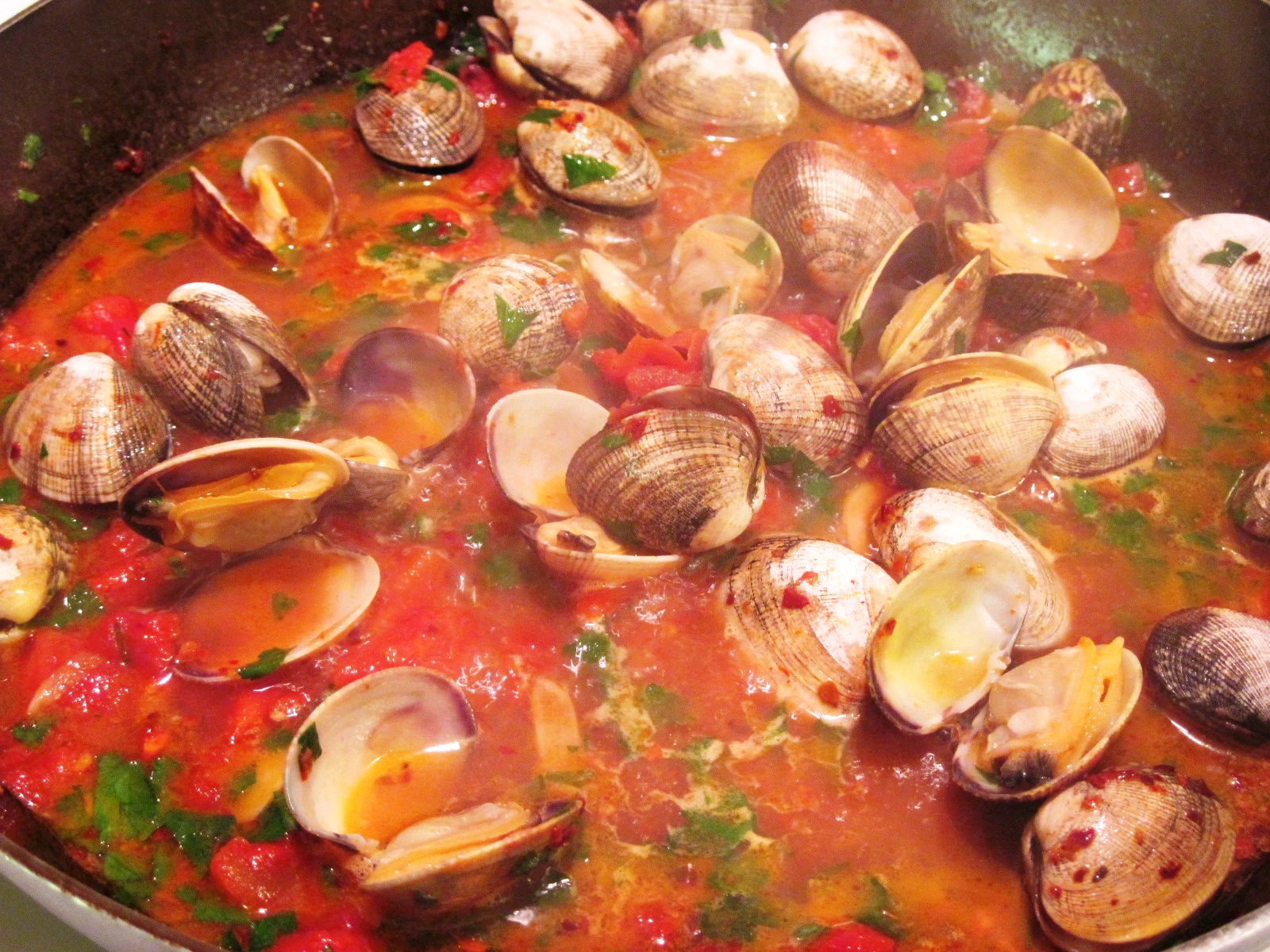
Reserve ½ cup of the pasta water. Drain the pasta and add it to the clams. Stir and cook for about a minute more, until the pasta is done. Add some of the reserved pasta water if it seems too dry.
Remove from heat, add the remaining 6 tablespoons of olive oil, teaspoon of pepper flake, and 2 tablespoons chopped parsley and serve.
Buon appetito!
Share this:

Acorn Squash with Honey
We had acorn squash last night. It was pretty good for a change. Truthfully, though, I prefer butternut squash; I find it more flavorful. Acorn squash needs some kind of embellishment. Perhaps that’s why so many recipes for it include a sweetener to help bring out the flavor. I chose to use a honey/butter blend. (I ended up with more honey/butter than I needed; I am looking forward to it on an English muffin!)

The oven temperature is really a suggestion. If you are baking or roasting something else in the oven that requires a different temperature, the squash will do fine at any temperature from 350˚ to 425˚. Just adjust the cooking time a bit.

Acorn Squash with Honey
(Serves 4)
1 acorn squash (about 1½ pounds)
Olive oil
2 tablespoons butter
1 heaping tablespoon honey
Salt
~~~
1. Preheat oven to 375˚.
2. Cut the squash in half. (A cleaver comes in handy here.) Scoop out the seeds.
3. Put a bit of olive oil around the cut edge of each piece.
4. Place cut-side down on a foil-lined baking sheet.
5. Bake for 40 minutes.
6. While the squash is baking, stir the butter and honey together.
7. Turn the squash halves over. Lightly sprinkle with salt and spread them with the honey/butter blend.
8. Return to oven to bake another 10 minutes.
9. Spoon the melted honey butter out into a small bowl. Cut each half in half for 4 servings and spoon some of the honey butter over each one.

Share this:

Mom’s Buttermilk Pancakes
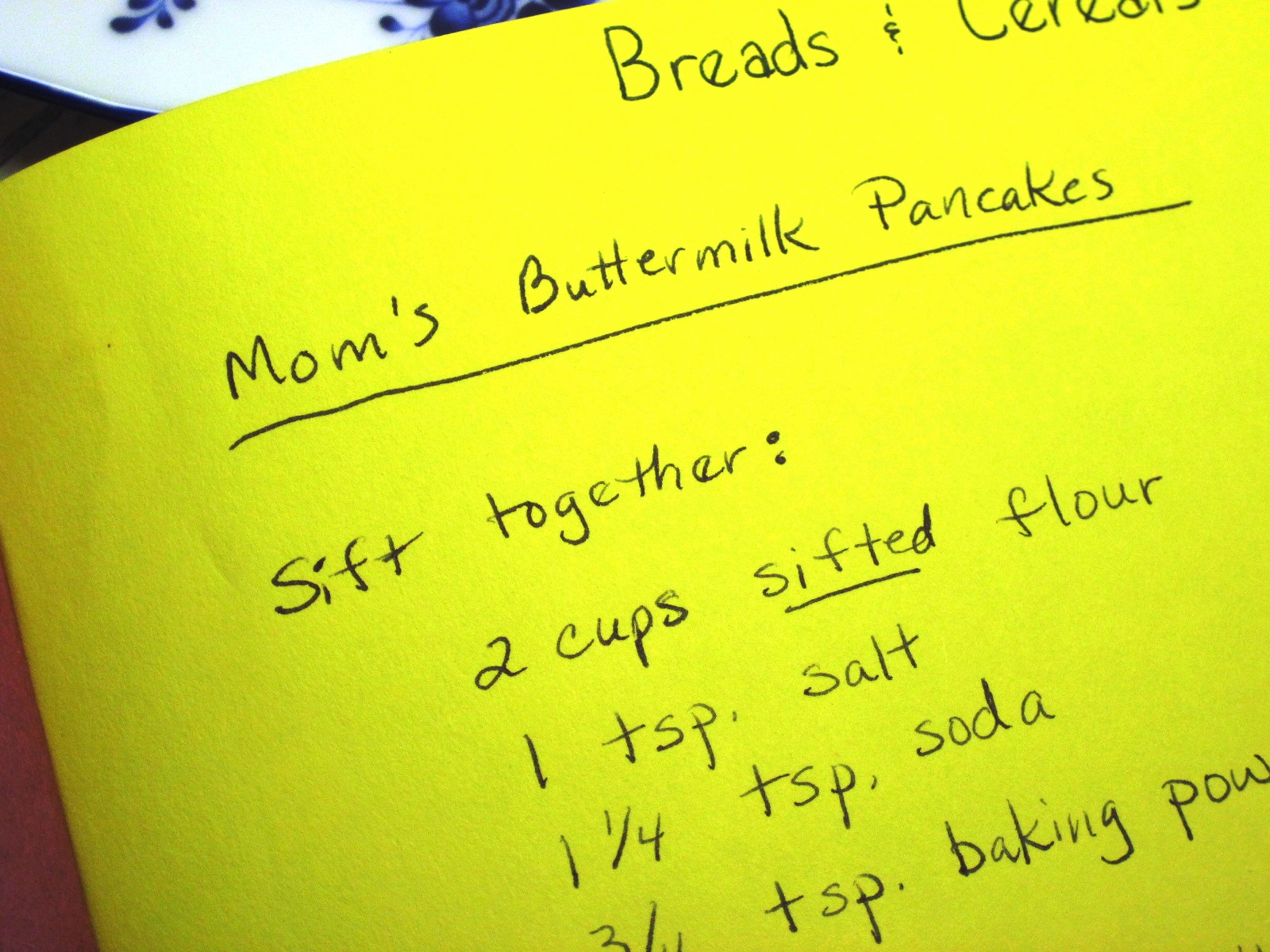
“Mom” is my mom, Hazel Wright; Grandma to a few of you loyal readers!
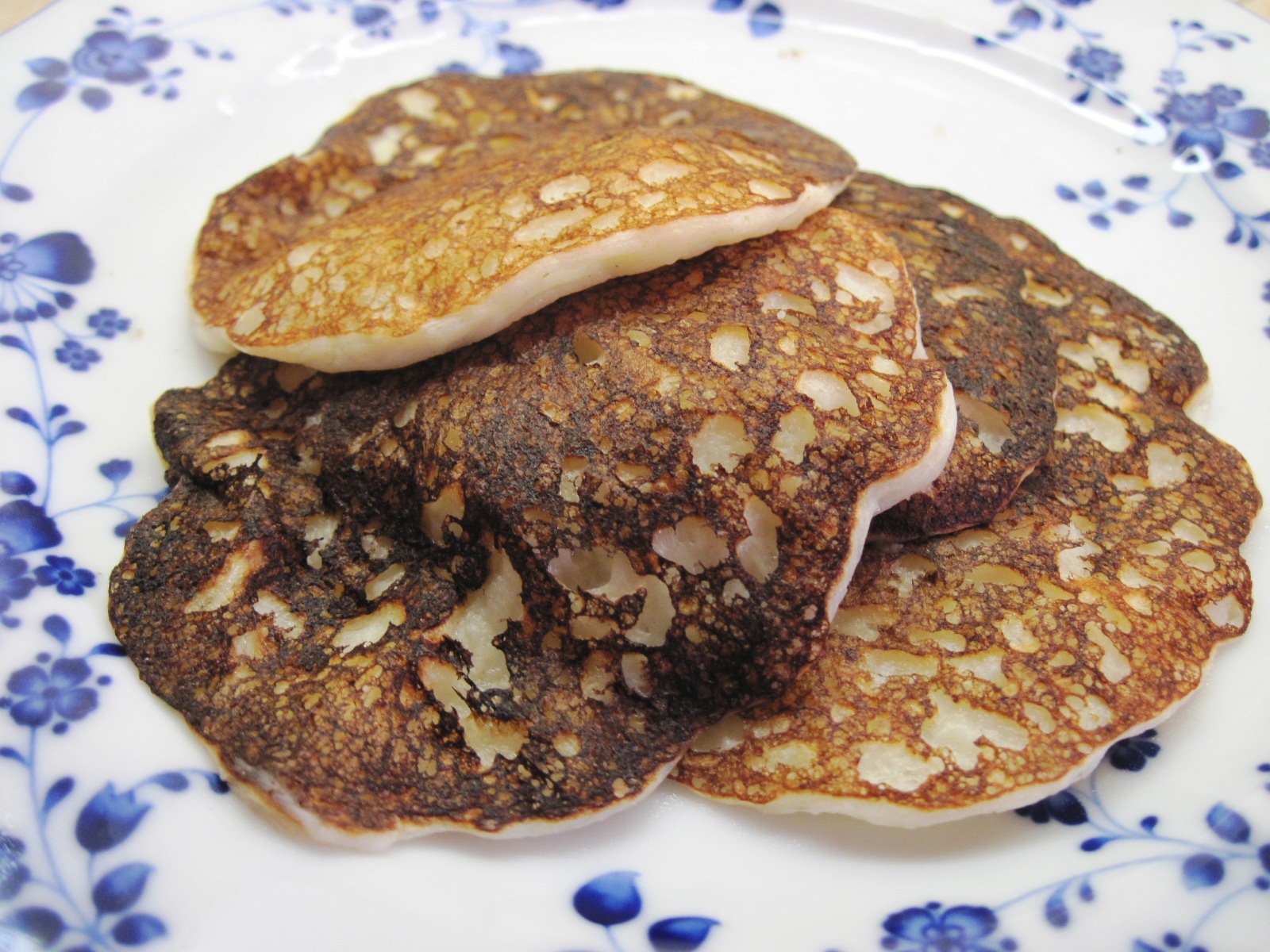
Staying at Grandma and Grampa’s house on Bainbridge Island often meant a breakfast of fresh-squeezed orange juice, lots of bacon, and Mom’s Buttermilk Pancakes. It’s a recipe that Mom adapted from the one on a Darigold Buttermilk carton. She used twice as much buttermilk which makes the pancakes very light, almost like Swedish pancakes. The pancakes were cooked on her old electric griddle which did a fine job. We ate them with pure maple syrup, but Mom always had Log Cabin syrup for Dad because that’s what he preferred.
I copied the recipe and have been making them myself for about 25 years. I’ve had a couple of different stovetop griddles over the years. One was a two-burner griddle that worked well, but it had a non-stick coating that eventually started chipping off. Another was too lightweight to heat evenly.
I finally discovered Lodge’s cast iron griddle which works perfectly and should last forever.

The key is to give it plenty of time to heat up over medium – medium high heat. (On my electric stove, just over medium heat works well.) When it’s had enough time to heat up, it will be hot all the way out to the edges. (You could actually use a large cast iron skillet, but it’s definitely easier to flip the pancakes on a griddle.)
You’ll notice in the photo of my hand-written recipe that it calls for sifted flour. I find that sifting the flour is an unnecessary extra step. Mom did sift her flour, but I haven’t done that for years.
Mom’s Buttermilk Pancakes
(Adapted from a recipe on a Darigold Buttermilk carton)
Serves 4 – 6 (you can easily cut in half to serve 2 – 3)
~~~
Stir together:
2 cups (240g) flour
1 tsp. salt
1 ¼ tsp. soda
¾ tsp. baking powder
Beat together well:
2 eggs
4 cups buttermilk
¼ cup melted butter
1. Preheat your griddle until it’s quite hot. (A drop of water will immediately sizzle when it’s hot enough.)
2. Combine the dry ingredients and the buttermilk mixture and stir until the batter’s just barely mixed. It will be a bit lumpy.
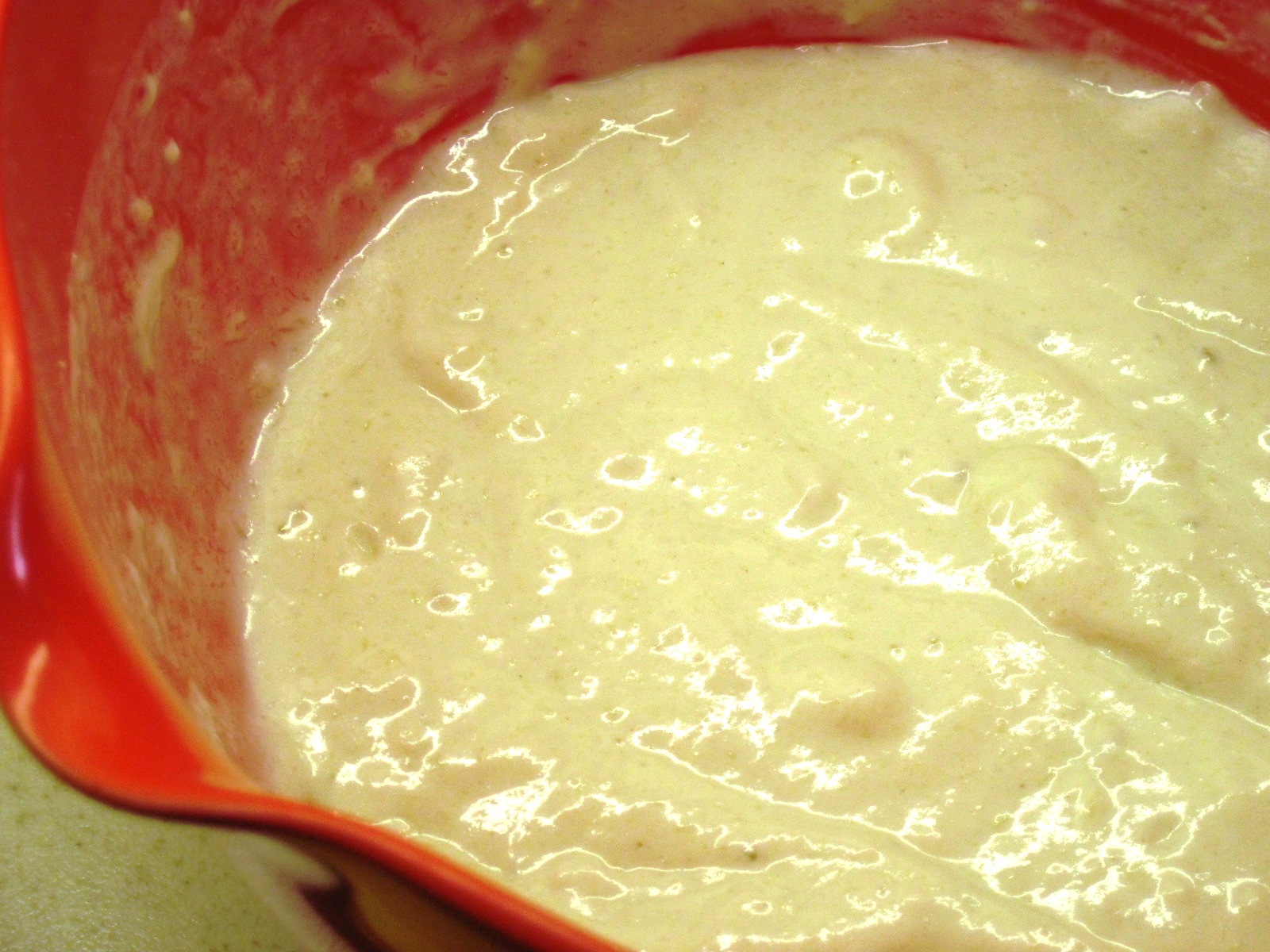
3. Ladle the batter on the griddle when it is hot enough.
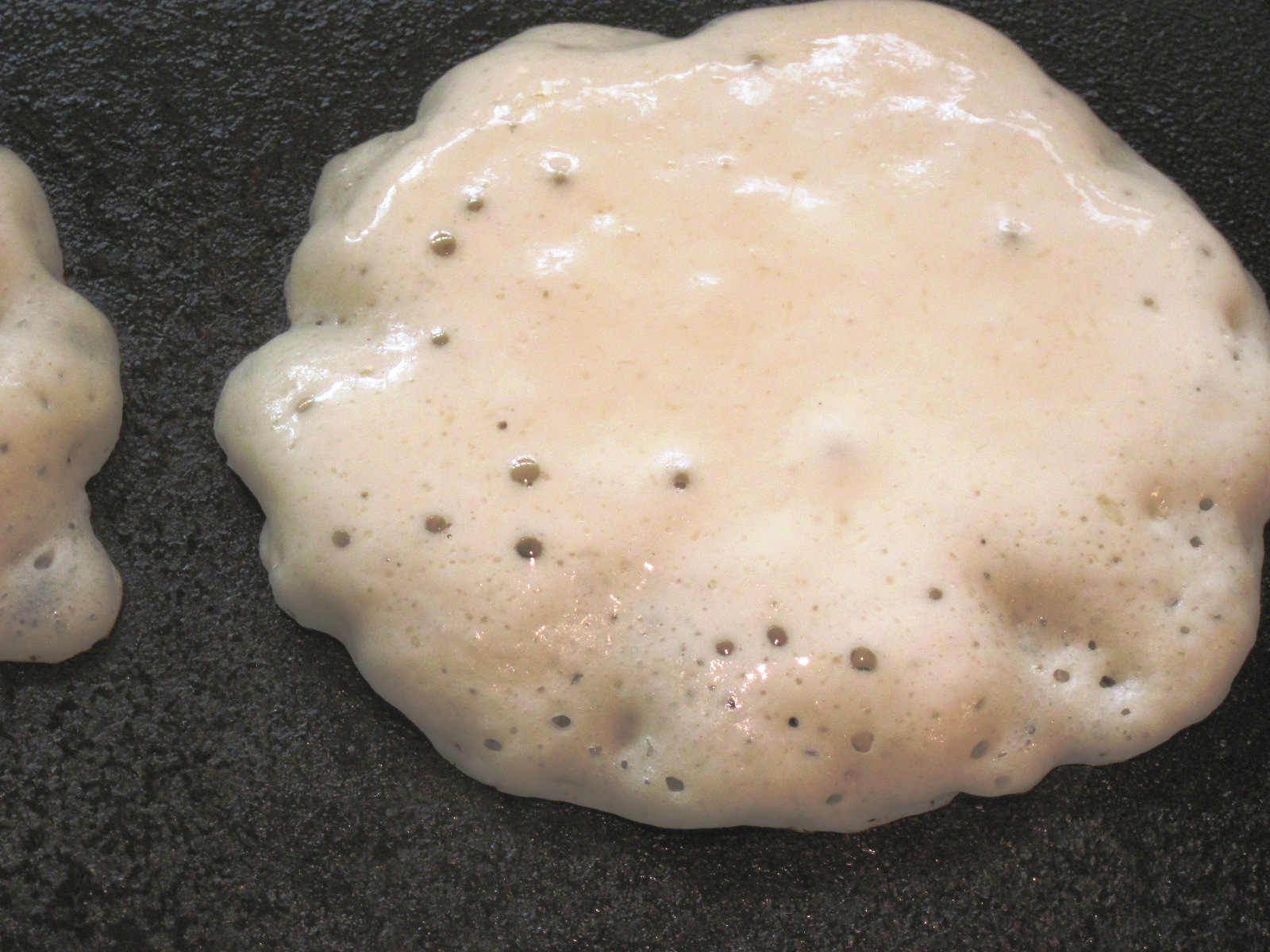
4. Cook until the pancakes are dry around the edges and there are bubbles on the top. The one below is just about ready.
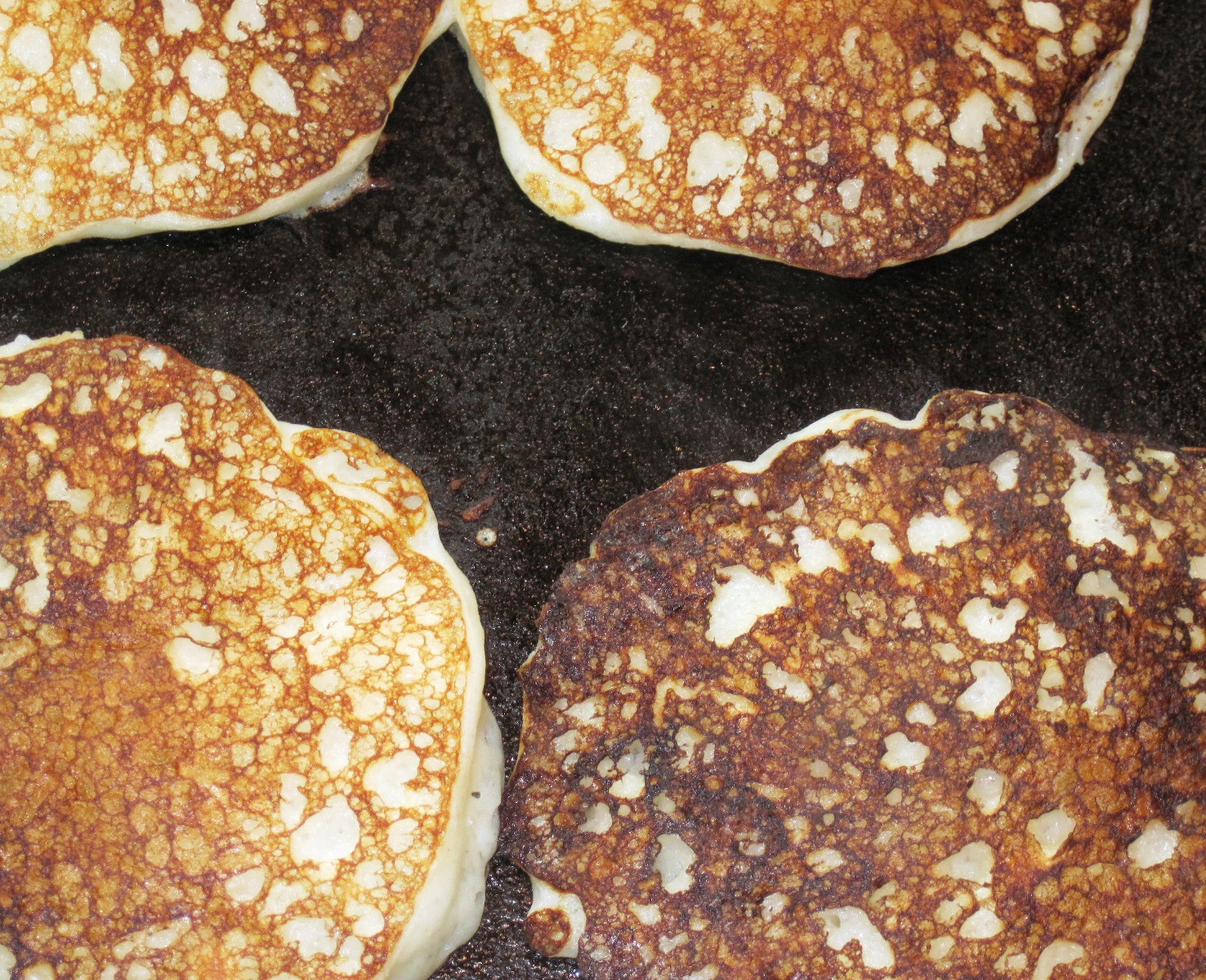
5. Flip and cook a minute or two more.
6. Serve with pure maple syrup, good preserves, or (Bob’s favorite) honey
Leftover pancakes can be cooled on a rack (helps to keep them from sticking together), and refrigerated. They can be reheated in the microwave pretty successfully for a quick Monday morning breakfast.


 In the kitchen with Kath