Welcome!
You'll find over 470 of my favorite recipes here, including ideas for Quick meals, Cooking for 2, Feasting on Leftovers, and cooking with 5 Ingredients or Less. I'm adding new posts regularly; you can subscribe by email or RSS feed if you'd like to receive the latest recipes. Bon appétit!
Turkey Carcass Soup
By Kath Dedon
.
Turkey Carcass Soup might be the best reason to roast a Thanksgiving turkey! This recipe is adapted from one by Jane Brody in her Good Food Book; she says her husband is convinced that she roasts turkey just for the carcass for this soup.
.

~
I like the fact that it makes use of the whole turkey. The wings are cut off and saved for the soup. The rest of the carcass is ready for the soup after most of the meat has been cut away. Leaving some of the meat on the bones adds a ton of flavor to the turkey broth. Be sure to save the skin to add to the stock pot, too!
I always save about 1 cup of turkey meat to add to the soup. After giving “its all” in the long simmer for the stock, the meat that’s left on the bones is not that great.
After making the turkey stock, I use about 6 cups of it to make Turkey Carcass Soup, and I freeze the rest for future recipes.
The recipe calls for barley or rice. It’s great either way. This time I used brown rice; it holds up better than white rice.
Ms. Brody uses ½ cup of chopped mushrooms in her recipe, which is not enough for me. I used 2 cups of sliced mushrooms.
Bob loves this soup! It should have made 4 servings, but he had “seconds” last night, so there’s just enough for 2 small servings for lunch today.
.
Ready for the stock pot!
~
Turkey Carcass Soup
(Adapted from the recipe in Jane Brody’s Good Food Book)
.
~
Soup Serves 4 (with extra broth to save for other uses)
a
Turkey Broth
1 turkey carcass, broken in pieces
12 – 18 cups water, or enough to cover the carcass completely (In my 12-quart pot I use 18 cups.)
1 large onion, coarsely chopped
1 large carrot, cut in about 6 pieces
2 large stalks of celery, each cut in about 6 pieces
2 cloves garlic, cut in half
Bouquet garni, made by tying in cheesecloth 6 sprigs fresh parsley (or 2 teaspoons dried) and a few sprigs fresh thyme (or ½ teaspoon dried)
1 bay leaf
2 – 3 teaspoons Kosher salt (depending on how much water you add)
.
Dried parsley and fresh thyme
~
1. Put everything in a large pot (I used a 12-quart stock pot). Bring to a boil. Reduce the heat so it is barely simmering. (You should just see a tiny bubble surface now and then.) Partially cover so the stock will reduce a bit and get more concentrated, and simmer for 3 – 4 hours.
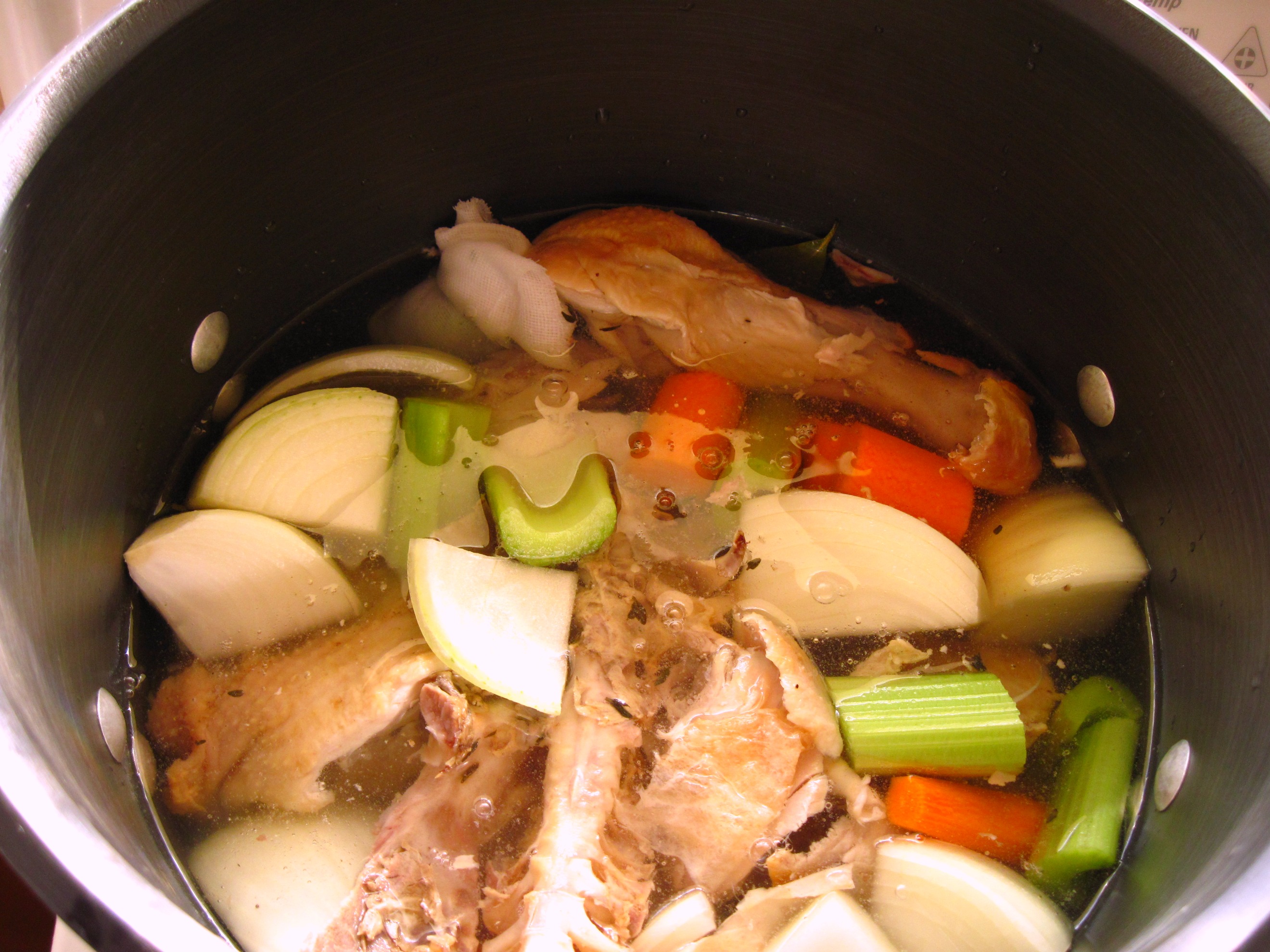 ~
~
2. Strain the stock and discard the turkey and vegetables.
3. Use 6 cups for the soup; the rest can be frozen for later use.
a
Soup
2 tablespoons butter
¼ cup minced onion
2 cloves garlic, minced
1 cup diced carrot (about 1 large)
½ cup diced celery (about 1 large stalk)
2 cups sliced mushrooms
1½ tablespoons flour (substitute sweet rice flour, also known as mochiko, for gluten free)
6 cups turkey broth
1 teaspoon marjoram
1/3 cup raw brown rice (or 1/3 cup raw barley)
Salt and pepper, to taste
1 cup diced turkey meat
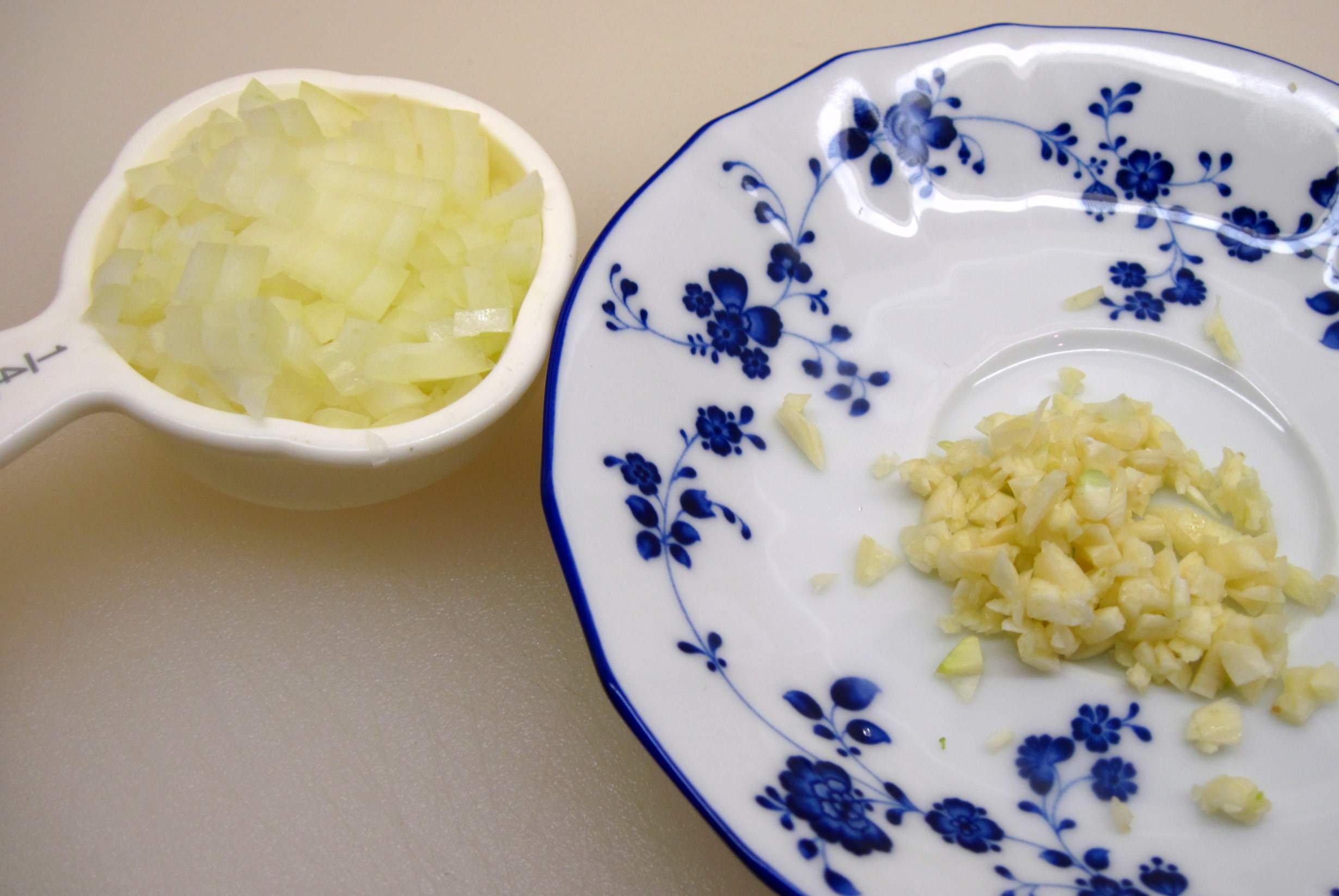
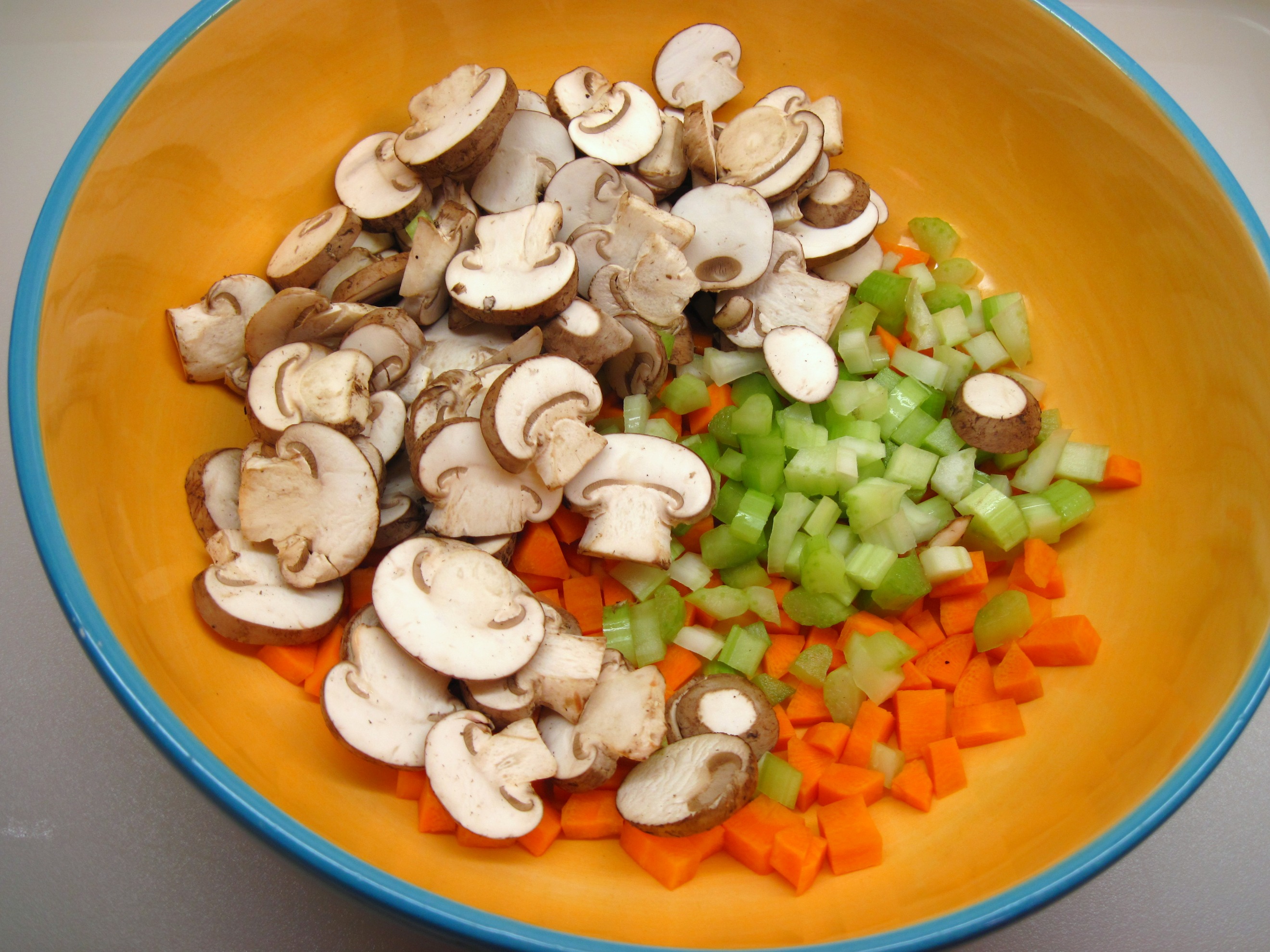
1. Have all of the vegetables cut and ready to go.
2. Melt the butter in a large pot. Add the onion and garlic; cook for a few minutes until they are softened.
3. Add the carrot, celery, and mushrooms to the pot. Lightly salt and cook, stirring occasionally, for about 5 minutes.
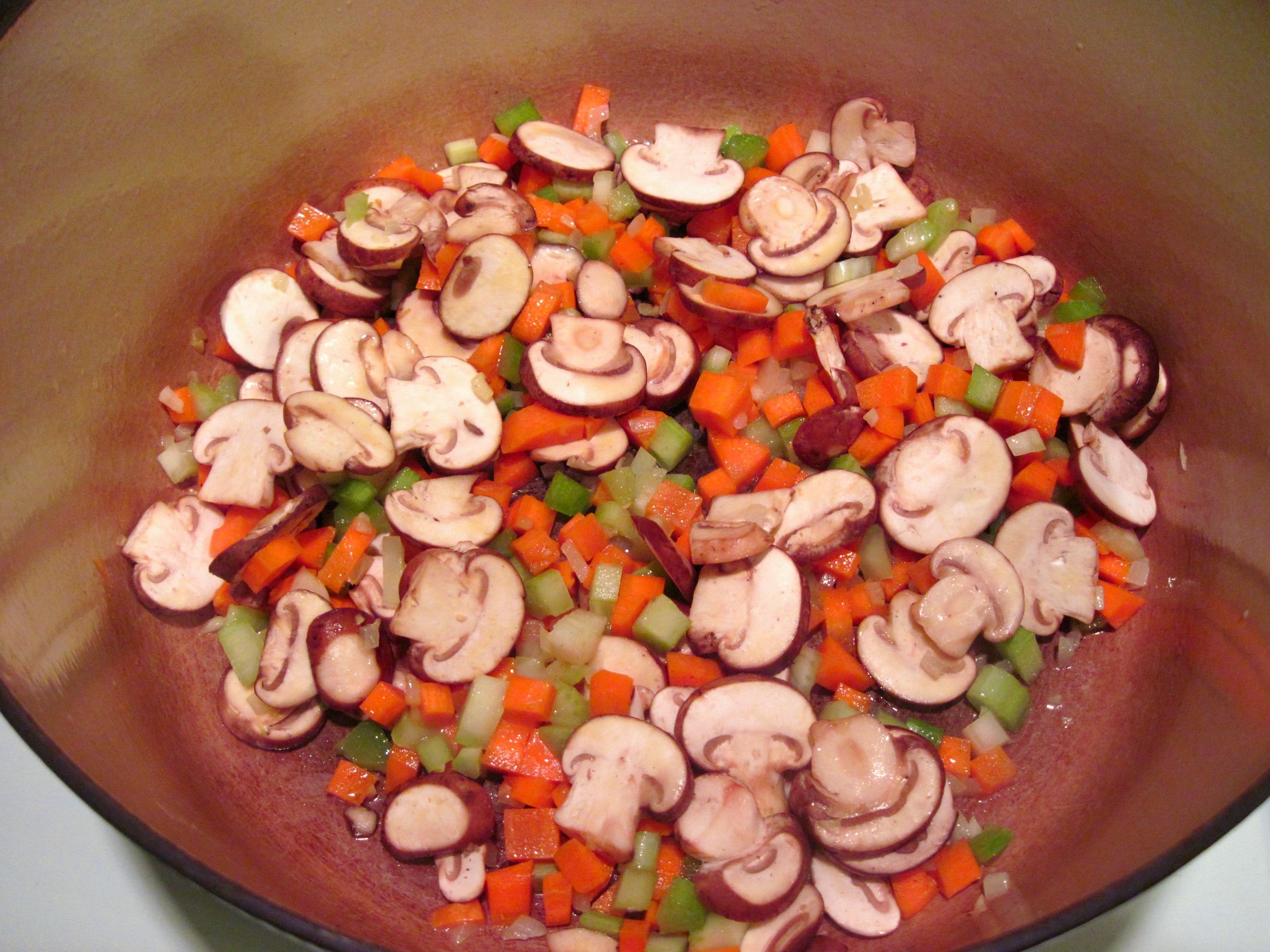
~
4. Add the flour; cook, stirring for about 1 minute.
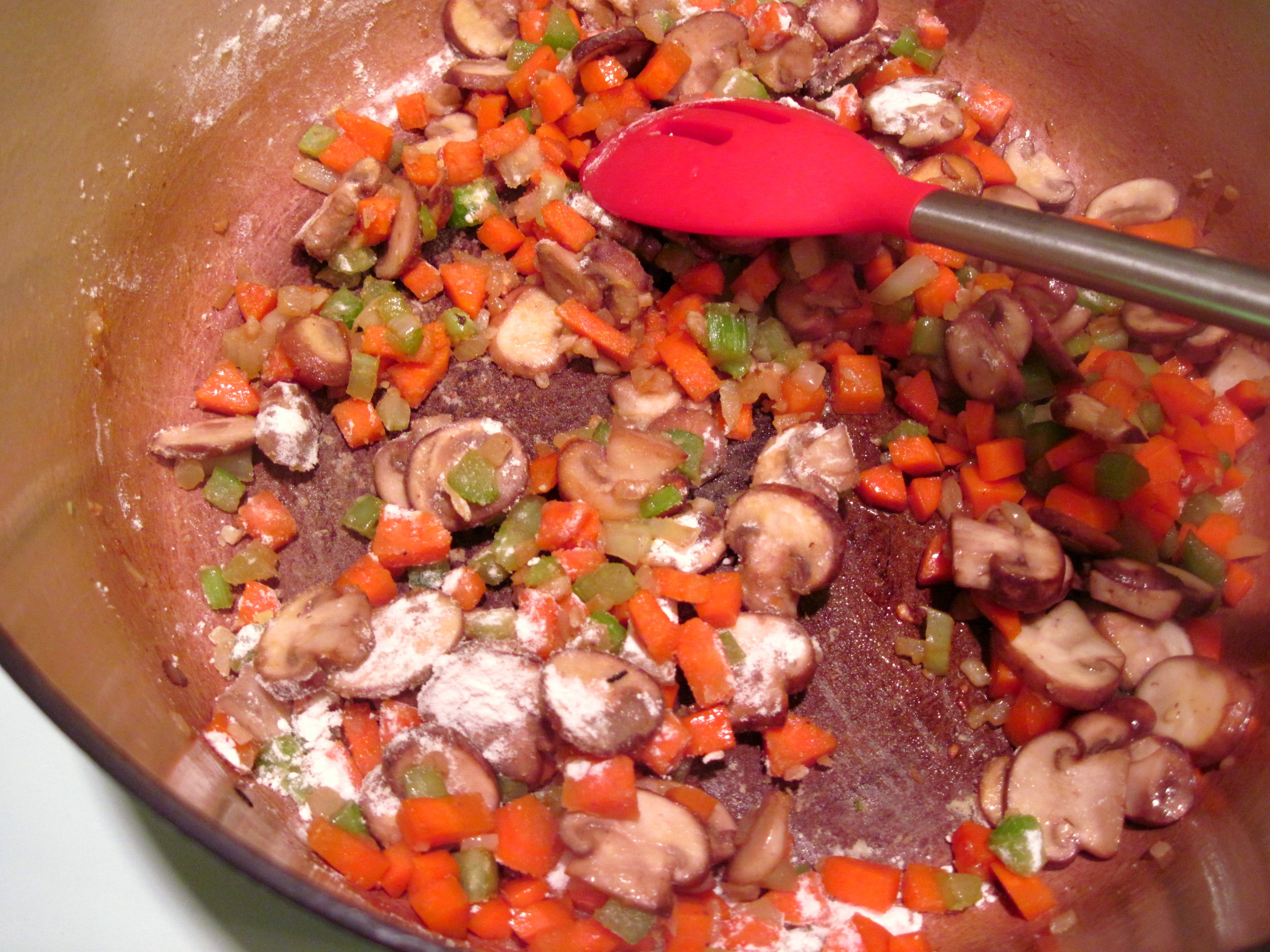
5. Remove the pot from the burner. Pour in a bit of the broth and stir until it is well blended. Add the rest of the broth.

6. Return the pot to the burner. Add the marjoram and the rice. Bring to a boil; reduce heat so it’s simmering. Cover, and simmer for 1 hour.
7. Add the turkey meat. Taste for seasoning; add salt and pepper, if necessary. Enjoy!

Share this:

Holiday Roast Turkey and Gravy
By Kath Dedon
.
I can’t believe that I failed to get a picture of my Holiday Roast Turkey before I carved it! I guess it doesn’t matter too much, though, because my turkey was not the most beautiful Thanksgiving bird. My roasting method was chosen to get the tastiest turkey, even though it meant I would not have a Norman Rockwell turkey to photograph.
.
 (image from media.photobucket.com)
.
Over the years, I have tried many different turkey roasting methods: high heat, frequent basting, brining, frequent turning, indirect grilling, a countertop roaster….and probably more that I’m forgetting.
This time I went back to the method that has never failed to produce a well-cooked turkey with moist, tender breast meat. It’s the way my mom usually roasted turkeys.
Basically, you put the turkey upside-down (breast-side down) on a rack and roast it until it’s done. That’s it. The turkey is self-basting because most of the fat is in the legs, thighs, and back.
The only down-side is the fact that you don’t get a beautifully browned breast, but I’d rather have delicious breast meat than a beautifully photogenic turkey.
.
Here it is…..After I carved it!

~
Holiday Roast Turkey
.
.
Classic Herb Bread Stuffing is fantastic with the turkey!
.
If you buy a frozen turkey, be sure to allow enough time to defrost it. Allow 1 day for every 4 pounds, 3 – 4 days for a 12 – 16 pound turkey.
.
1 turkey (mine was 12 pounds), fresh or fully defrosted
Salt and pepper
1 yellow onion, peeled and quartered
3 sprigs thyme
1 stalk of celery, cut into 4 pieces
1 carrot, peeled and cut into 4 pieces
4 tablespoons butter, melted
~
1. Take the turkey out of the refrigerator about an hour before roasting
2. Preheat the oven to 325˚.
3. Remove the plastic or metal clip that holds the drumsticks together.

4. Remove the giblets and turkey neck from the cavity of the turkey. (I usually discard the liver. Reserve the giblets and neck to make broth, if desired.)*
5. Rinse the turkey inside and out, and dry it well with paper towels.
6. Generously salt the cavity of the turkey.
7. Put half of the onion and the 3 sprigs of thyme inside the cavity.
8. Put a V-shaped roasting rack in a roasting pan*; put the other half of the onion, the celery, and the carrot in the bottom of the pan. Add 3 cups of water to the pan.
*For many years I used a disposable aluminum roasting pan. If that is what you’re using be SURE to use it with a sturdy baking sheet underneath. They are much too flimsy to safely handle a turkey on their own.
9. Salt and pepper the breast-side of the turkey. Brush with half of the melted butter.
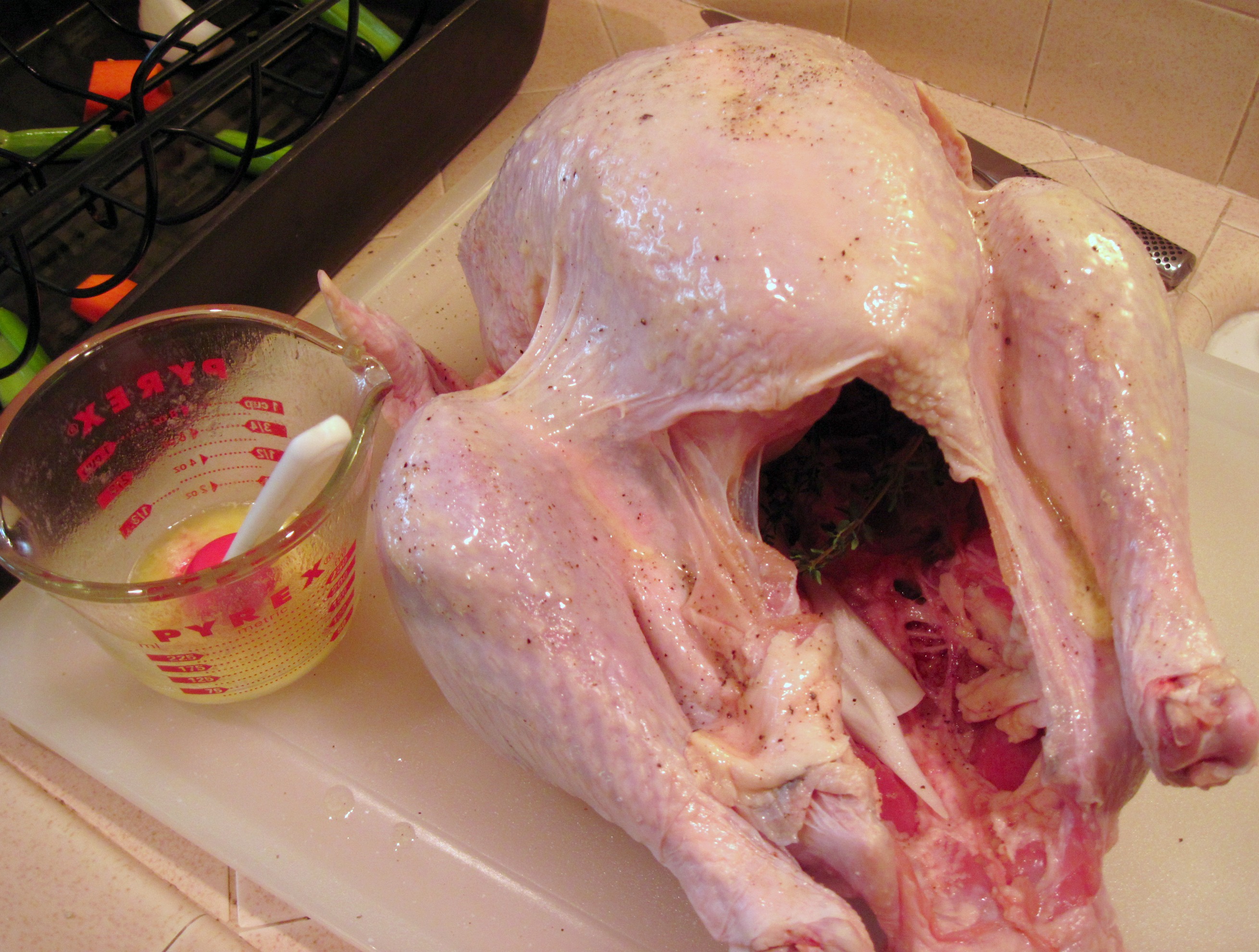
10. Put the turkey breast-side down on the rack in the roasting pan.
11. Salt and pepper the back of the turkey and brush with the rest of the melted butter.
.
Upside-down, brushed with melted butter, and ready for the oven!
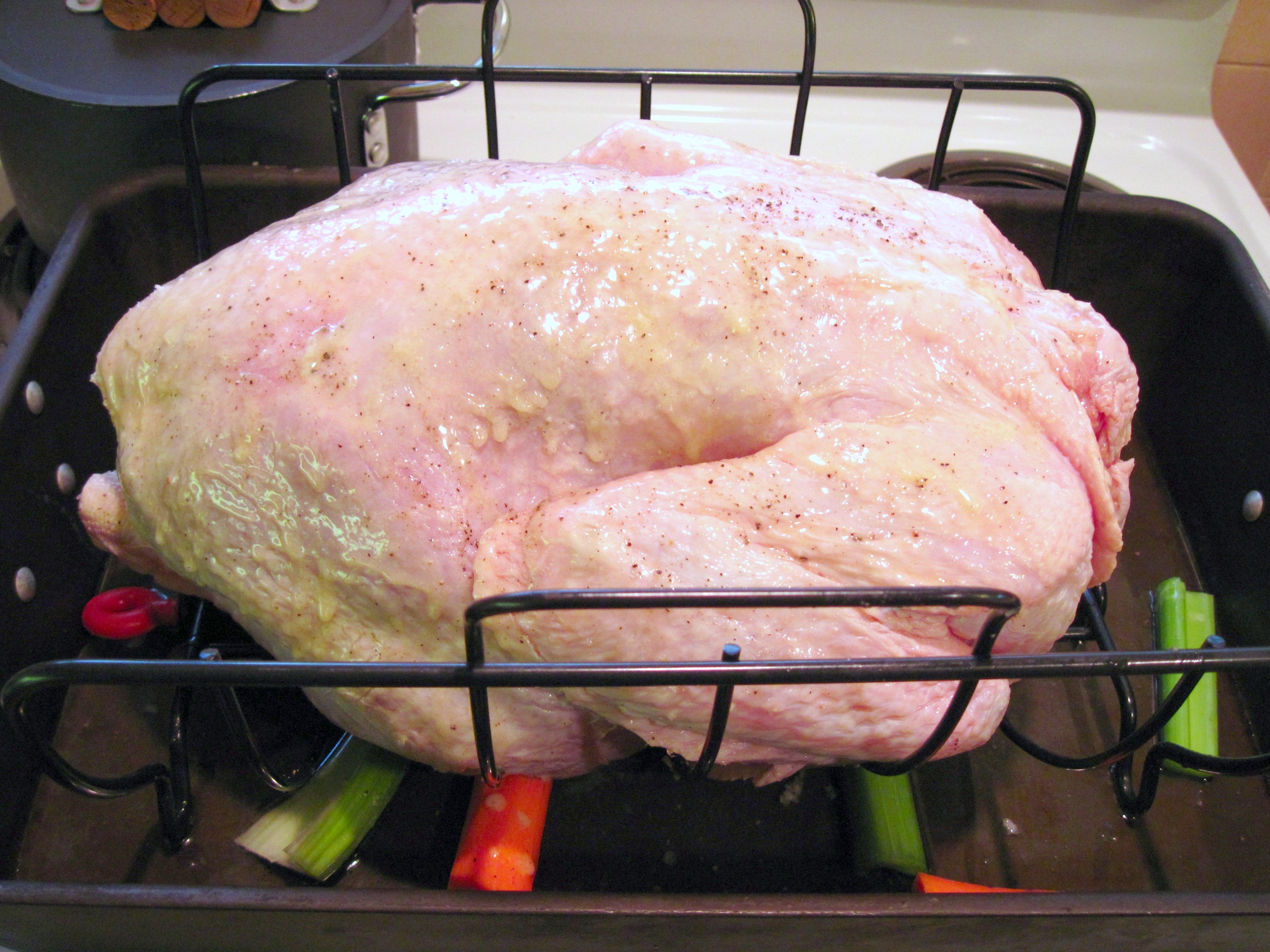
12. Roast for 15 minutes per pound (about 3 hours for a 12 pound turkey)
13. After the first hour, add more water to the pan, if necessary. You want to maintain about 3 cups.
14. When the turkey is almost done, turn it over so the breast will get a bit of color. (Silicone oven mitts make this task much easier!)
.
At this point you can use a bulb baster to remove some of the broth and drippings for stuffing. Add more water so there’s still about 3 cups left in the pan.
 ~
~
15. Use a good thermometer to check the turkey. It’s done when the thighs, at the thickest part, are 180˚ and the breasts are between 165˚ and 170˚.
A great tip from Global Gourmet: You can test the accuracy of your digital thermometer by inserting the tip 2 inches into a pot of boiling water. At sea level, it should register 212˚.
16. When done, remove turkey from the pan and cover with heavy duty aluminum foil to rest for 30 minutes.
17. Remove and discard the vegetables from the pan. Strain the broth to use for gravy and/or stuffing.
*Using the giblets and neck for broth
Put the gizzard, heart, and neck in a 3 quart pot. Add half of a peeled yellow onion, a stalk of celery (cut in about 4 pieces), and a peeled carrot (cut in about 4 pieces). Add 3 – 4 cups of water or chicken broth. Bring to a boil. Reduce heat, cover, and simmer for 1 – 2 hours. Strain the broth to use for gravy and/or stuffing.

Turkey Gravy
(Adapted from Julia Child’s recipe in The Way to Cook)
.
Makes about 1¼ cups, serving 4. Double to serve 8. (I wish I had doubled it!)
Triple the recipe to serve 12 (Print the recipe that is tripled)
.
If you don’t have enough turkey broth, use what you have and add chicken broth to make 2 cups (or 4 cups, if you double it).
Bon Appétit found that King Arthur Gluten-Free All-Purpose Flour works well to make gluten-free gravy because it has no added gums (like guar gum, for example). I tried it and it worked great!
3 tablespoons turkey fat, skimmed from the top of the broth from the pan
1 tablespoon butter
2 tablespoons flour (Substitute King Arthur Gluten-Free All-Purpose Flour for gluten-free gravy.)
2 cups turkey broth
1/4 teaspoon fish sauce (optional; adds umami not fishy flavor)
Salt and pepper, to taste
.
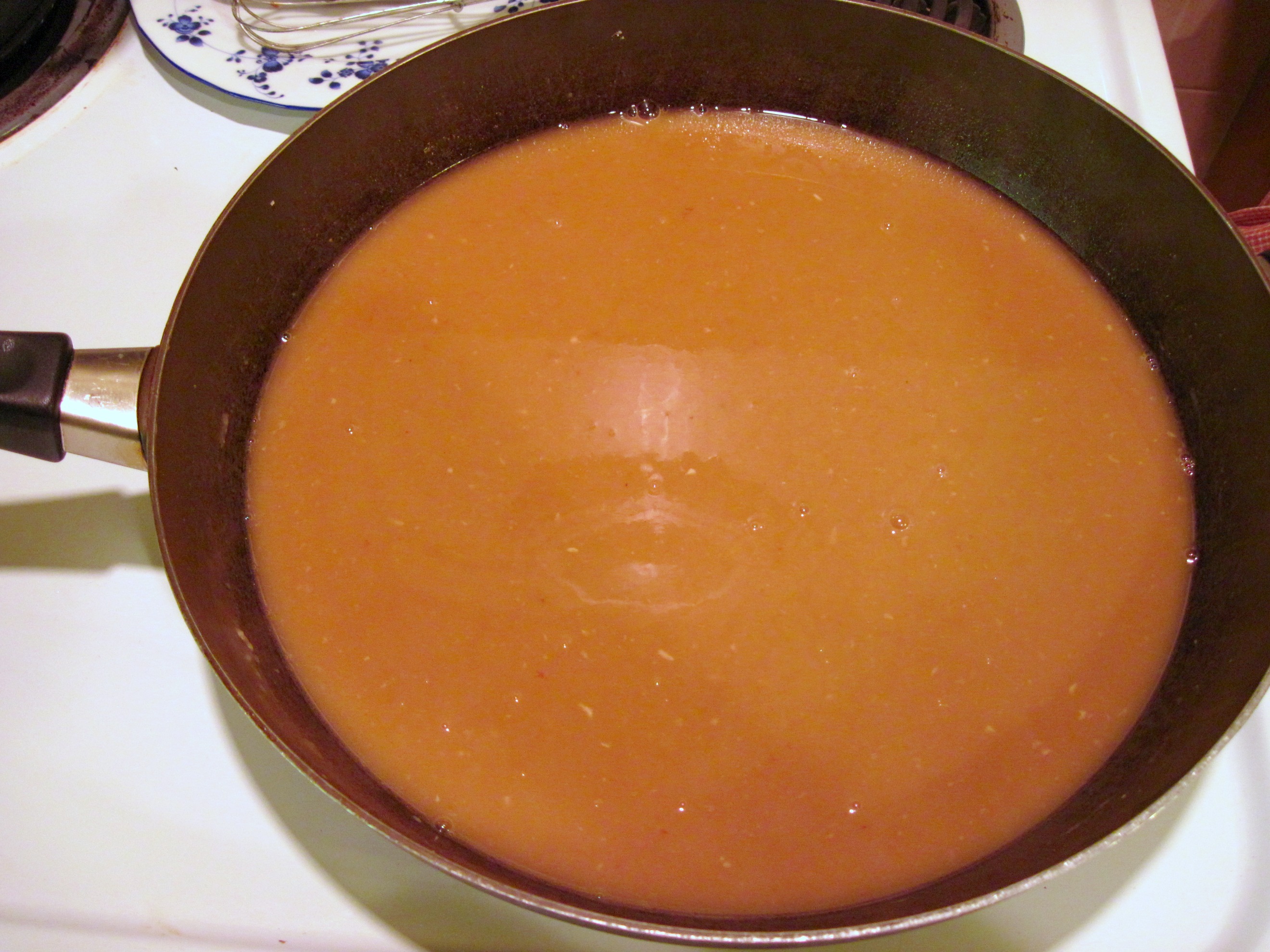
1. Melt the butter in the turkey fat over medium heat.
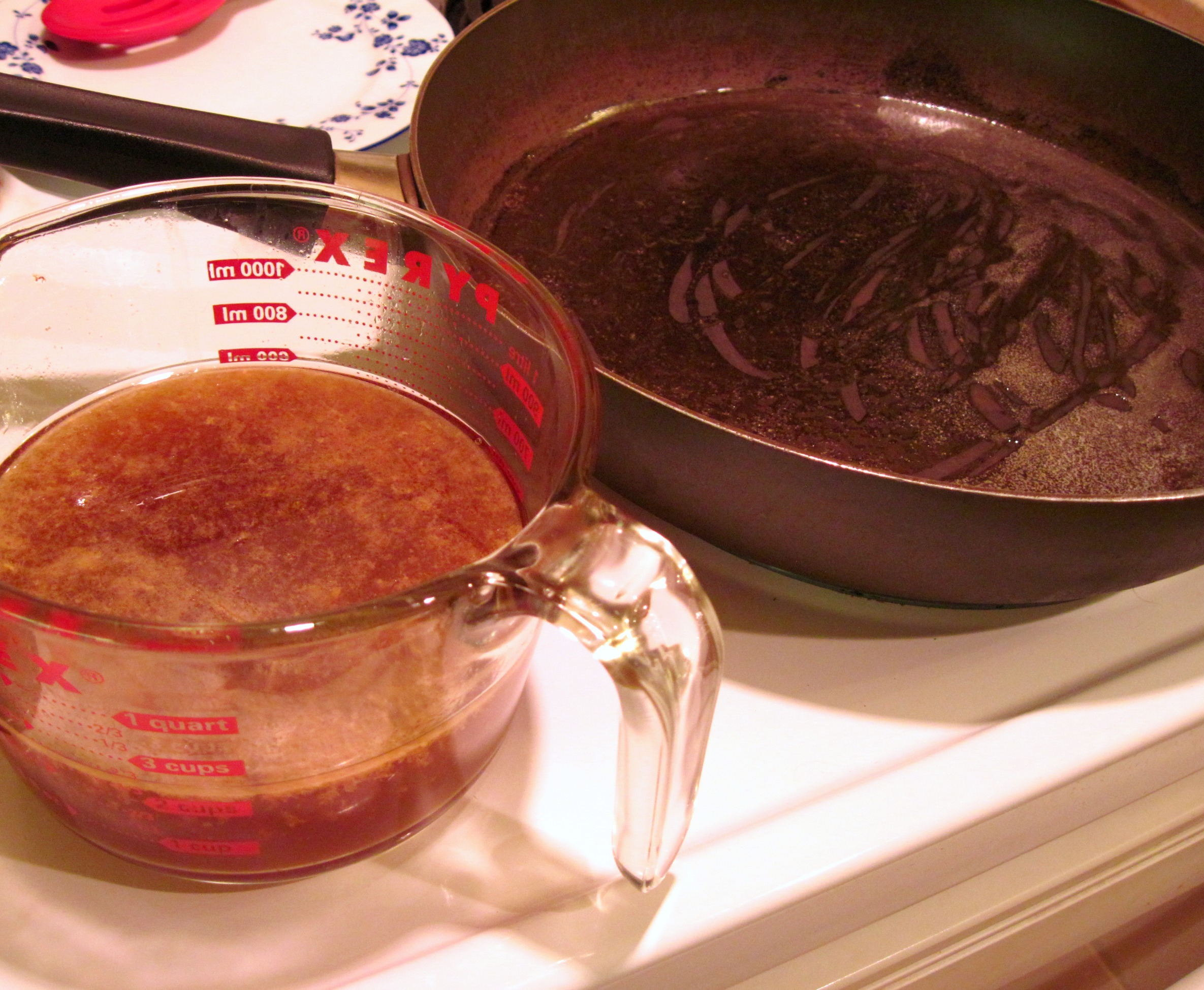
2. When the butter is melted, add the flour to make the roux. Cook, stirring constantly, for a few minutes. The roux will turn brown.
3. Remove the pan from the heat. Pour some of the broth in the pan and whisk vigorously until it is smooth and lump-free.

4. Whisk in the rest of the broth. Whisk in the fish sauce, if using.
5. Put the pan back on the burner; reduce the heat so it is just simmering. Cook, stirring occasionally, for about 10 minutes.
6. When the gravy is done, season to taste with salt and pepper.
Share this:

Classic Herb Bread Stuffing
By Kath Dedon
.
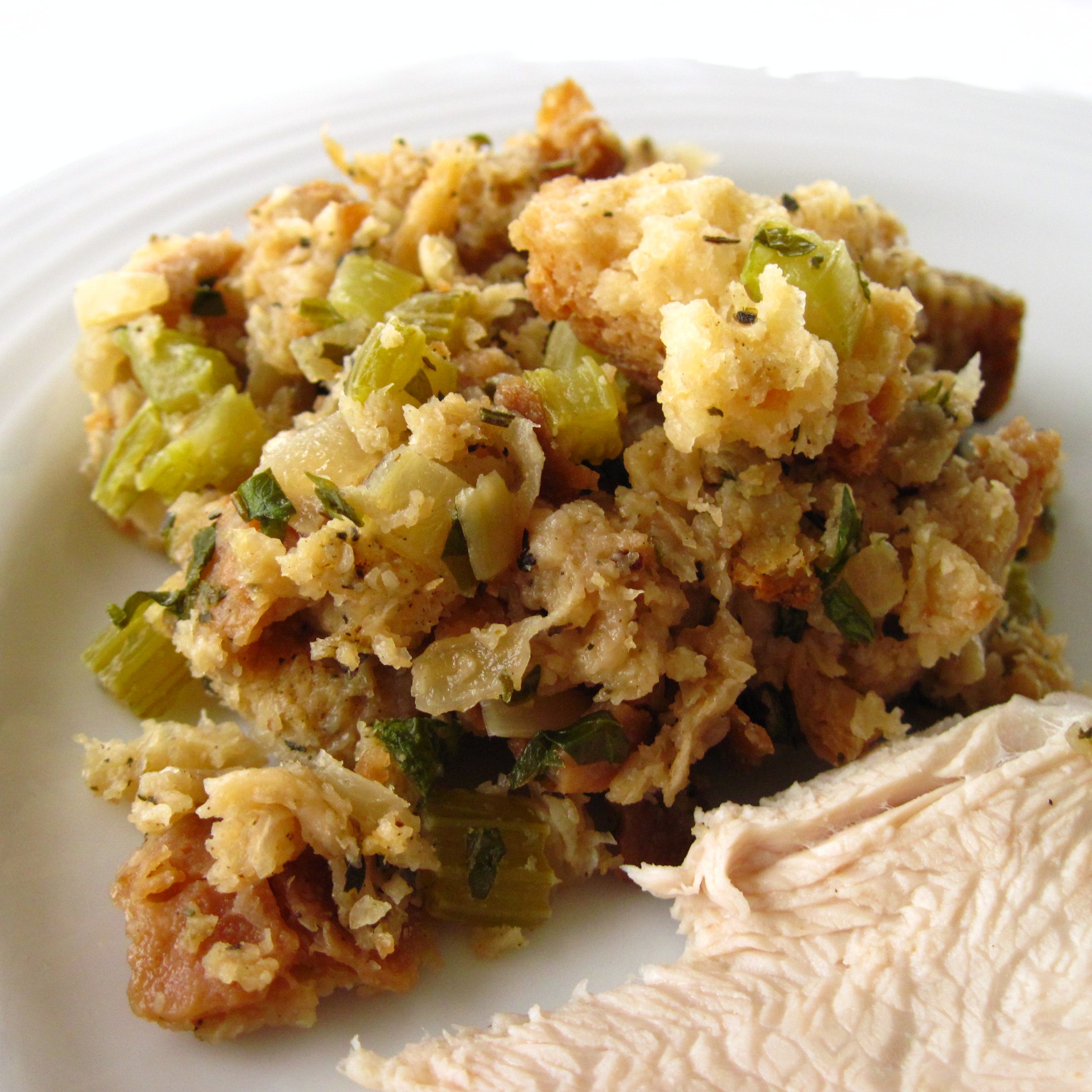
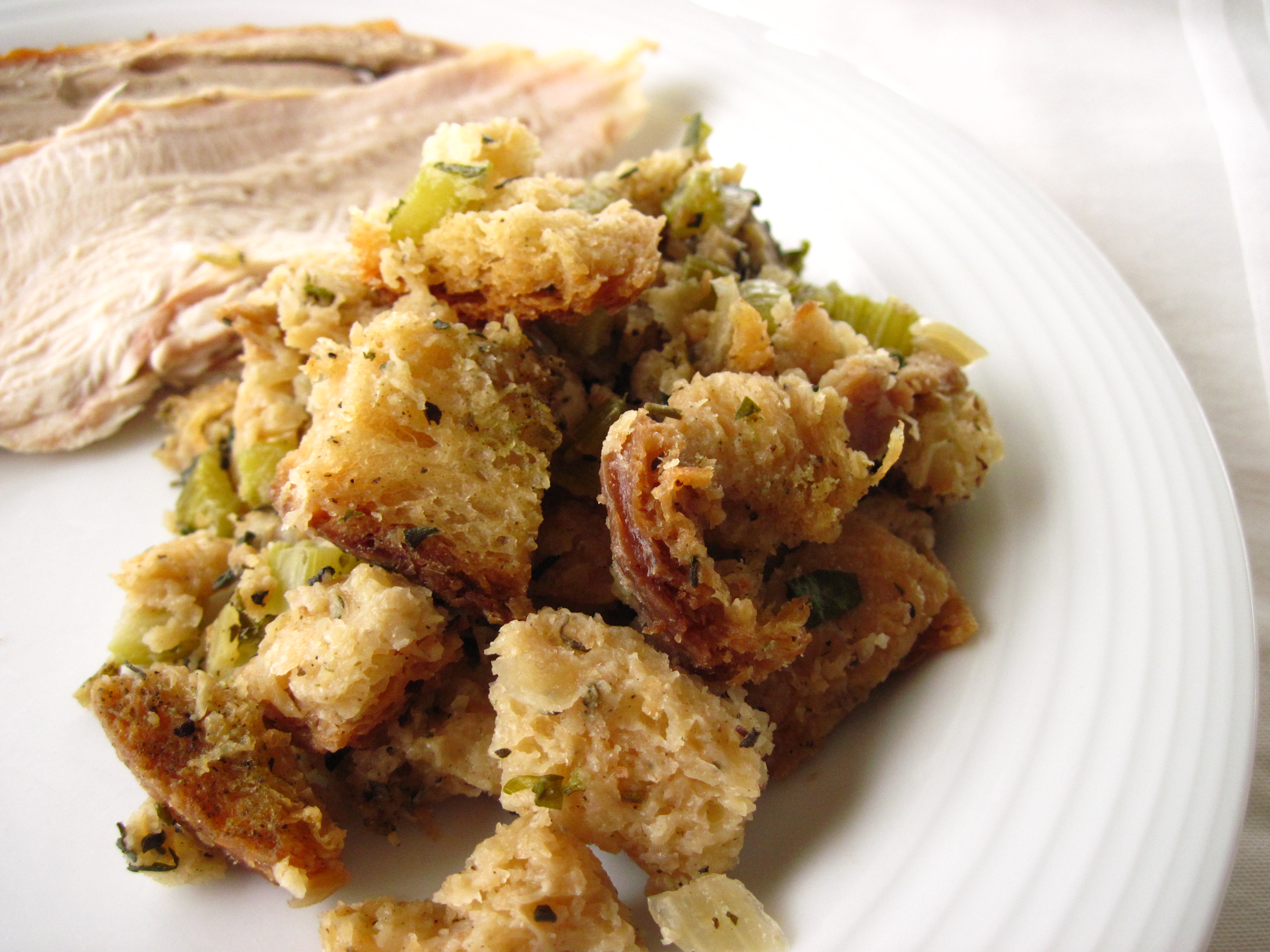
My Classic Herb Bread Stuffing is a recipe that’s adapted from the bag of Grand Central Baking Company’s Rustic Stuffing. I believe one of the reasons it works so well is because it starts with top quality bread. Grand Central Bakery, with locations in Seattle and Portland, makes outstanding artisan bread. I am glad that they turn some of their bread into toasted croutons for stuffing!
 ~
~
I bake the stuffing in a casserole instead of stuffing the turkey. It is so much easier – easier to get the turkey ready for the oven, and easier to serve the stuffing. Besides, a stuffed turkey can be overcooked by the time the stuffing inside reaches a safe temperature of 165˚. I have the casserole of stuffing ready for the oven by the time the turkey is done. While the turkey is “resting”, I bake the stuffing.
There is one major change that I make to the recipe on the bag; I use twice as much broth. Plus, I use a bulb baster to get some of the broth under my roasting turkey and add it to the stuffing. The extra broth and the flavorful turkey drippings make the stuffing very moist and my Classic Herb Bread Stuffing tastes very much like it has been baked in the turkey.
In the past, I have added the optional 2 cups of toasted pecans to the stuffing and we enjoyed that version. I chose to leave them out this time, and the stuffing was still fantastic. If you love pecans, you might want to include them.
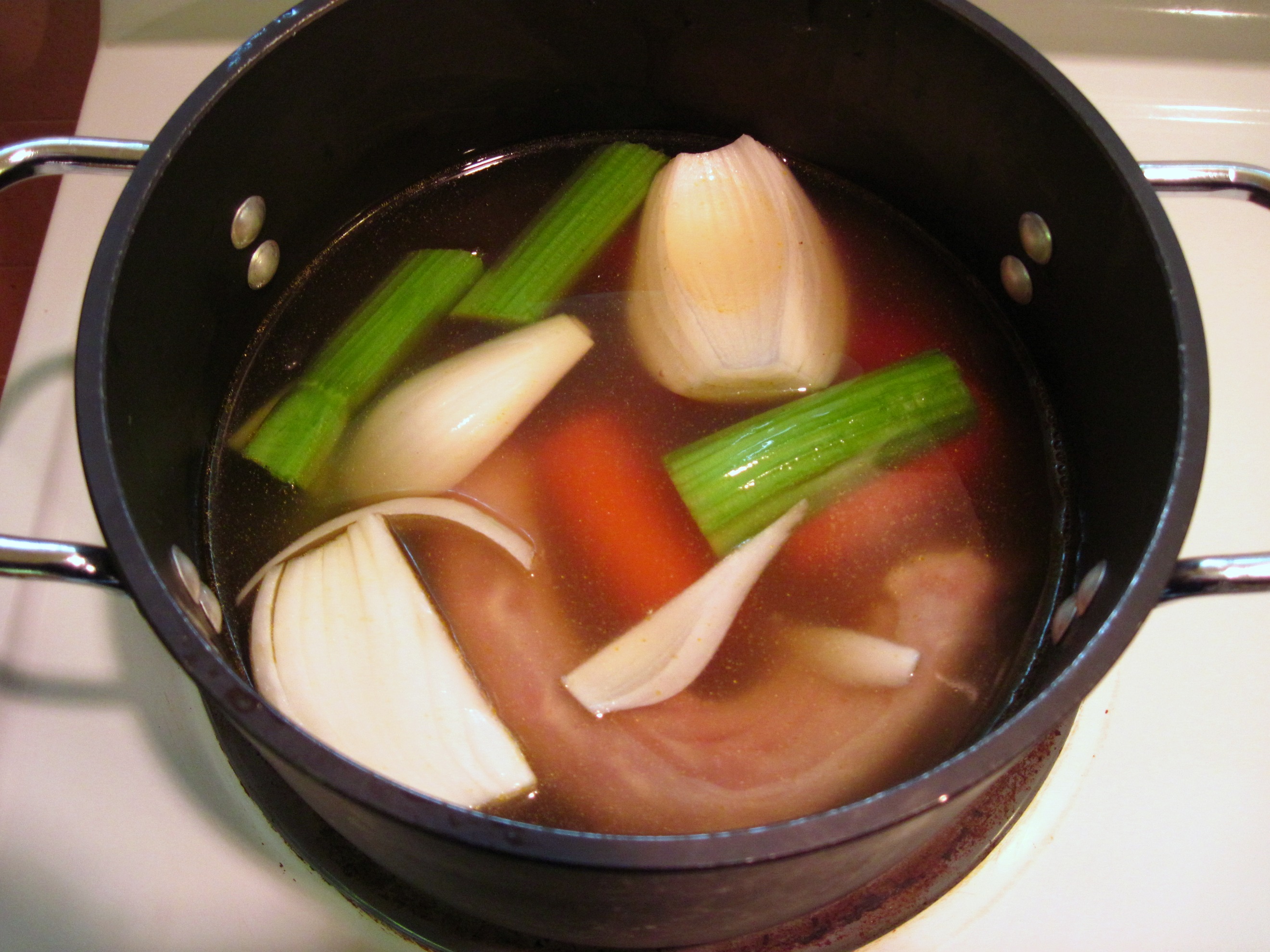
I usually make broth with the giblets (gizzard and heart, but not the liver) and the turkey neck. This time the turkey included the neck, but no giblets. I used the neck, along with part of an onion, a carrot, and a stalk of celery in 2 cans of chicken broth to make a more “enriched” broth. I simmered it, covered, for a couple of hours and then had 2¼ cups of broth to use for the stuffing.
Onion, celery, and carrot for the broth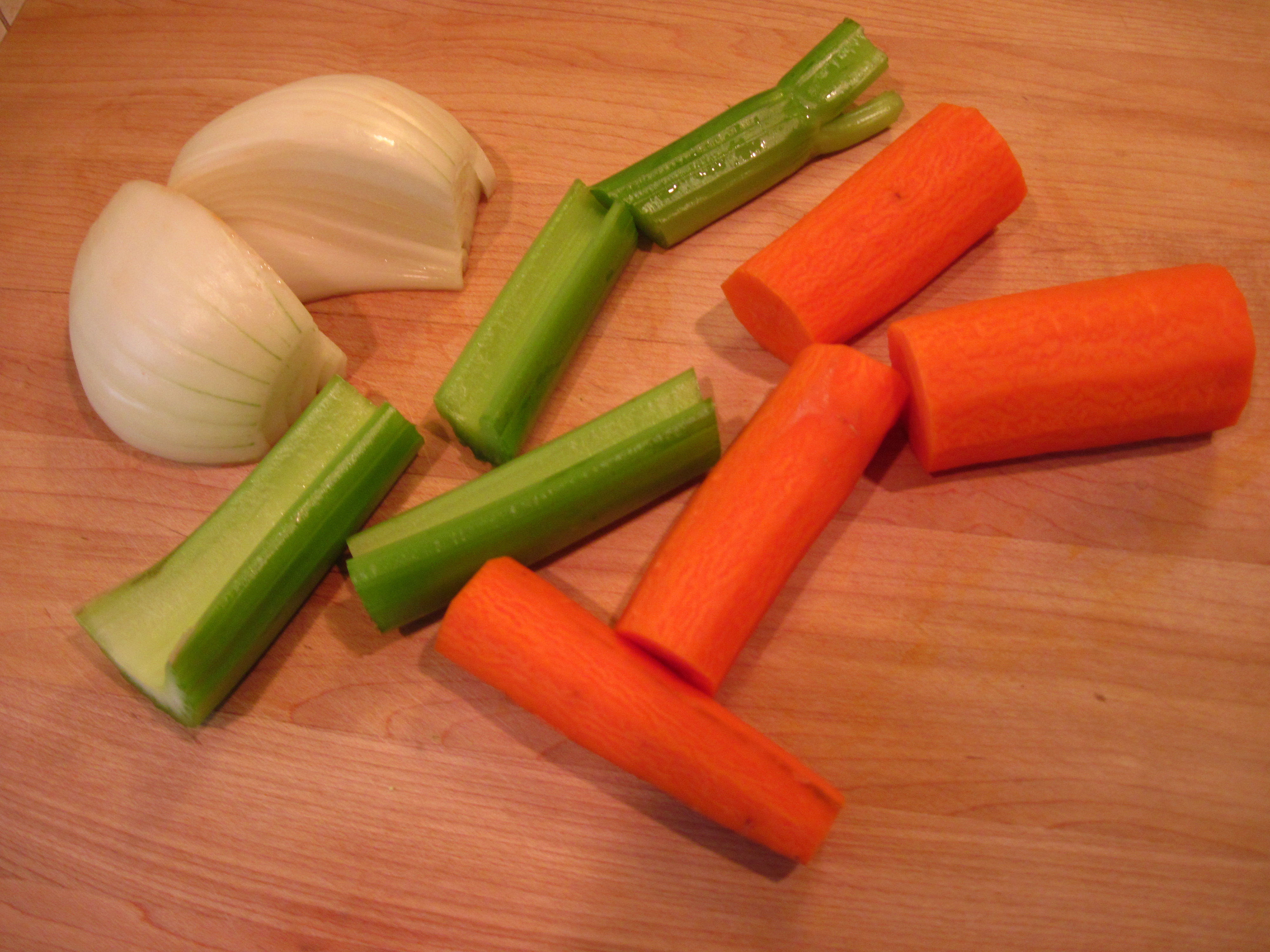
Turkey neck, vegetables and 2 cans of chicken broth
 ~
~
Classic Herb Bread Stuffing
(Adapted from the recipe on the bag of Grand Central Baking Company’s Rustic Stuffing)
.
Serves 8, doubles easily
.
.

~
1 (12-ounce) package of Grand Central Baking Company’s Rustic Stuffing (or about 10 cups bread stuffing)
8 tablespoons butter (1 stick), plus more for greasing the casserole and dotting the top)
2 ¼ cups diced yellow onion (about 1 large)
1 1/3 cups diced celery (about 3 large stalks)
2 large cloves minced garlic
1½ tablespoons chopped fresh sage
1½ tablespoons chopped fresh thyme
¾ cup chopped fresh Italian parsley
2 teaspoons poultry seasoning
4 cups broth (1¾ cups of the broth was taken from the turkey roasting pan)
Salt, to taste
Pepper
Optional: 2 cups of toasted pecans
If your oven isn’t already in use for the turkey, preheat to 350˚.
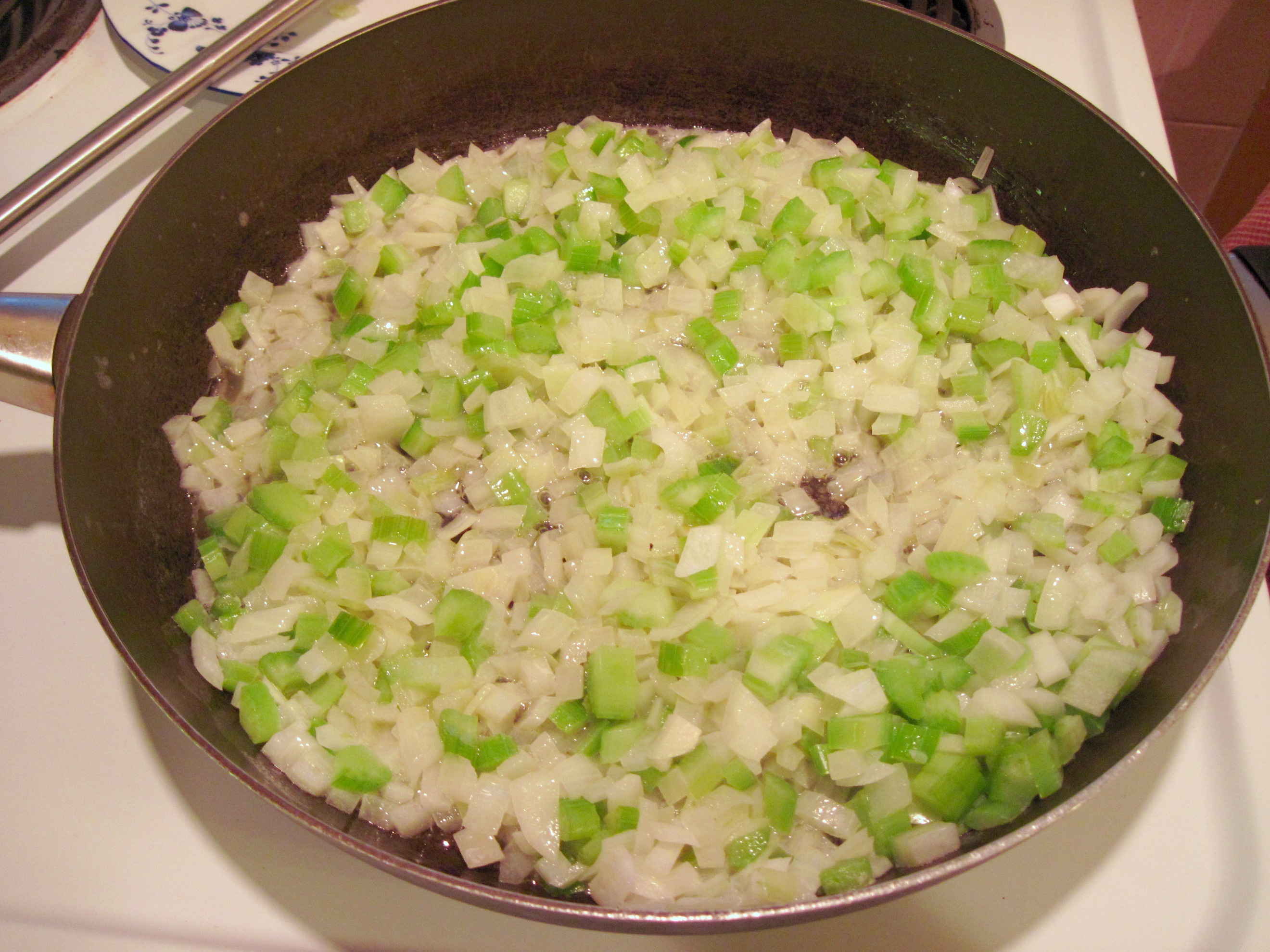
1. Sauté the celery and onion in the 8 tablespoons of butter until it is softened.
~
2. Add the garlic and cook for another minute.
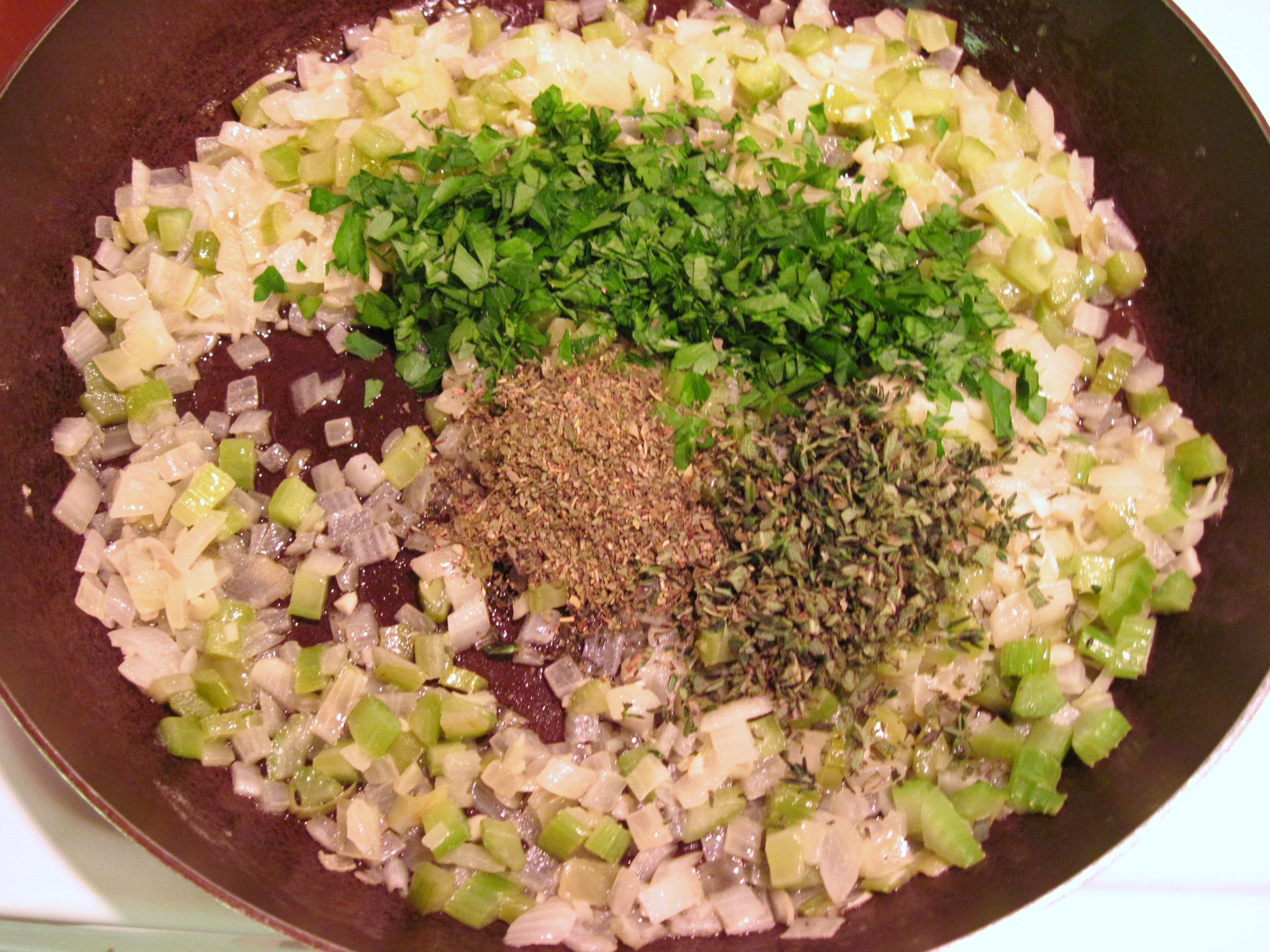
3. Stir in the sage, thyme, parsley and poultry seasoning.
 ~
~
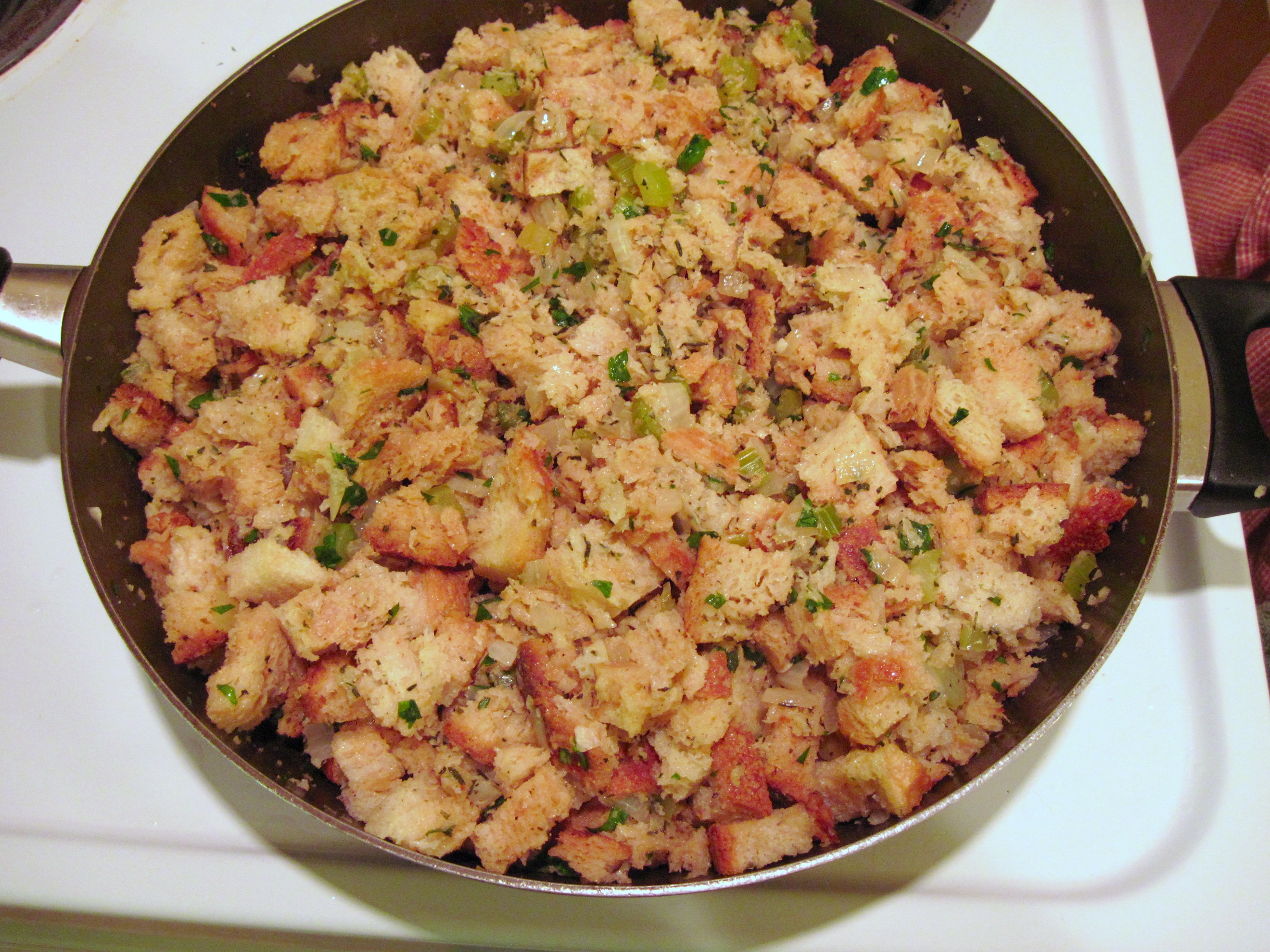
4. Add the stuffing, broth (best if some of it is from the turkey roasting pan), and toasted pecans, if desired. Gently stir until the stuffing is well combined.
Using a bulb baster to get some broth from the turkey pan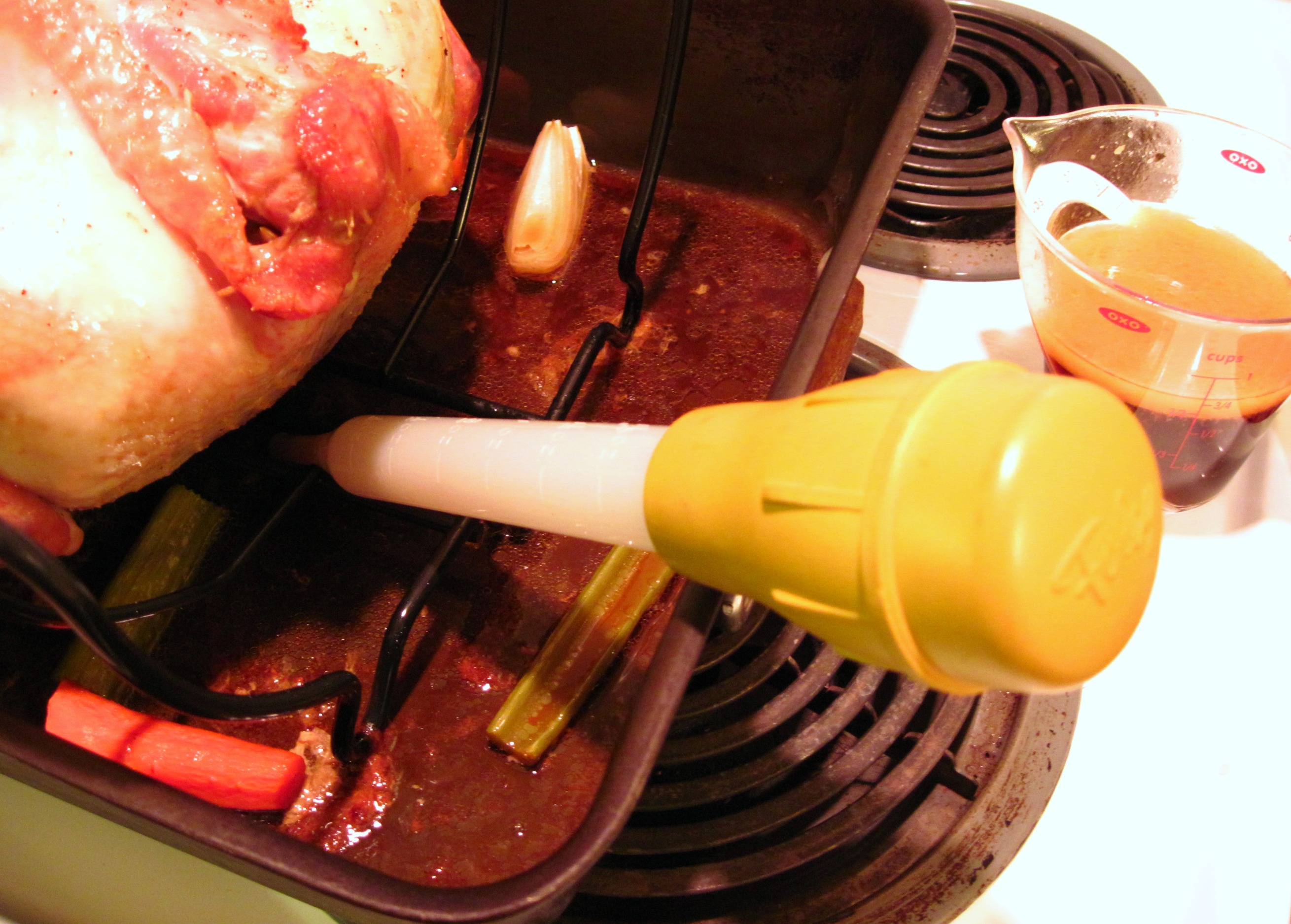
~
Everything combined in the pan
 ~
~
5. Put 1 tablespoon of butter in a large casserole and spread it around with a paper towel.

6. Put the stuffing in the casserole. Dot the top with butter. Bake, uncovered, at 350˚ for 30 minutes.
~
Share this:

Easy Cranberry Chutney
By Kath Dedon
.
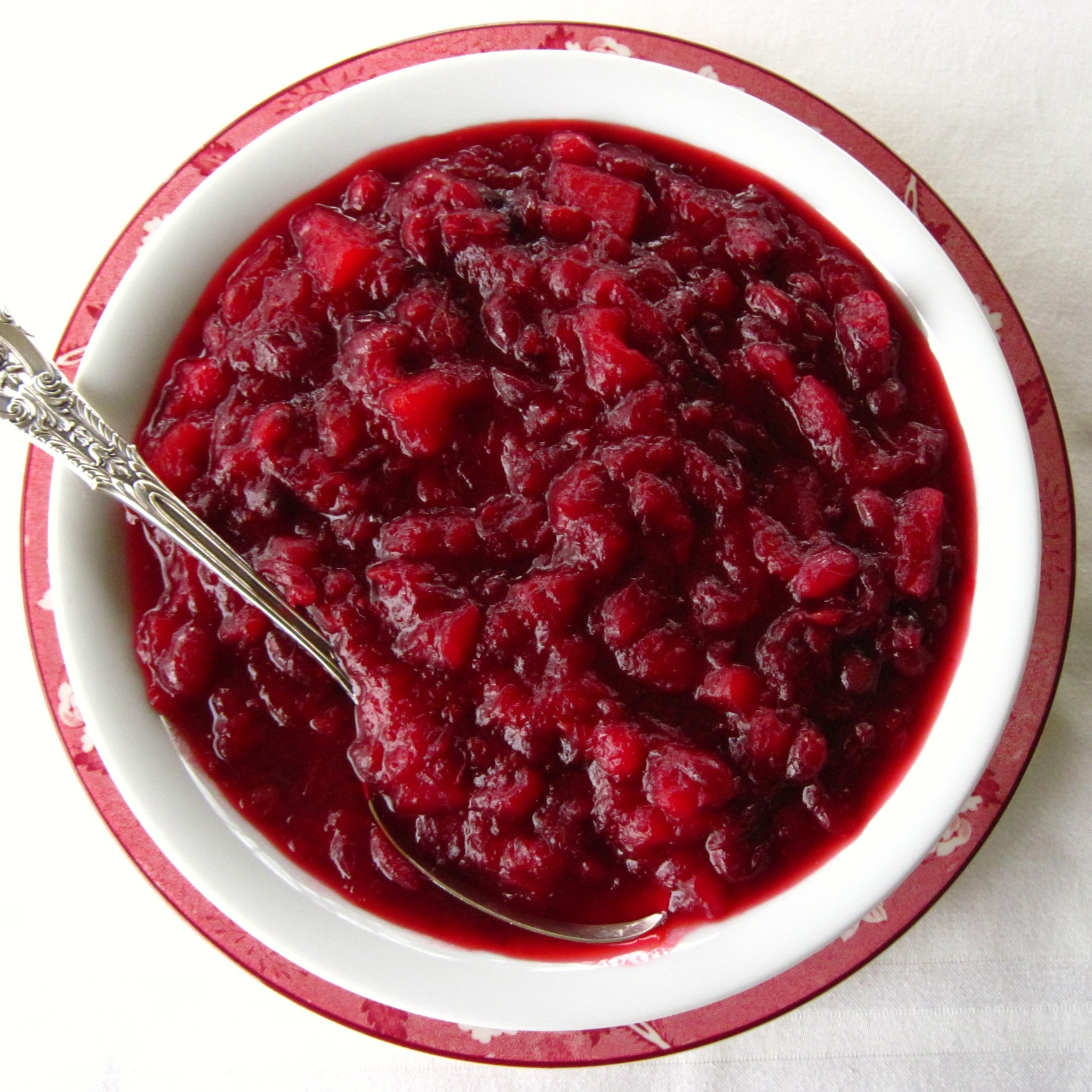
Cranberry Chutney has been on our Thanksgiving table for many years; I know I would get many complaints if I ever omitted it. It’s the perfect condiment with roast turkey, but it’s just as fantastic with a holiday ham!
My dad always liked jellied cranberry sauce. Mom bought it just for him; she opened both ends of the can, pushed the jelled sauce out and cut it into slices. Dad got to eat most of it because the rest of us preferred the whole berry sauce, which was also a part of our Thanksgiving dinner.
Like anything else, homemade cranberry sauce is much better than the canned variety. This recipe is adapted from one in Yumana’s Table, by Yumana Devi. I like the fact that it’s sweetened with pure maple syrup instead of sugar or corn syrup. It uses only 4 ingredients and is super easy to make. Once made, it will keep up to a week in the refrigerator, so you can easily make it a day or two before the big Turkey Day!
.
~
Cranberry Chutney
(Adapted from a recipe in Yumana’s Table by Yumana Devi)
.
.
Makes about 3 cups, and doubles easily if you’re serving a crowd.
~
1 (12-ounce) bag of cranberries
2 large apples
2 large oranges
1 cup pure maple syrup


~
1. Zest the oranges.
Zesting the oranges is quick and easy with a Microplane zester.

.
2. Wash and drain the cranberries and put them in a pot. (My 3 quart pot is the perfect size.)
3. Peel, core, and chop the apples, and add them to the pot.
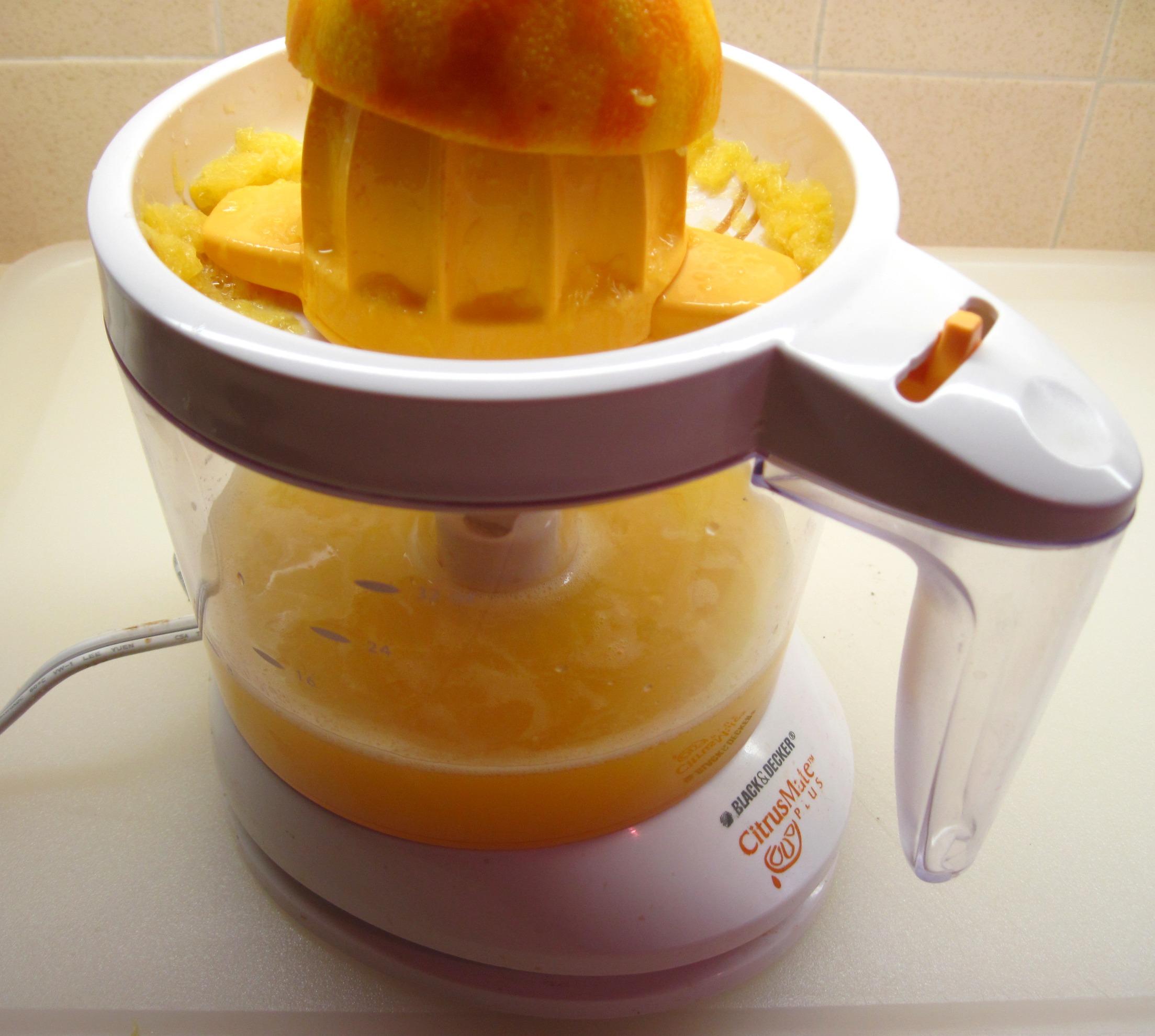
4. Juice the oranges. Add the juice and the orange zest to the pot.
.
~
5. Add the maple syrup.
Everything is in the pot, ready to cook!
~
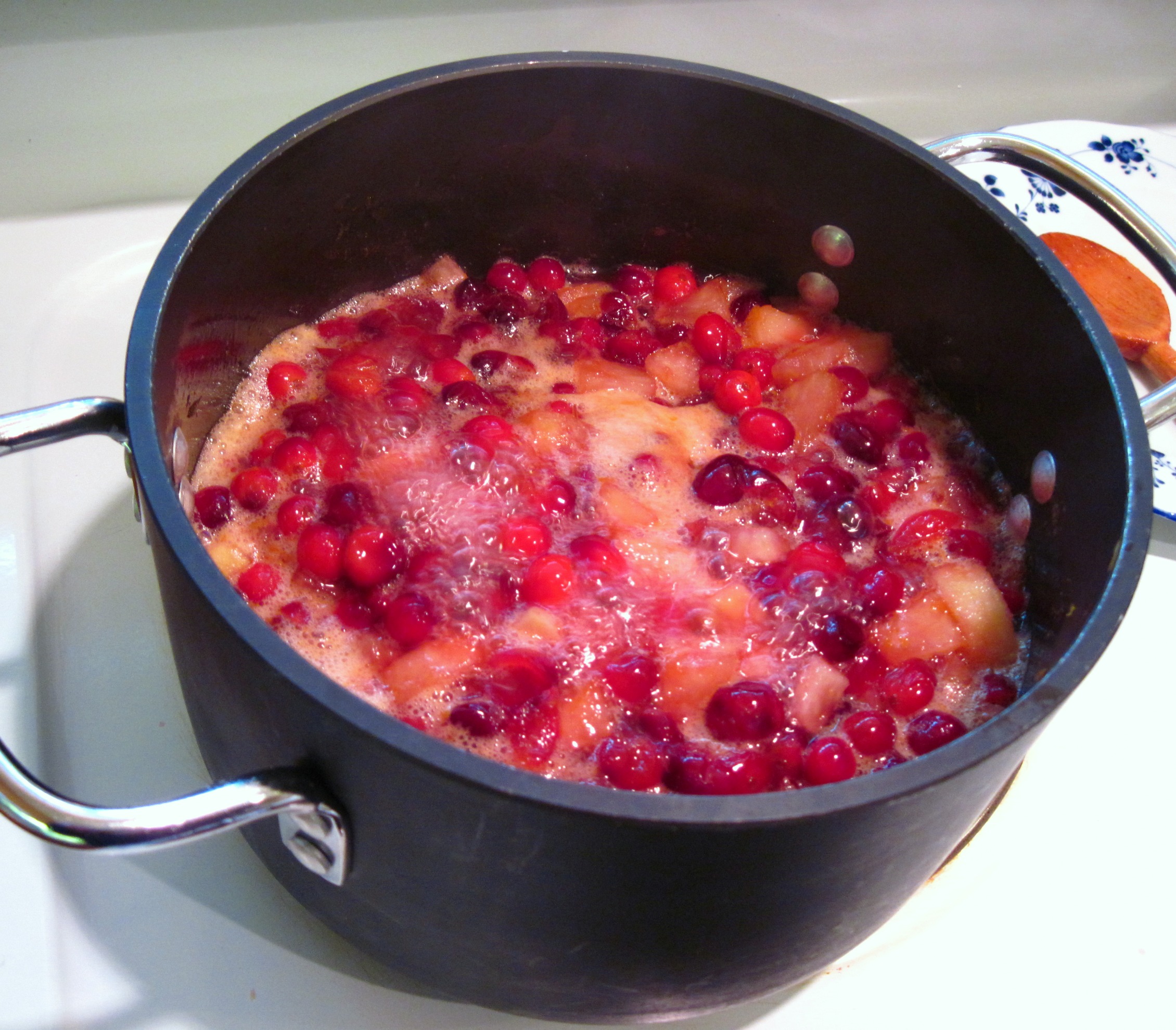
6. Bring the chutney to a boil over medium-high heat.
~
7. Reduce heat to medium. Cook, uncovered, for about 15 minutes 30 – 45 minutes, until the cranberries have popped, the apples have cooked down, and the chutney has thickened a bit. Stir it occasionally while it’s cooking.

~
8. Cool and transfer to a bowl; cover and refrigerate until ready to use.

Share this:

Naturally Sweetened Pumpkin Pie!
By Kath Dedon
.
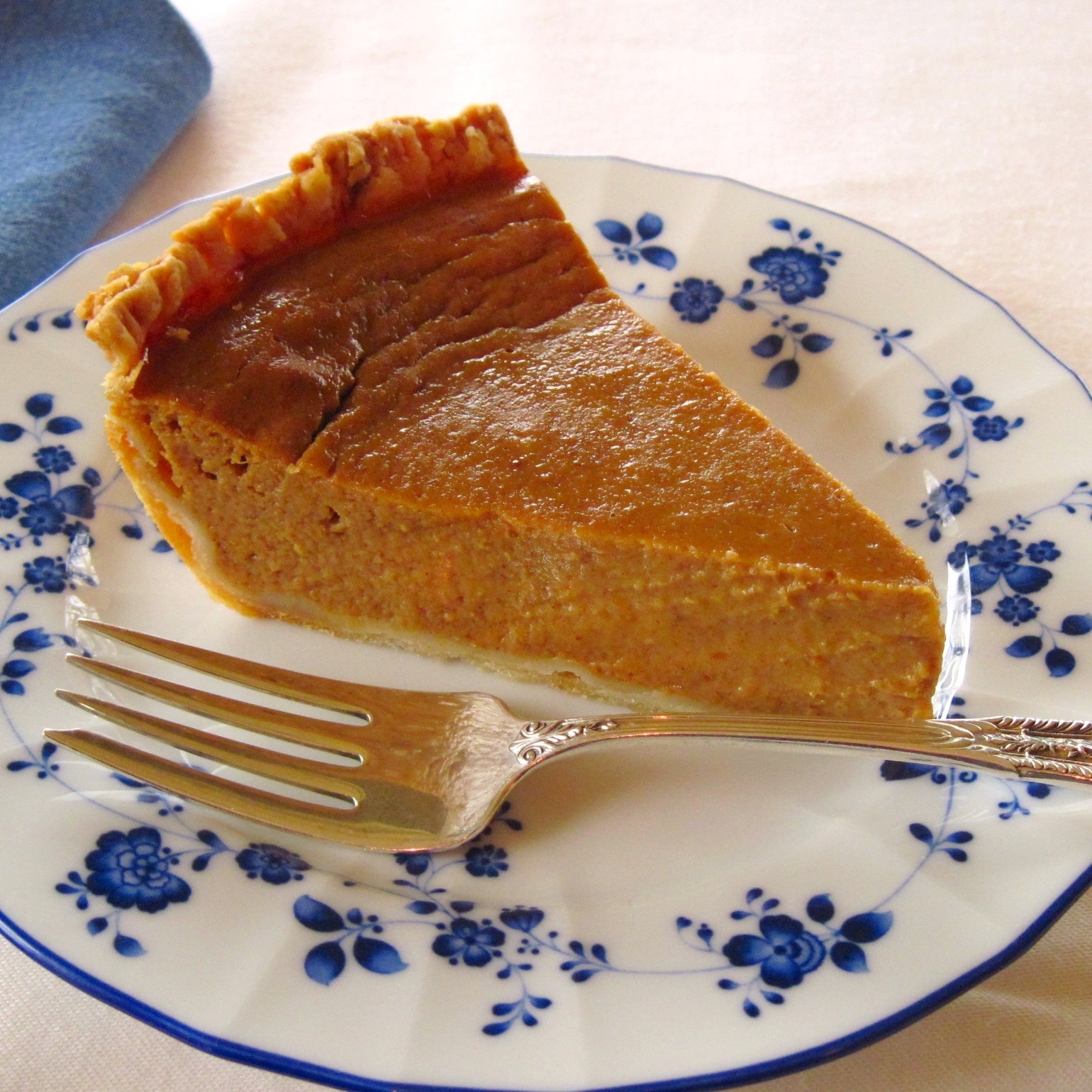
I developed this Naturally Sweetened Pumpkin Pie years ago and it has since been one of my family’s favorite desserts, especially at Thanksgiving!
.
 ~
~
Pumpkin pie had always seemed too bland to me until I increased the spices. I use more cinnamon and ginger than most recipes call for, making it much more interesting. (If your spices are old, they will not be as flavorful. Now is a good time to go to a store that sells bulk herbs and spices to get ready for your holiday baking. Buying spices in bulk is astonishingly economical.)
The pie is sweetened with honey and pure maple syrup; they complement the flavor of the pumpkin without being overpowering. Maple syrup is a bit expensive; you can skip the maple syrup and just use ¾ cup of honey, if you prefer. It will still be fantastic!
So, what are the 5 top reasons you should make this Naturally Sweetened Pumpkin Pie for Thanksgiving?
— 5. It is one of the easiest pies of all to make.
— 4. It is so much better than a store-bought pie.
— 3. It can be made the day before. Simply cover it with plastic wrap and refrigerate after it has cooled.
— 2. You can feel good about the wholesome ingredients you have used.
and the #1 reason? — You will be a super-hero for serving (or bringing) such a fabulous Naturally Sweetened Pumpkin Pie!
.

Naturally Sweetened Pumpkin Pie
I use my largest 9½-inch pie plate because the recipe makes a lot of filling.
a
a
Serves 8 – 10
a
Pastry for a 9-inch single-crust pie
1 (15-ounce) can pure pumpkin
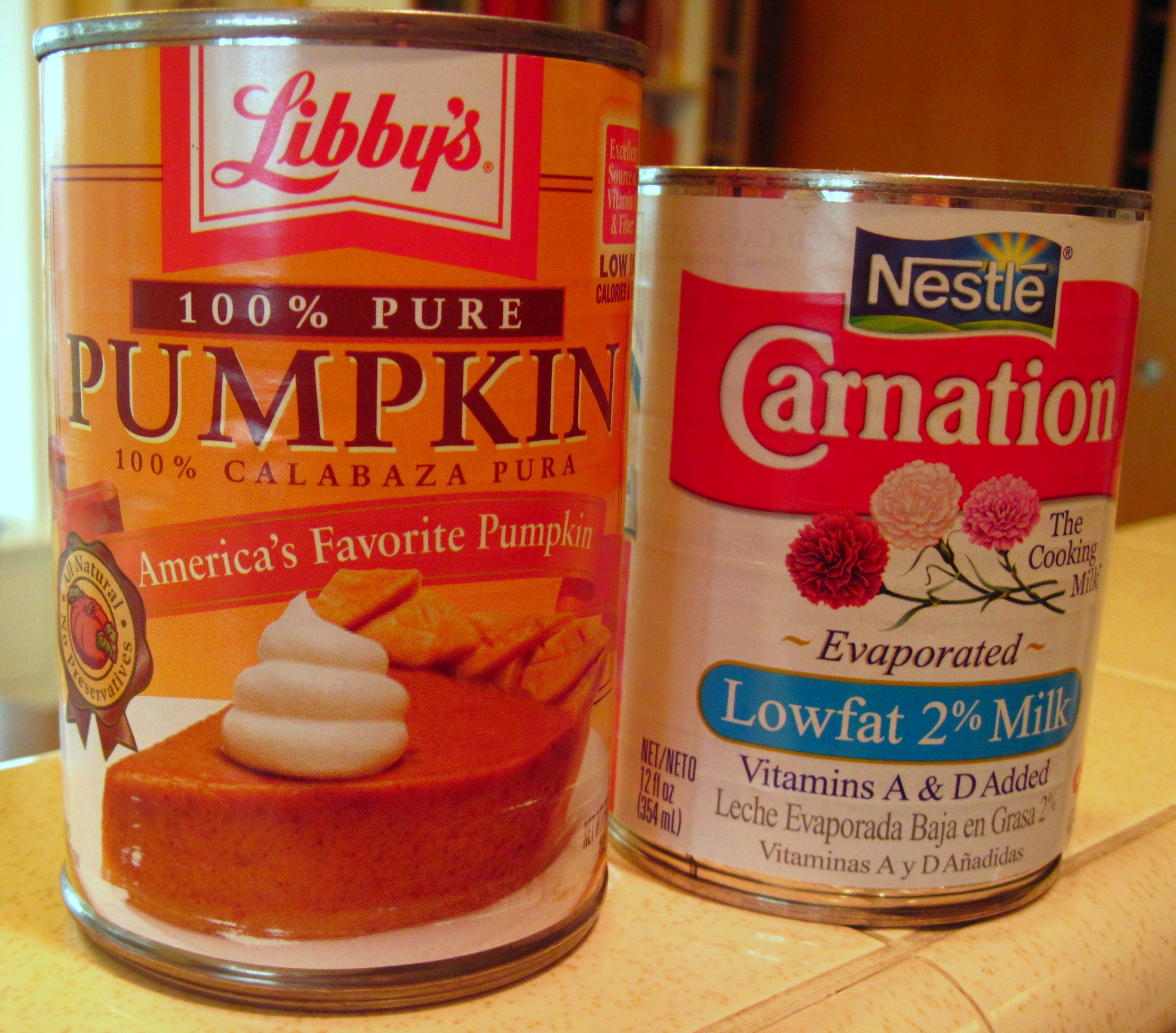
1 (12-ounce) can evaporated milk (Not sweetened condensed, and for bests results use regular evaporated milk, not low fat or fat free)
2 teaspoons ground cinnamon
2 teaspoons ground ginger
¼ teaspoon ground cloves
½ teaspoon salt
½ cup honey
¼ cup pure maple syrup
3 eggs
I have found that best results come from using regular evaporated milk, not low fat as is shown in the photo.
~
1. Place a large baking sheet in the oven and preheat to 375˚.
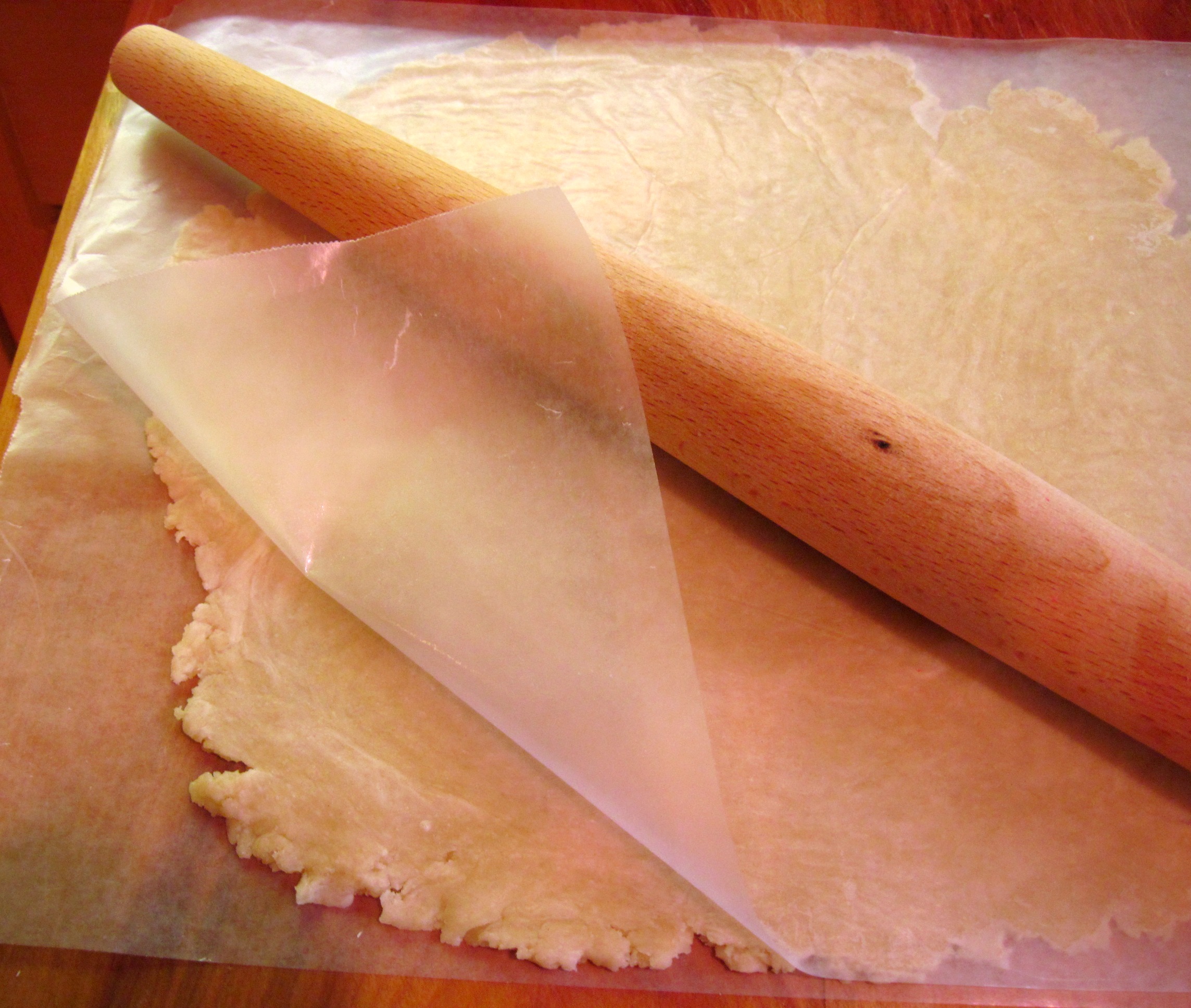
2. Make the single crust recipe of Easy Pie Crust (or pastry of your choice)
.
Rolling out the pastry with my new French rolling pin. Love it!
 ~
~
 ~
~
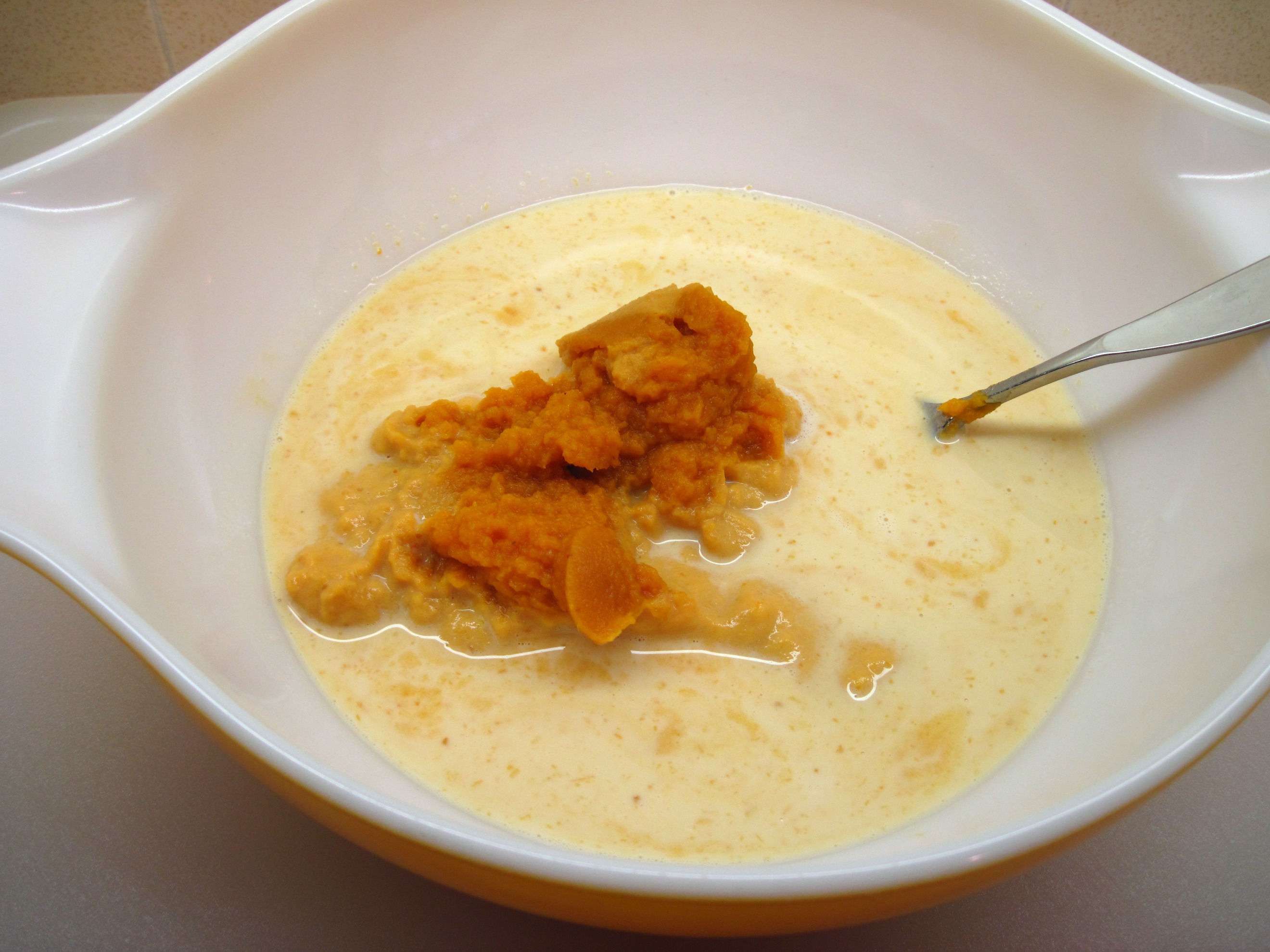
3. Stir the pumpkin and evaporated milk together in a large bowl.
~
4. Add the cinnamon, ginger, cloves, and salt. Stir to blend well.

~
Blended pumpkin, milk, and spices:
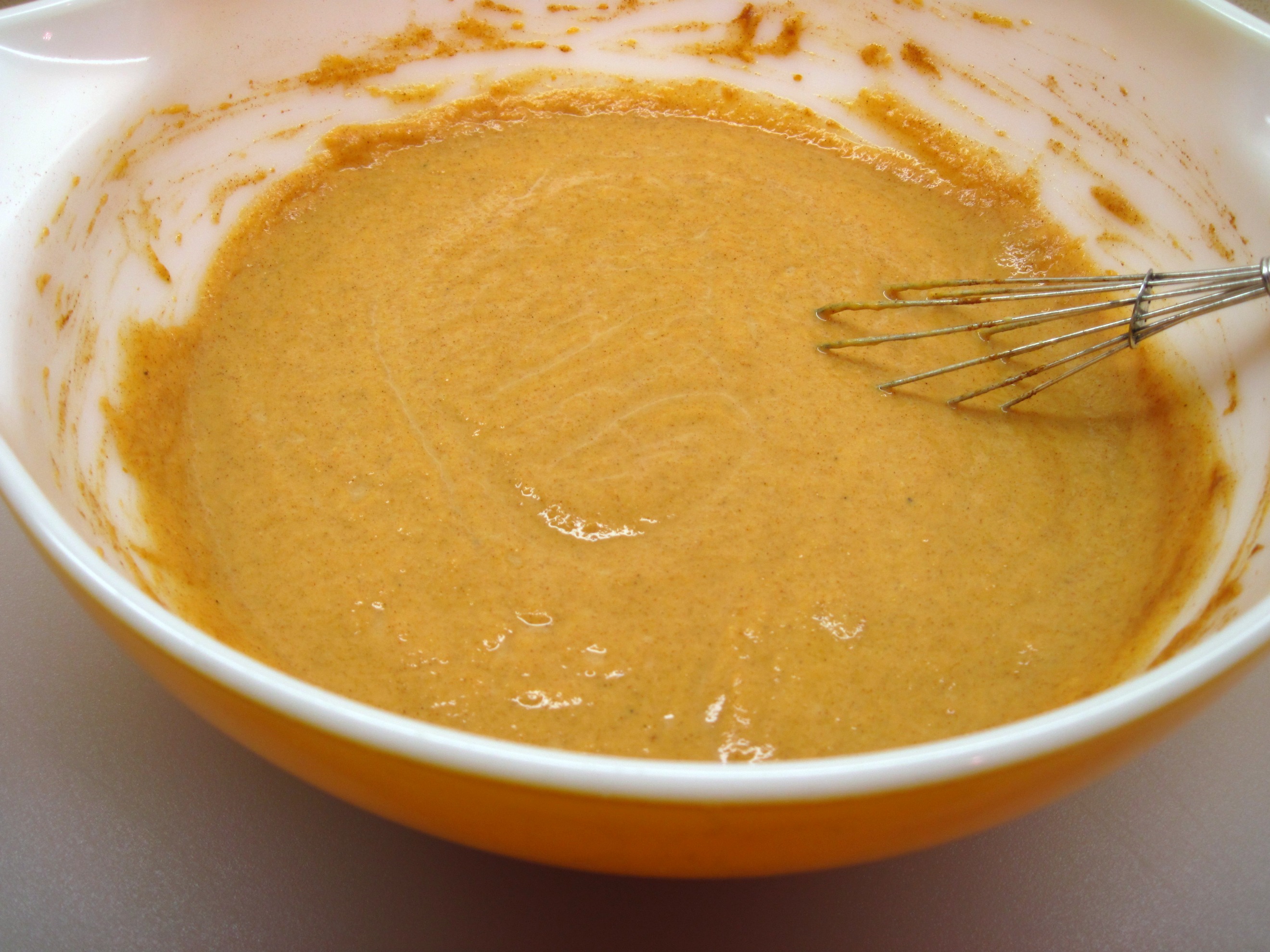 ~
~
5. Stir in the honey and maple syrup.

~
6. Lightly beat the eggs until they are just blended.
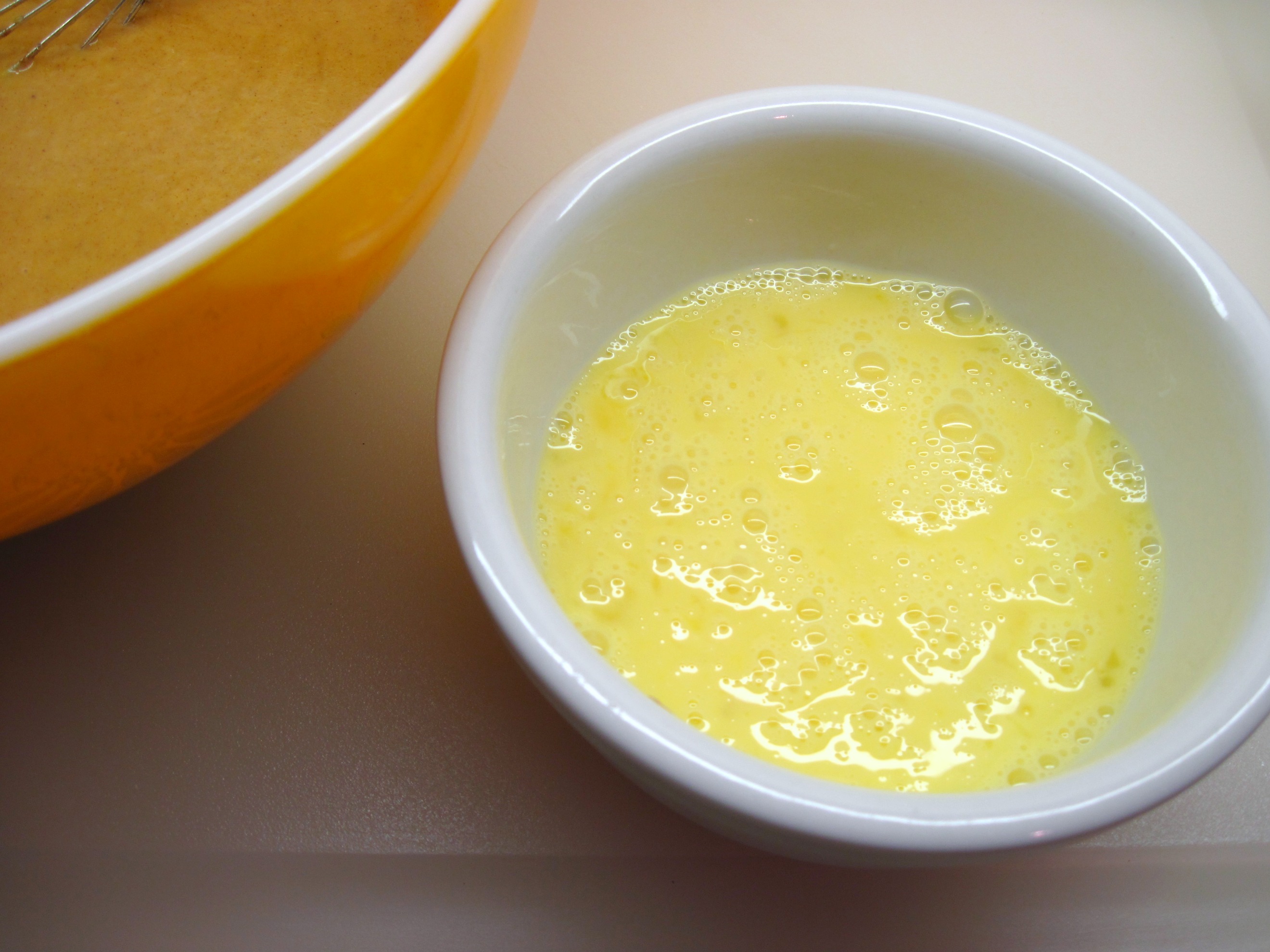
~
7. Stir the eggs into the pumpkin mixture. Don’t over-beat. Just stir until it’s all blended.
8. Pour the pumpkin filling into the prepared pie crust.

9. Put the pie on the baking sheet in the preheated oven and bake for 1 hour, or until a knife inserted off-center comes out clean.
.
Knife came out clean:

~
10. Cool on a wire rack. Cover and chill to store.

Share this:

My Ultimate Chicken Noodle Soup
By Kath Dedon
a
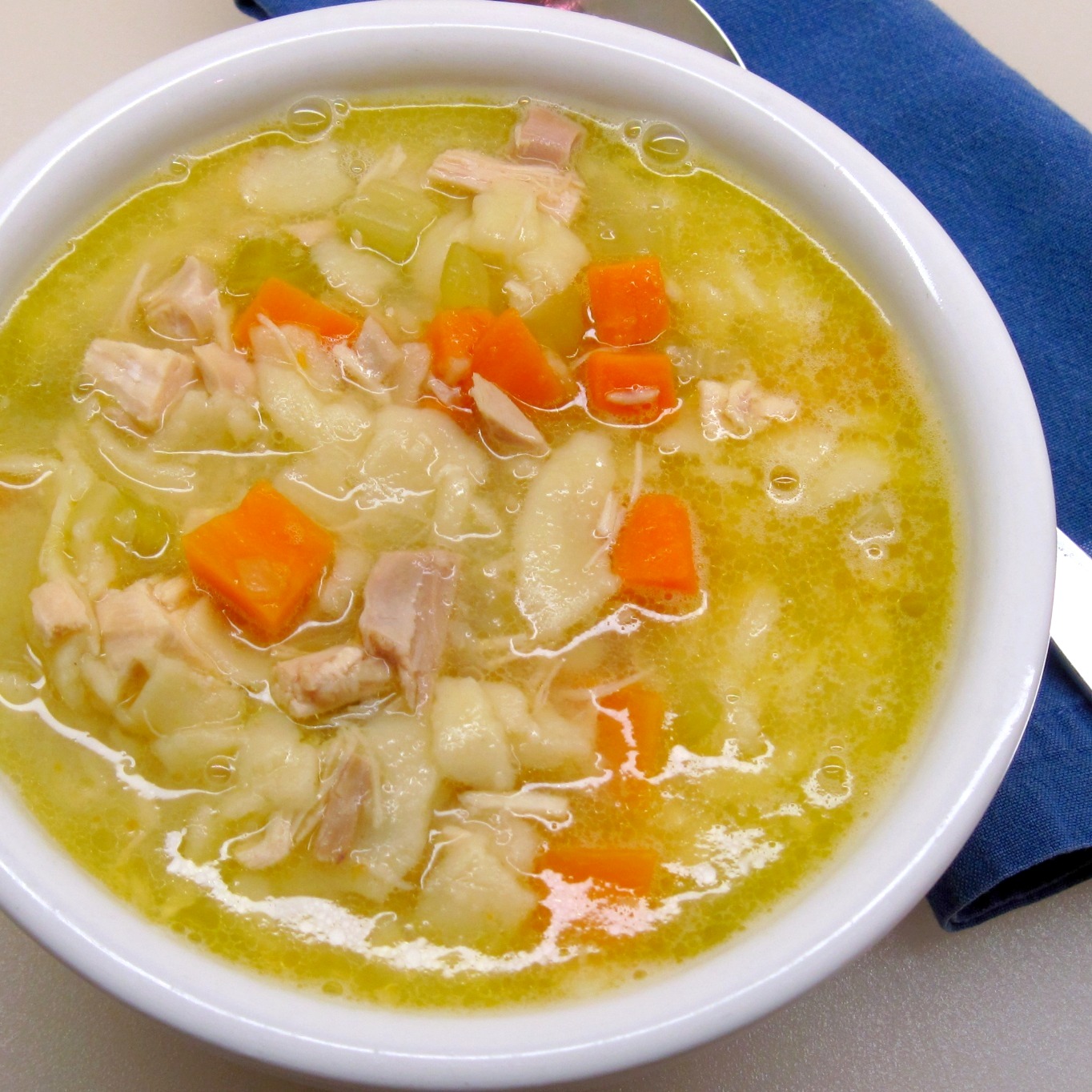
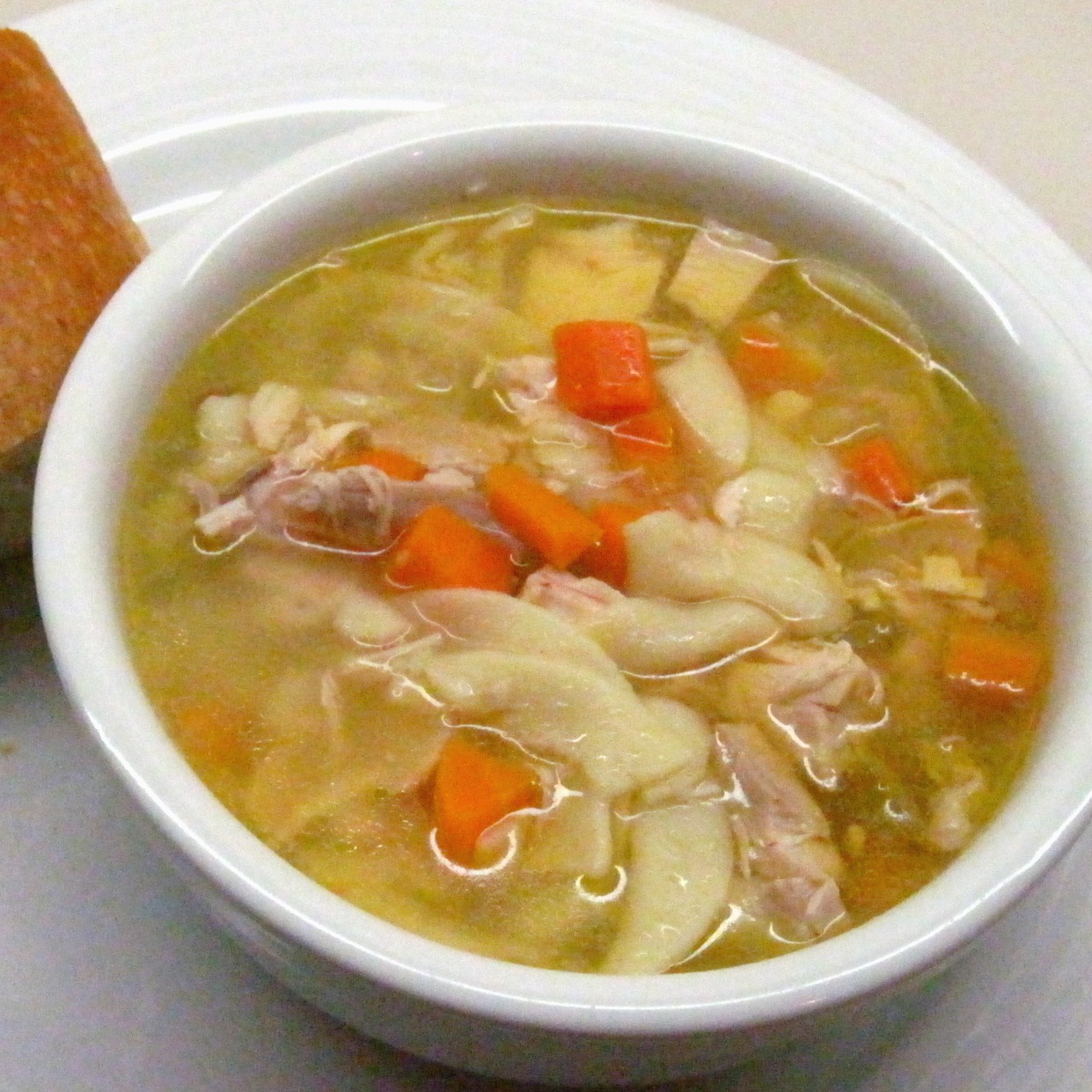
I have already posted a recipe for Quick and Easy Chicken Noodle Soup, and it’s very good. This, however, is My Ultimate Chicken Noodle Soup….the “killer” chicken noodle soup that I promised.
It’s not quick, but it is very easy. This is the soup to make when you want a rich chicken soup and you have free afternoon to make it. It takes a few hours, but most of that time is unattended so you can enjoy the afternoon doing other things.
The recipe is adapted from one in the 1981 edition of La Leche League’s Whole Foods for the Whole Family, edited by Roberta Bishop Johnson. I was given the book by a dear friend over 25 years ago, and it’s still one that I enjoy using. It’s a community cookbook; over 7,000 recipes were contributed by LLL members. Those recipes were triple-tested and whittled down to about 900. Emphasizing wholesome ingredients, and including vegetarian as well as meat dishes, the cookbook has something for everyone.
Most chicken soup recipes call for simmering a chicken in water. Instead of simmering, the first step of this recipe is roasting a whole chicken. It’s roasted over 2 cups of water and the water becomes chicken broth in the process. The flavor and texture of the roast chicken is, in my opinion, so much better than a simmered chicken. It’s fabulous in the soup!
The first time I made the soup (many years ago), I followed the directions until I got to the part about skinning the chicken and removing the meat from the bones. The recipe said, “discard skin and bones”. Well…it seemed to me that those bones and the skin had a lot more rich flavor to contribute to the soup. I put them in a pot, added a carrot, celery stalk, and part of an onion, added water and the broth from the roasting pan and simmered it all for about an hour. The resulting broth was so wonderful that I’ve done it that way ever since.
This makes a lot of soup, but I think it freezes well. (I’ll soon find out because I did freeze some of this batch.)
Serve the soup with good bread and a salad for a complete meal that all will love!
~
~
My Ultimate Chicken Noodle Soup
(Adapted from a recipe in La Leche League’s Whole Foods for the Whole Family)
.
.
4 – 5 generous servings
.
 ~
~
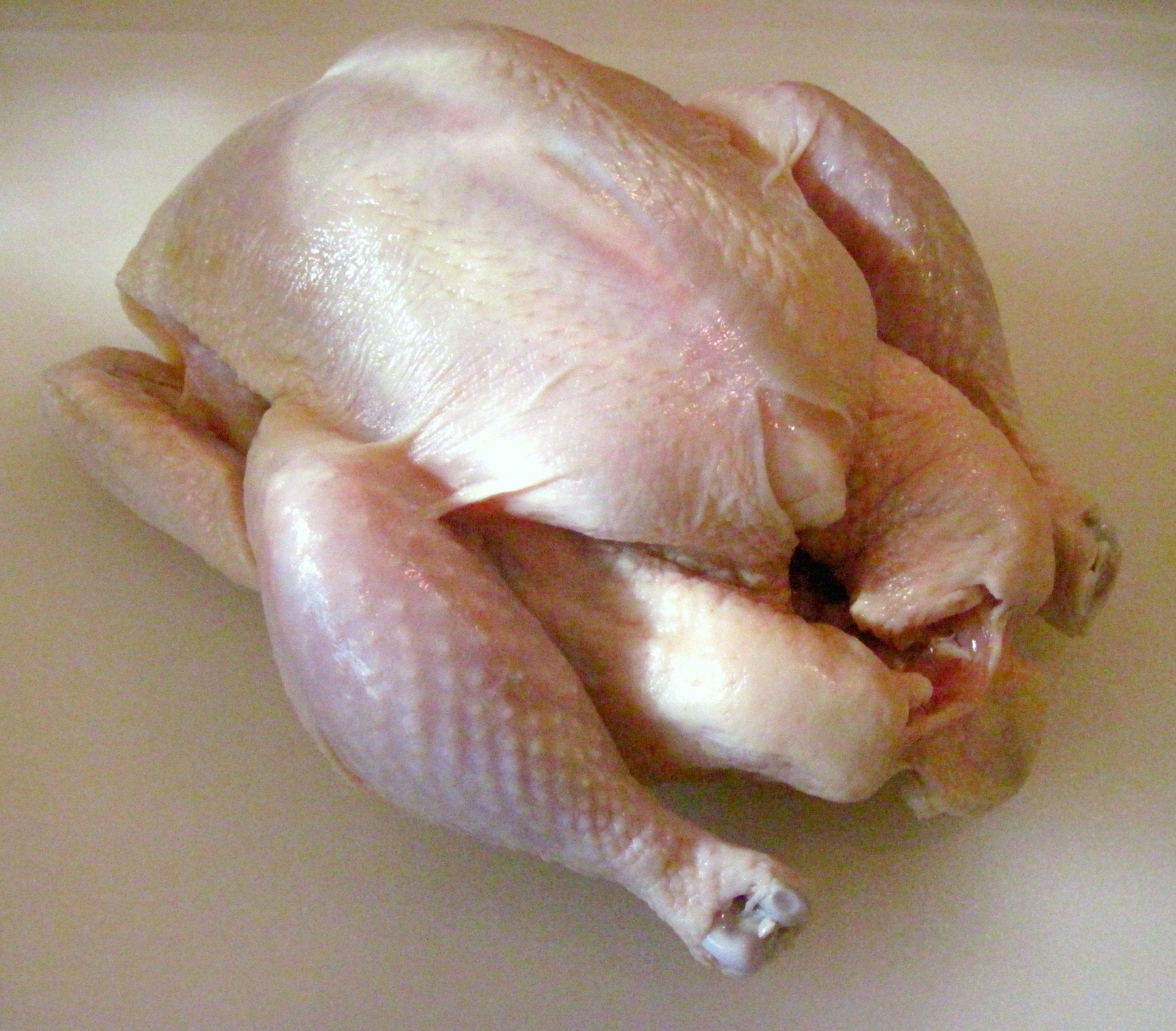
1 whole chicken
2 cups water
.
For the broth:
1 carrot, cut into 4 pieces
½ medium onion, cut into 4 pieces
1 stalk of celery, cut into 4 pieces
Broth from the roasting pan
8 cups water
1 teaspoon salt
Cheesecloth for straining
.
For the soup:
2 tablespoons butter
½ pound carrots, chopped (about 4 medium)
1 medium onion, chopped
4 – 5 stalks celery, chopped
Chicken meat, cut into bite-sized pieces
6 ounces noodles
.
1. Preheat the oven to 325˚.
2. Put the chicken breast-side down in a 9×13-inch baking dish.
3. Add 2 cups water to the baking dish.
4. Roast the chicken uncovered for 2 hours.
.
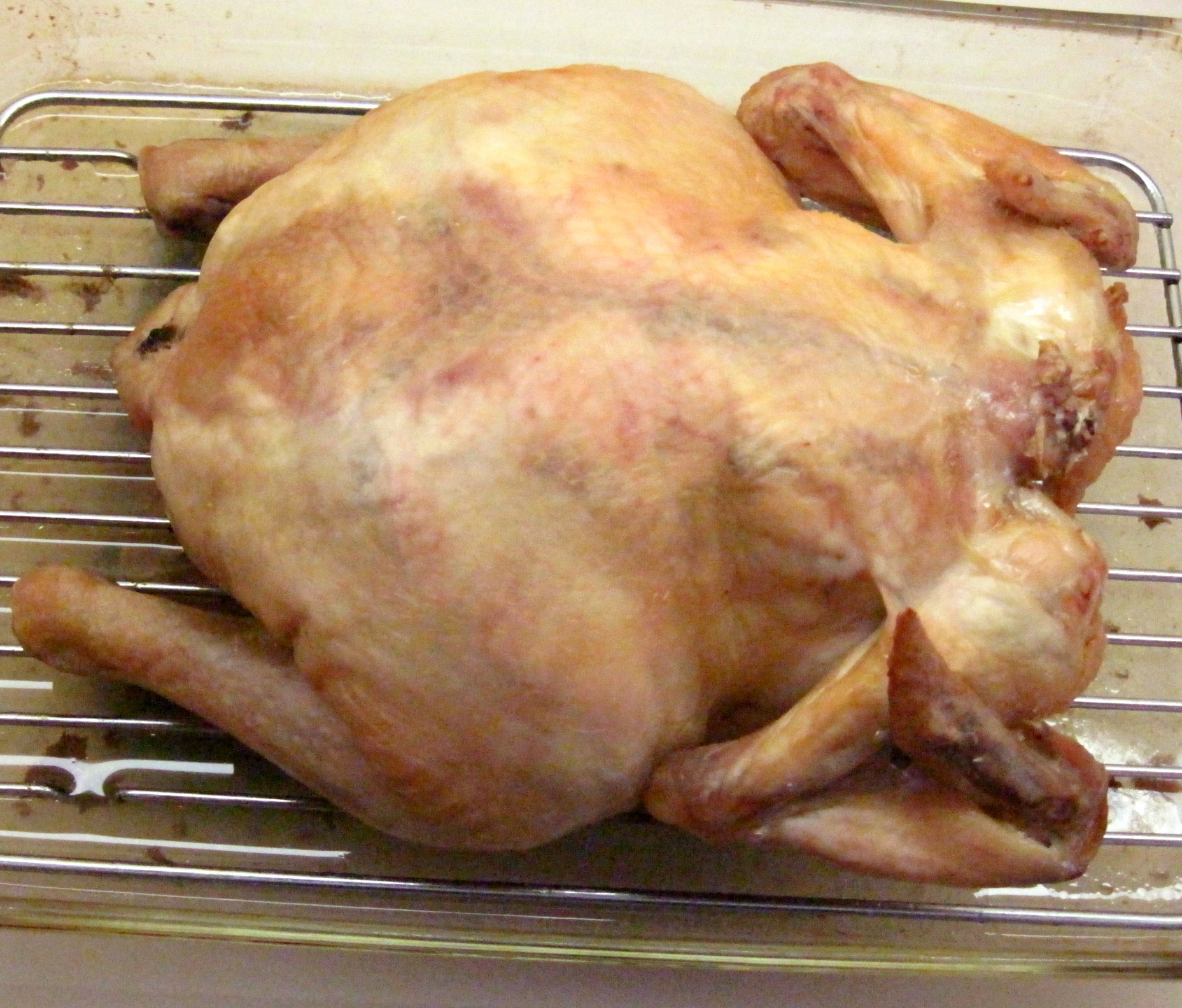
Roasted chicken. (I used a rack in the pan, but I don’t think it’s necessary.)
 ~
~
5. Pour the broth from the pan into a large pot. Let the chicken cool off until it’s cool enough to handle.
6. Remove the skin from the chicken and add it to the pot with the broth. Take the chicken meat off the bones and add the bones to the pot.
.
Chicken, removed from the bones (plus the wings for Bob)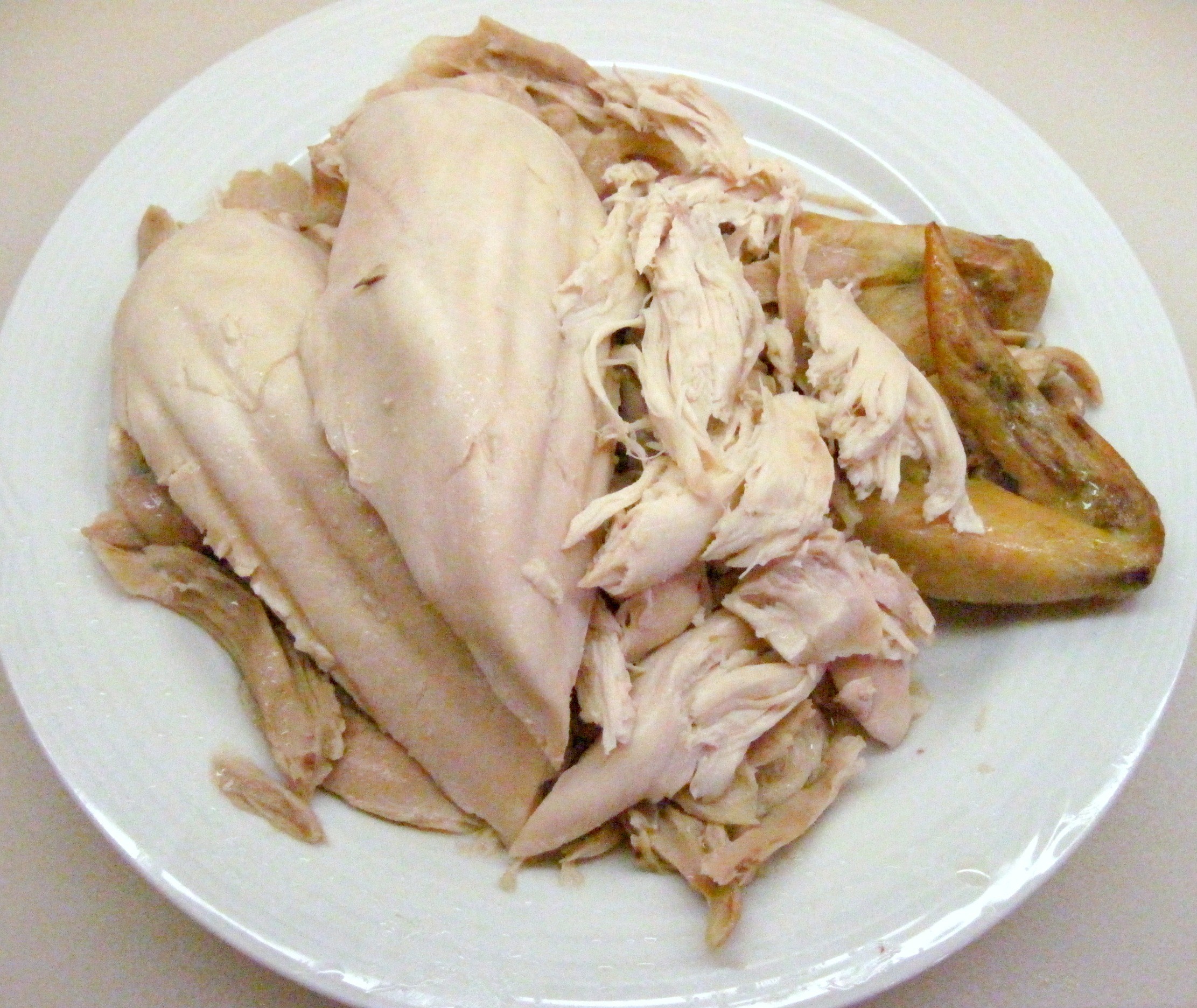
~
7. Cut the chicken meat into bite-sized pieces; cover and refrigerate until ready to use.
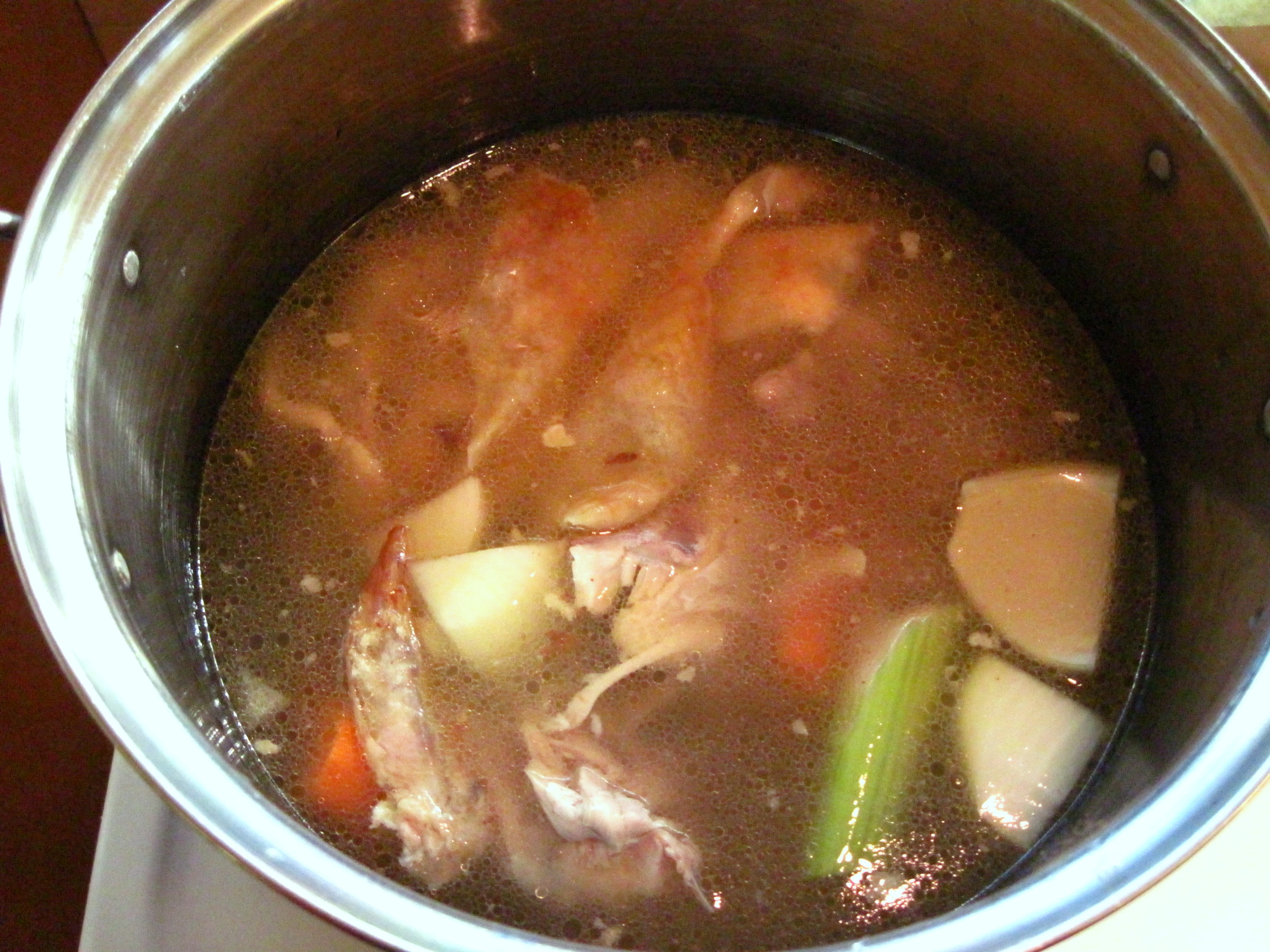
8. Add the carrot, onion, celery stalk (all cut into 4 pieces), 8 cups of water, and salt to the pot. Bring to a boil; reduce heat, cover, and simmer for 1 hour.
.
~
9. Remove the vegetables from the broth and discard them. Line a strainer with cheesecloth and strain the broth into measuring cups or other pans. (You should end up with about 10 cups of broth.)
.
I strained 4 cups of broth into my quart measuring cup and then strained the rest into another pan.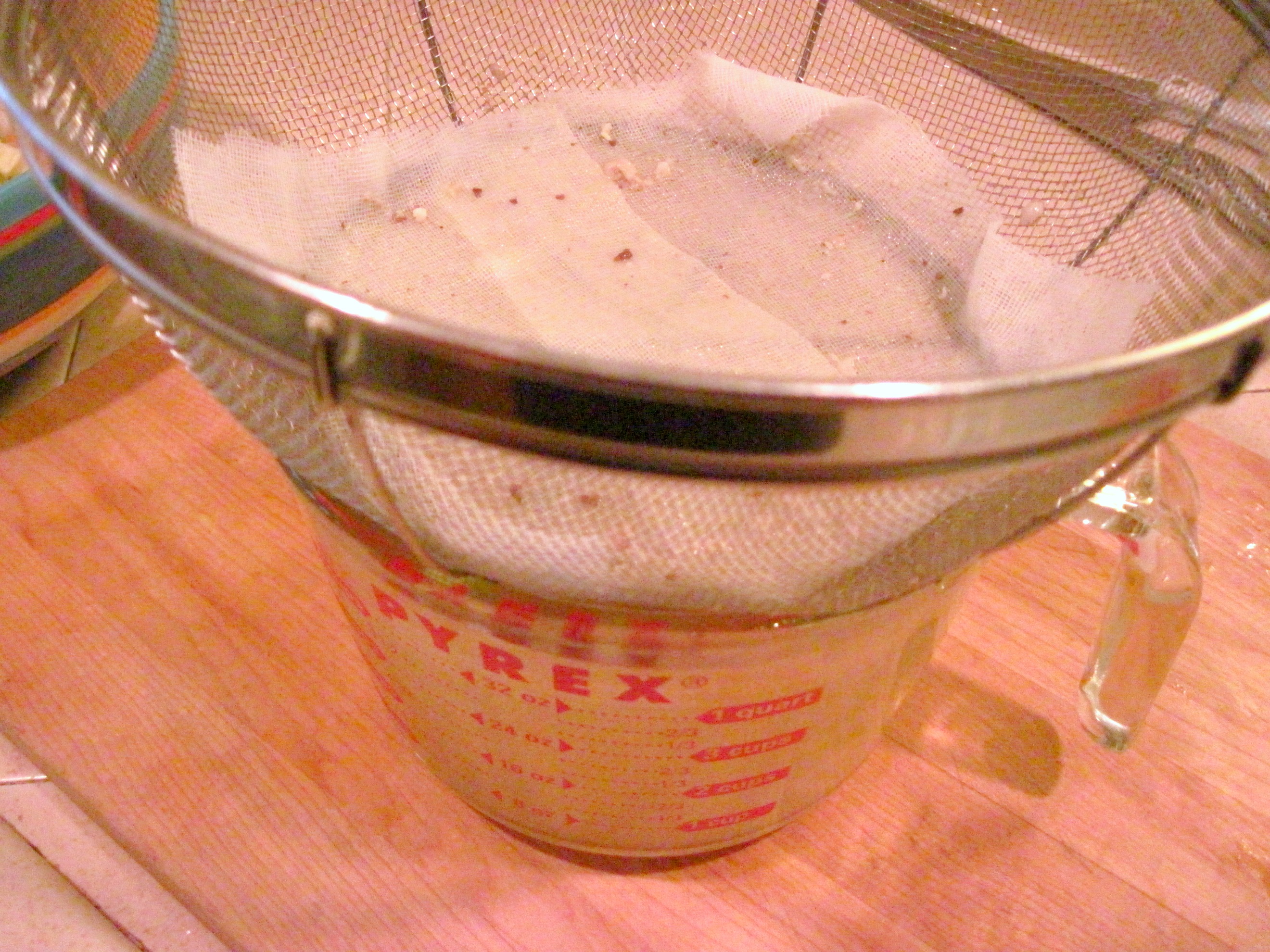
~
10. Melt the butter in a large pot (you could use the same one you used for the broth).
11. Add the chopped carrots, onion, and celery. Cook until the vegetables are starting to soften, 5 – 10 minutes.
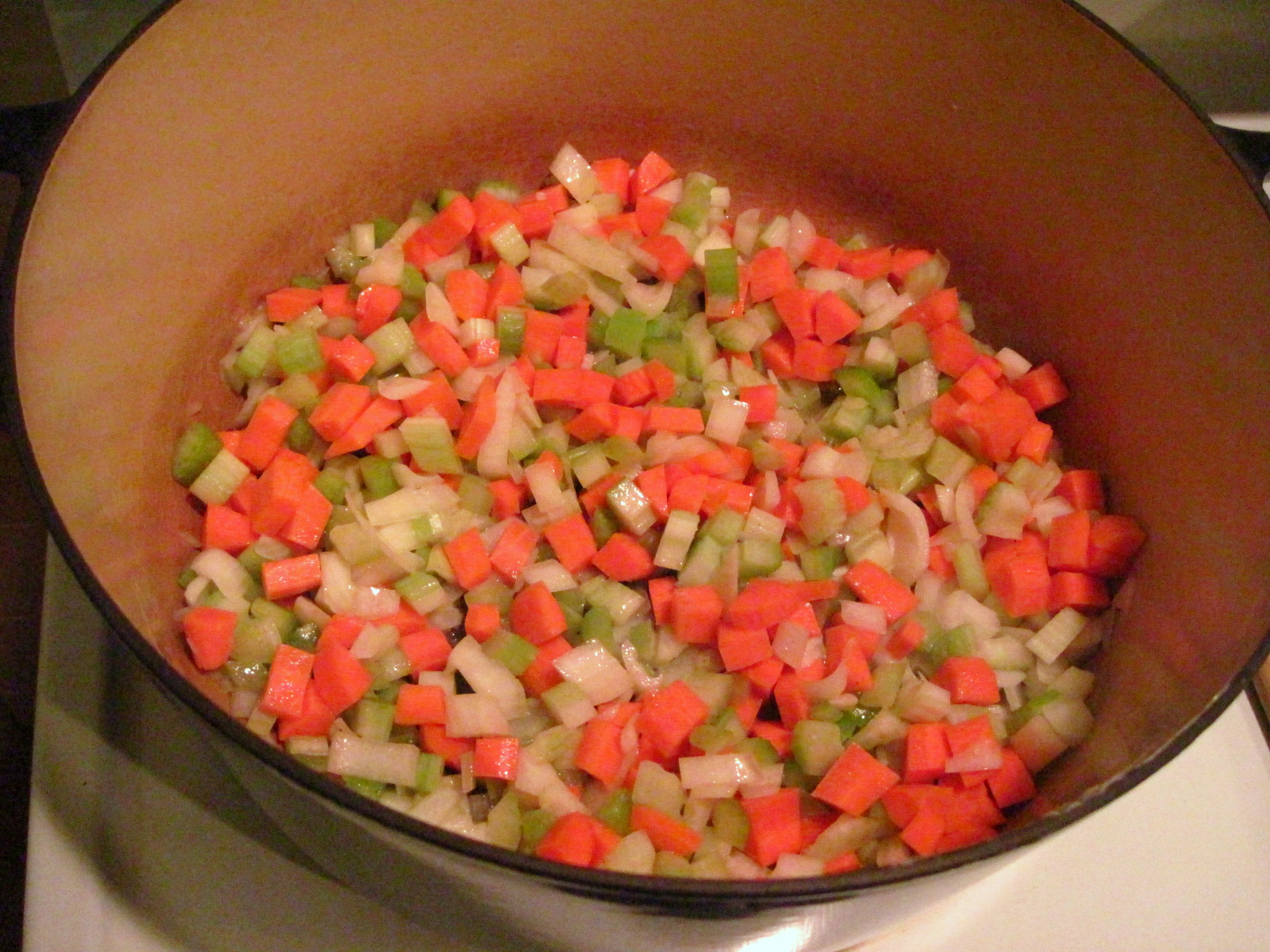
~
12. Add the reserved broth and the chicken. Bring to a boil; reduce heat, cover, and simmer for 40 minutes.
13. Add the noodles and simmer for 20 minutes.
14. Season to taste with salt and pepper. (I added another teaspoon of salt.)
.
Share this:

Mashed Potatoes
By Kath Dedon
.
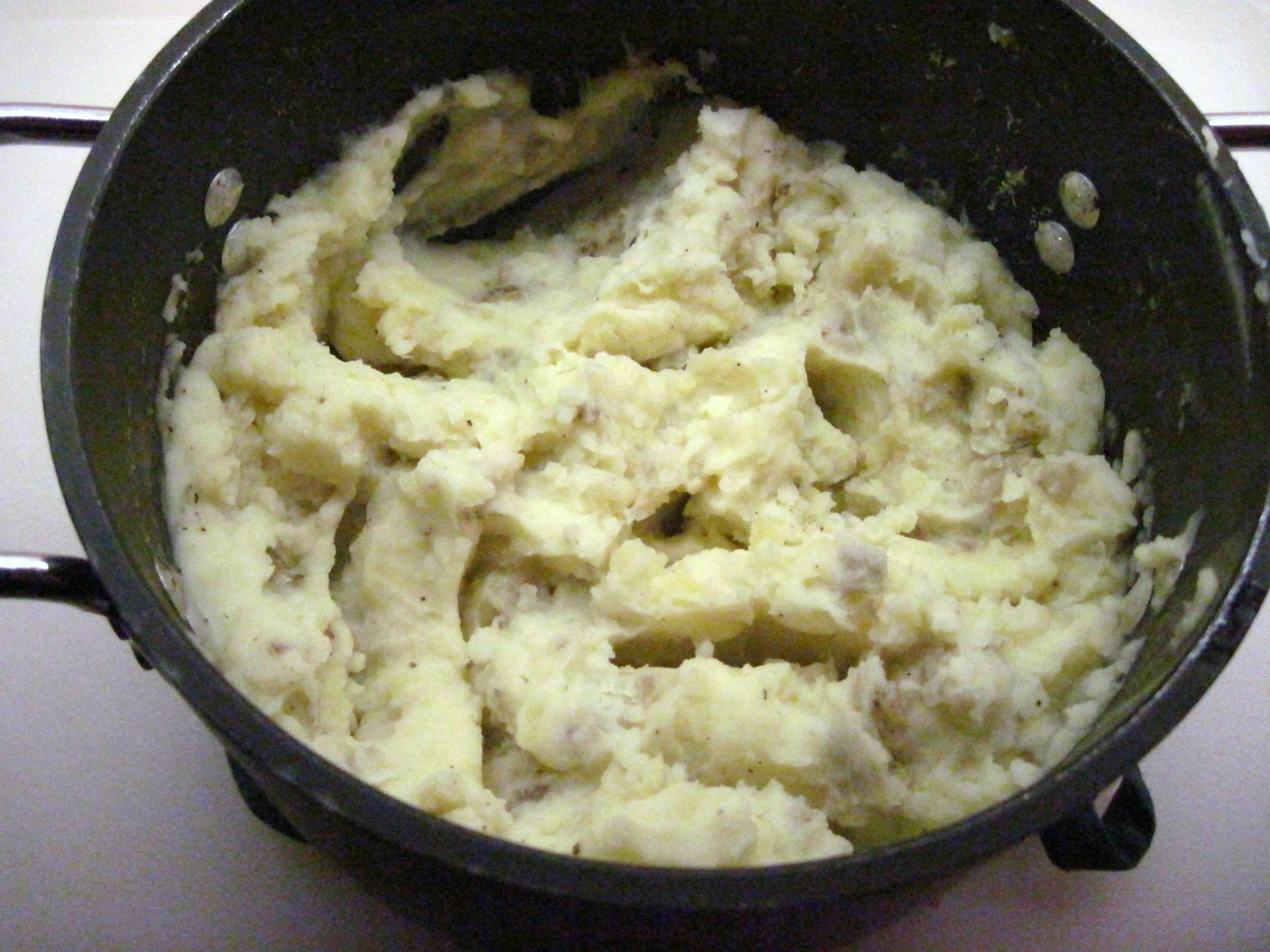
My usual way to make Mashed Potatoes is to put the peeled and cooked potatoes through a potato ricer. Then I stir in milk and a bit of butter. The result is incredibly smooth mashed potatoes. I love them! (And so does Bob!)
Sometimes, though, I make a more rustic version of mashed potatoes – potatoes that have bits of the skin and lumps. It seemed the best way to make mashed potatoes with our home-grown crop. Bob harvested the last of our potatoes and there were just enough Yukon Golds to make 6 servings of Mashed Potatoes.
If the potatoes had all been the same size, I would have scrubbed them and boiled them whole. However, our babies were all different sizes; I cut them into pieces of similar size so they would cook more evenly.
The amount of milk and butter used are approximations. I don’t measure; I just put a bit in, mash, and add a bit more if needed. This time I used a bit of cream (about 2 tablespoons) along with the milk because I had it, but usually I just use milk.
The Mashed Potatoes were terrific! Fresh-from-the-garden potatoes have an “earthiness” that you don’t get from supermarket ones. I’m sure I’ll be making these again….with store-bought potatoes until we have a new crop next year.
.
 ~
~
Mashed Potatoes
.
.
Leftover Mashed Potatoes reheat beautifully. Just add a bit of milk and reheat in a microwave oven or on the stove.
.
Serves 6
.
2 – 2½ pounds potatoes (Yukon Golds are great)
¼ – ½ cup milk (or part milk, part cream)
3 – 4 tablespoons butter (plus more for serving)
Salt
Pepper
~
1. Scrub the potatoes well. If they’re all about the same size, leave them whole. If not, cut them into similar-size pieces.
2. Put the potatoes in a pot. Cover with water and bring to a boil.
.
Our home-grown Yukon Gold potatoes
~
3. When the water’s boiling stir in about 1 tablespoon of salt. Reduce the heat so the water is simmering. Cover and cook until done, about 15 – 25 minutes. (Timing will depend on the size of your potato pieces.)
4. When the potatoes are tender, drain the water out of the pot. Put the pot back on the burner for a minute or two to evaporate the rest of the water.
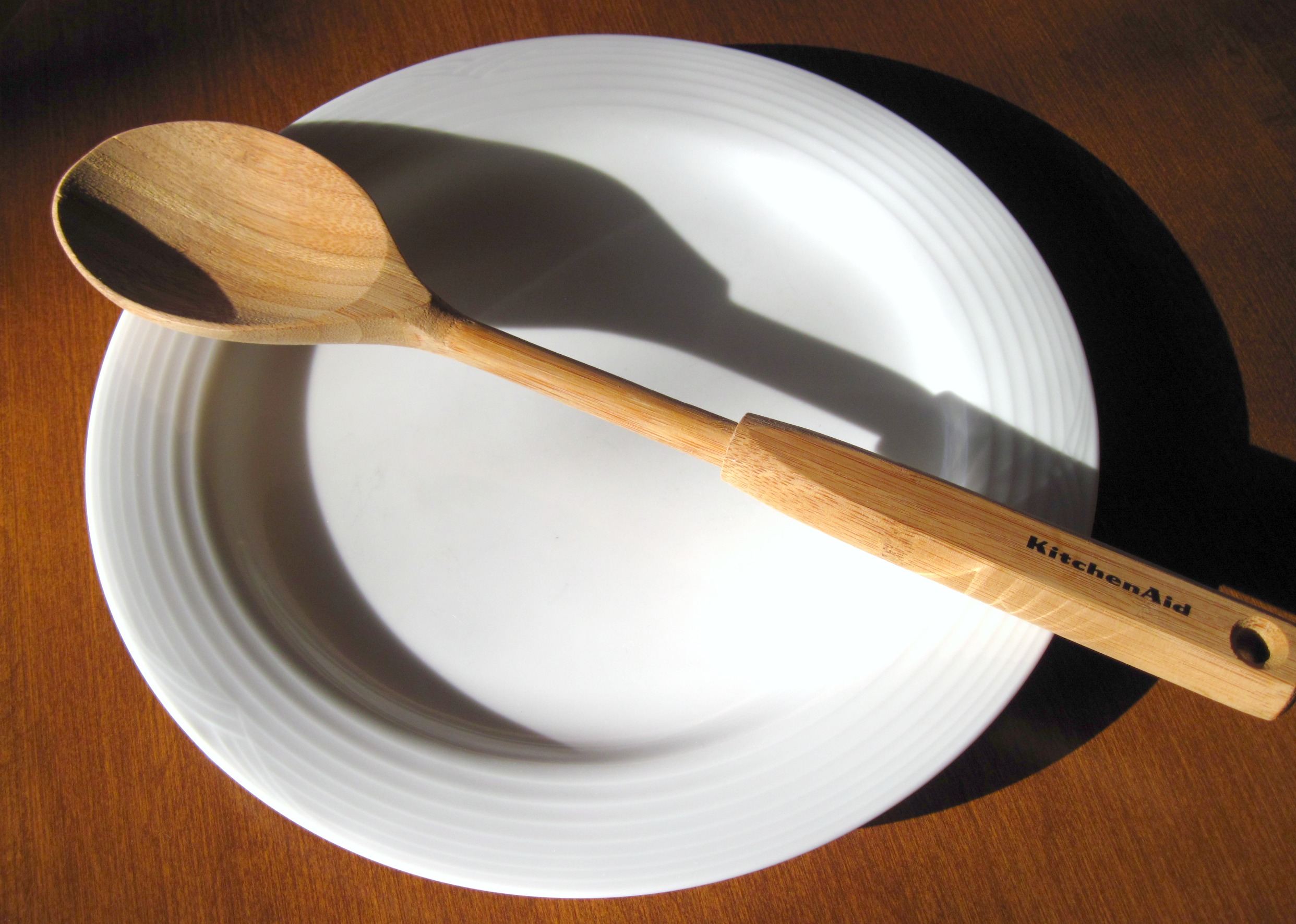
5. Mash them right in the pot with a potato masher. (I actually used a heavy wooden spoon, since I don’t have a potato masher.)
.
My large wooden spoon, shown on a dinner plate for scale:
 ~
~
6. After mashing them a bit, add some butter and milk. Start with the lower amounts; you can always add more later. Continue to mash, adding more milk and butter if needed, until done the way you like them.
7. Season with salt and pepper. Serve, offering extra butter at the table.
.
Update 8/26/2016: I have since received an OXO potato masher which I just love! It makes it incredibly easy to mash the potatoes right in the pot.
.
Share this:

Roasted Pumpkin Seeds
By Kath Dedon
.
~
Hey, Ho, Halloween’s Here!
.
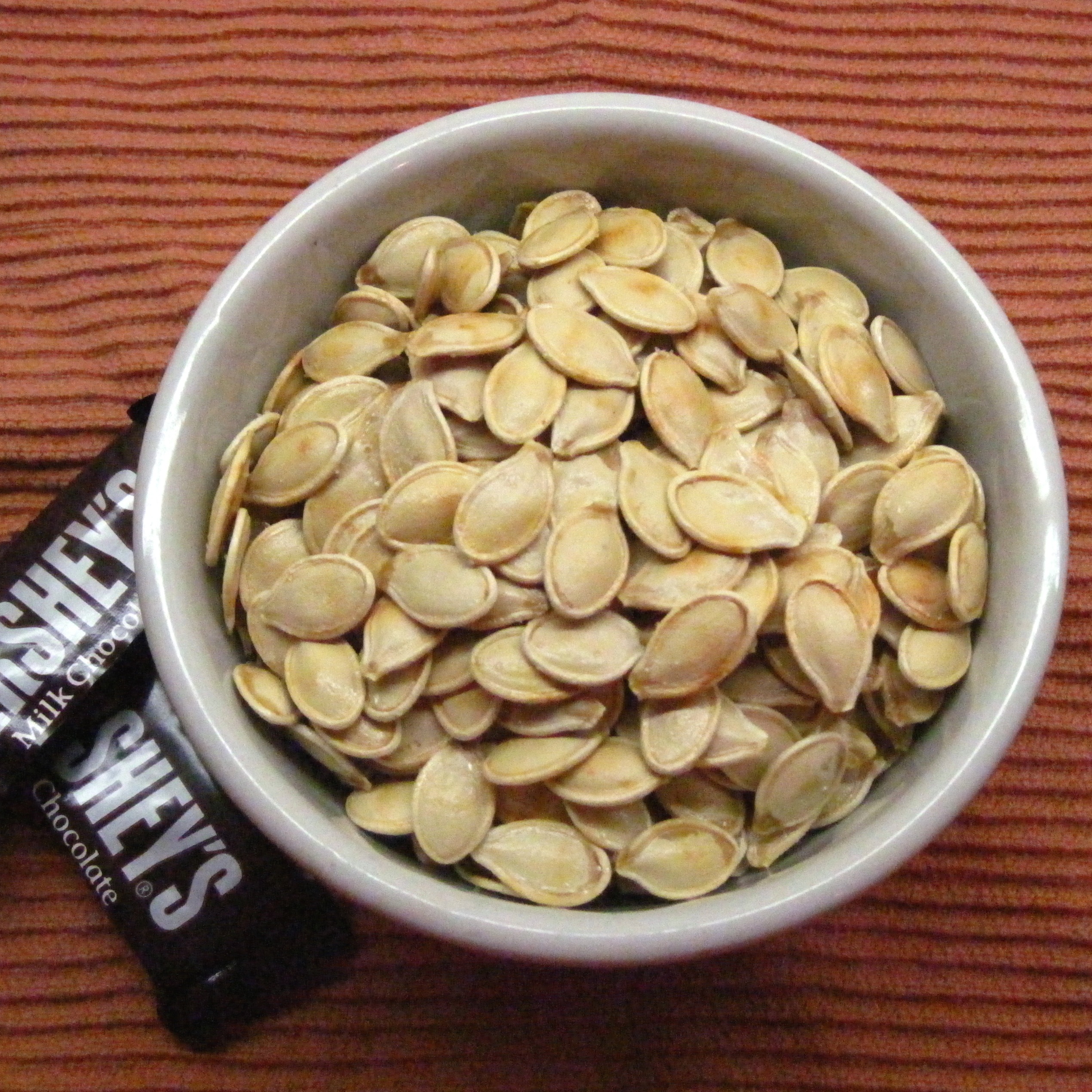
Every year I roast the seeds from our Halloween pumpkin. It’s so easy to do!
.
.
For 1½ cups of pumpkin seeds:
1. Rinse the seeds well and remove as much of the pulp as you can.
2. Put in a bowl, cover with water, and add about a teaspoon of salt. Let them soak for an hour or more. (You can cover them and refrigerate overnight, if you want.)
3. Preheat the oven to 400 degrees with an oven rack positioned in the upper third of the oven.
4. Cover a four-sided baking sheet with foil.
5. Melt 1 teaspoon of coconut oil (you can also use other oils) in a large bowl in the microwave (about 15 seconds on High).
6. Drain the seeds and toss with the coconut oil. Spread them out on the baking sheet.
7. Roast for 15 – 20 minutes, stirring occasionally, until toasted the way you like them.
8. Sprinkle with salt. Toss, and let them cool off.
~
I like just plain salt, but you can be creative with seasoned salt!
.
This year’s “Old Mr. Scarface” (carved by Bob with creative input from Nancy and me)

.
Pumpkins from a Halloween past:

Update, Halloween 2011
This year, from 3 big pumpkins, I had a lot more seeds to roast. I had 3 times as many seeds – about 4½ cups! I used the same method to roast them, but it took almost 40 minutes to get them toasted the way I like them. So I guess a less crowded pan gets the job done more quickly.
a

Our 2011 pumpkins

a
Update, Halloween 2012
This year I added just a touch of chipotle powder to the pumpkin seeds before I roasted them. It was just enough to add a bit of interest, not heat.
A
Our 2012 pumpkin


a
Share this:

Baked Chicken Meatballs
By Kath Dedon
.
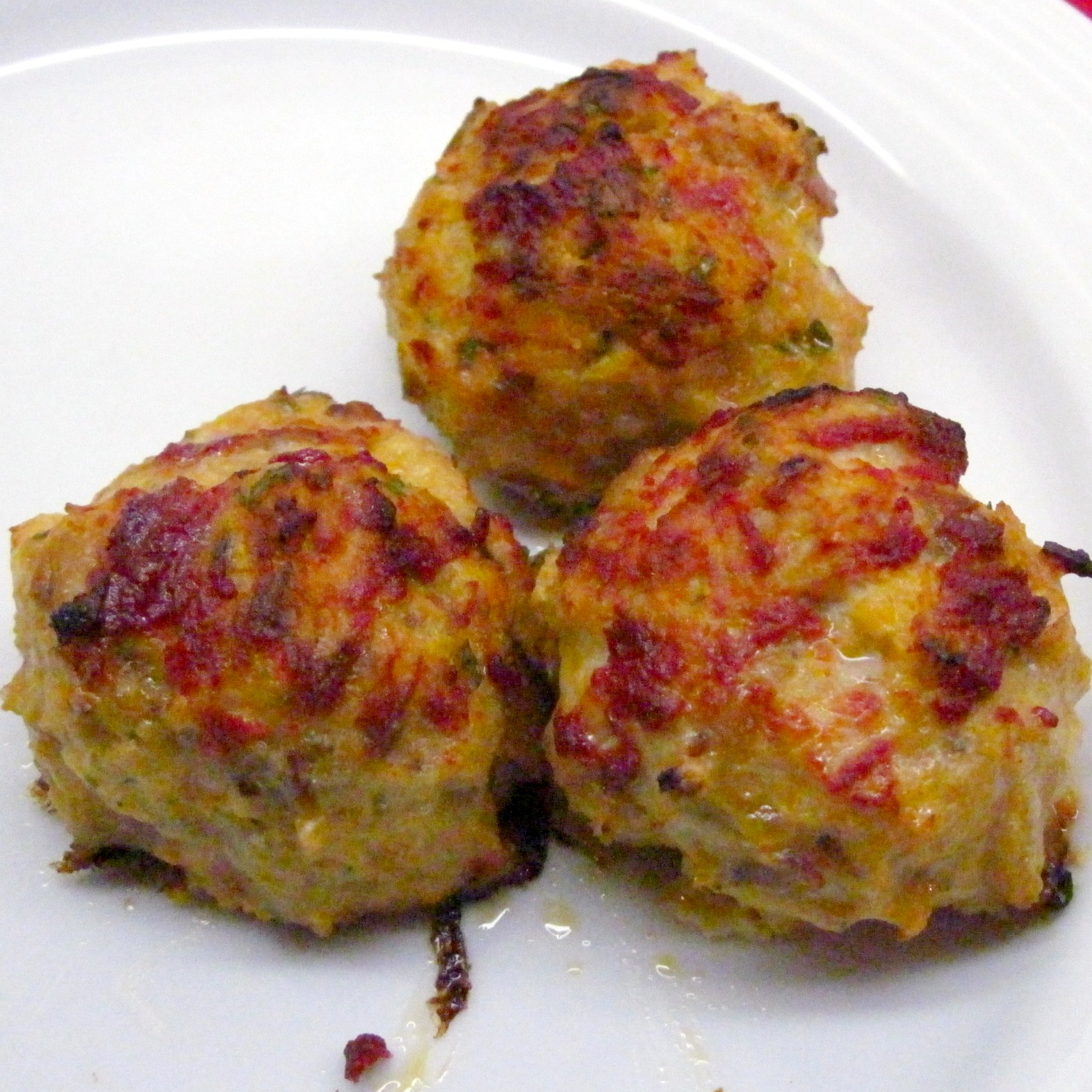
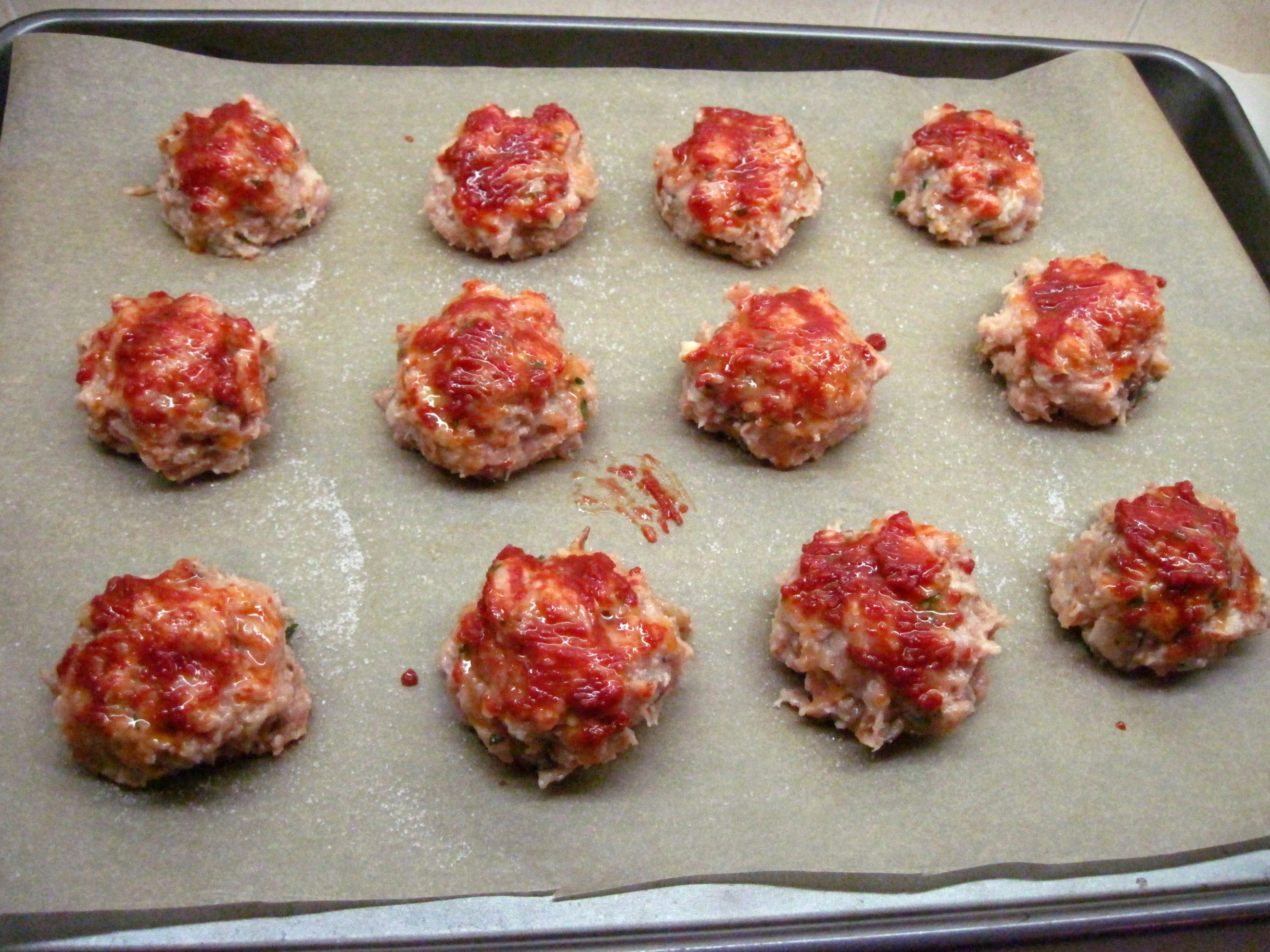
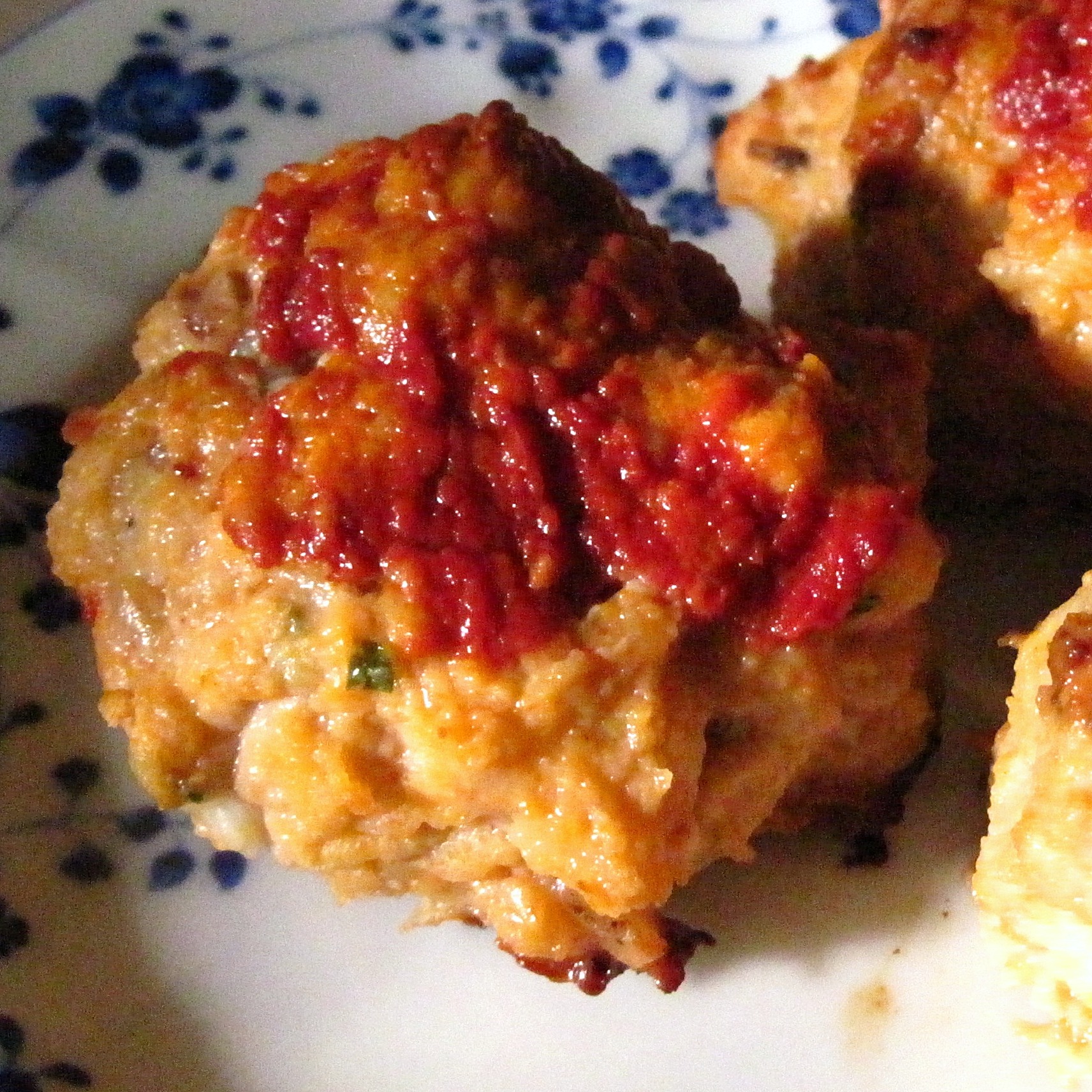
These Baked Chicken Meatballs have given me a new respect for ground chicken. They are tender and so flavorful! What’s the secret? I believe it’s the pancetta that is sautéed and added to the meatballs. And brushing the meatballs with a blend of tomato paste and olive oil before baking is genius! Besides adding some flavor, it makes them much more visually appealing than they would be with their naturally pale color.
Laura had recommended the recipe to me, and it has been on my list to try for quite a while now. It’s from Deb’s Smitten Kitchen, and she credits Gourmet for the recipe. I’m glad I finally tried it!
I made 12 meatballs, but as Deb suggests, you could also make mini meatballs for appetizers. They would be great for the upcoming holidays!
I’m lucky to be able to get excellent pancetta from Salumi at Metropolitan Market; if you can’t find pancetta, Deb suggests Canadian bacon. I think a fatty prosciutto might be a better choice. Or you could use bacon, if you can’t find prosciutto. Bacon, though, will add a smoky flavor that you won’t get with pancetta.
All in all, I would say that this recipe for Baked Chicken Meatballs is a great one to add to your repertoire! (Thanks, Laura!)
.
~
Baked Chicken Meatballs
(Adapted from a recipe on smittenkitchen.com, originally from Gourmet)
.
.
Serves 4 (or more as appetizers)
.
3 slices white bread, torn into small bits (1 cup) (I used French bread.)
1/3 cup milk
3 ounces sliced pancetta, finally chopped
½ teaspoon salt (omit if using bacon)
½ teaspoon ground pepper
1 small onion, finely chopped (about ½ cup)
1 small clove garlic, minced
1 large egg
1 pound ground chicken
2 tablespoons tomato paste, divided
3 tablespoons finely chopped flat-leaf parsley
1 tablespoon olive oil
~
1. Preheat the oven to 400˚.
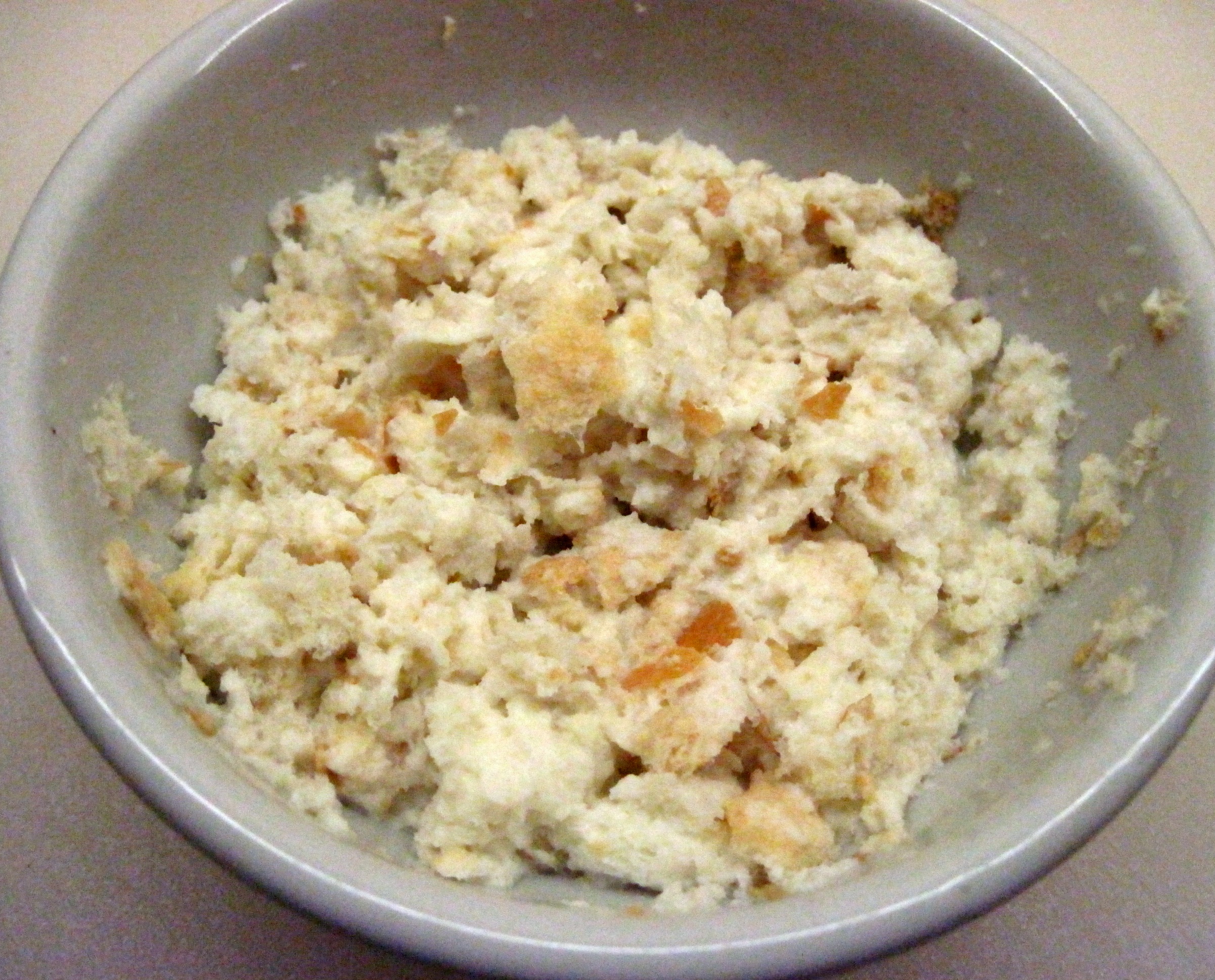
2. Pour the milk over the bread in a small bowl, and set aside.
 ~
~
3. Cook the pancetta over medium heat in a large skillet.
Salumi’s excellent pancetta
 ~
~
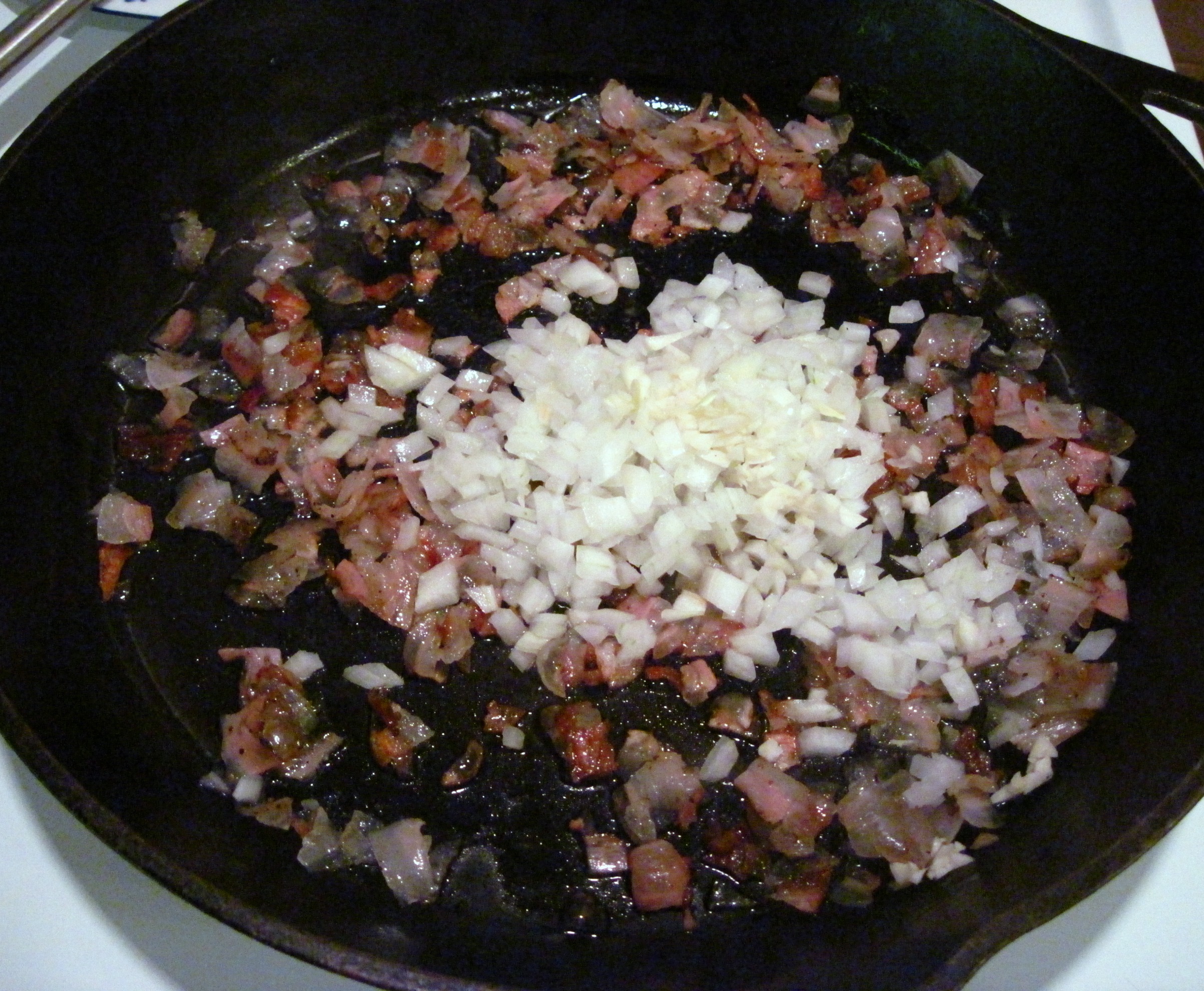
4. After the pancetta has rendered some fat in the pan, add the salt, pepper, onion and garlic.
 ~
~
5. Continue cooking the pancetta, onion, and garlic, stirring occasionally, until the onion is softened. This takes about 5 or 6 minutes.
6. Beat the egg in a large bowl.
7. Squeeze out any excess milk in the bread and discard. (Mine did not have any excess milk.)
8. Add the chicken, soaked bread, pancetta and onion mixture, 1 tablespoon of tomato paste, and parsley to the egg in the bowl. Mix together just until it is well blended.
9. Make 12 meatballs and place them on a 4-sided baking sheet (or in a 9×13-inch baking pan). (As you can see in the photo, I used parchment paper, but I don’t think that was necessary.)

~
10. Mix the remaining tablespoon of tomato paste and the tablespoon of olive oil together. Brush the meatballs with the mixture.
~
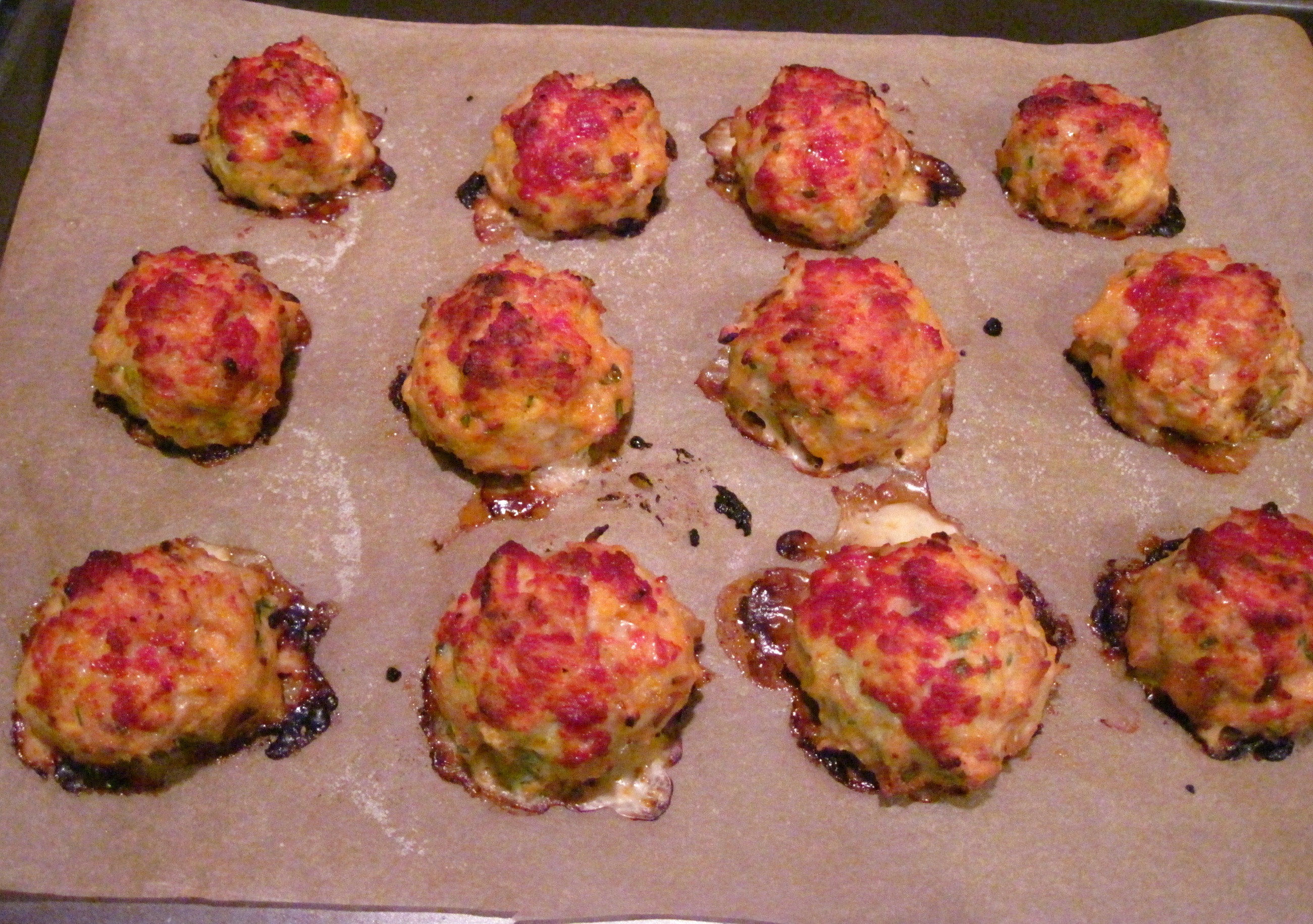
11. Bake for 25 minutes, or until done. (It will take less time for mini meatballs.)
~
Share this:

Mussels with Sake-Ginger Butter
By Kath Dedon
.
Tom Douglas has a recipe for Wok-Fried Mussels with Sake-Ginger Butter in his first cookbook, Tom Douglas’ Seattle Kitchen. At the time of its publication (2000), Tom was already a celebrity chef and the owner of Dahlia Lounge, Etta’s Seafood, and Palace Kitchen.
Since then he has added Dahlia Bakery, Lola, Serious Pie(pie as in “pizza pie” – the best in Seattle), and Seatown to Tom Douglas Restaurants. He has been a major contributor to the Seattle food scene and an active member of the community for over 30 years.
When I noticed that Metropolitan Market was featuring mussels at a great price, I decided to try Tom’s recipe. He said a large skillet with a lid would work just as well as a wok, so that’s what I used.
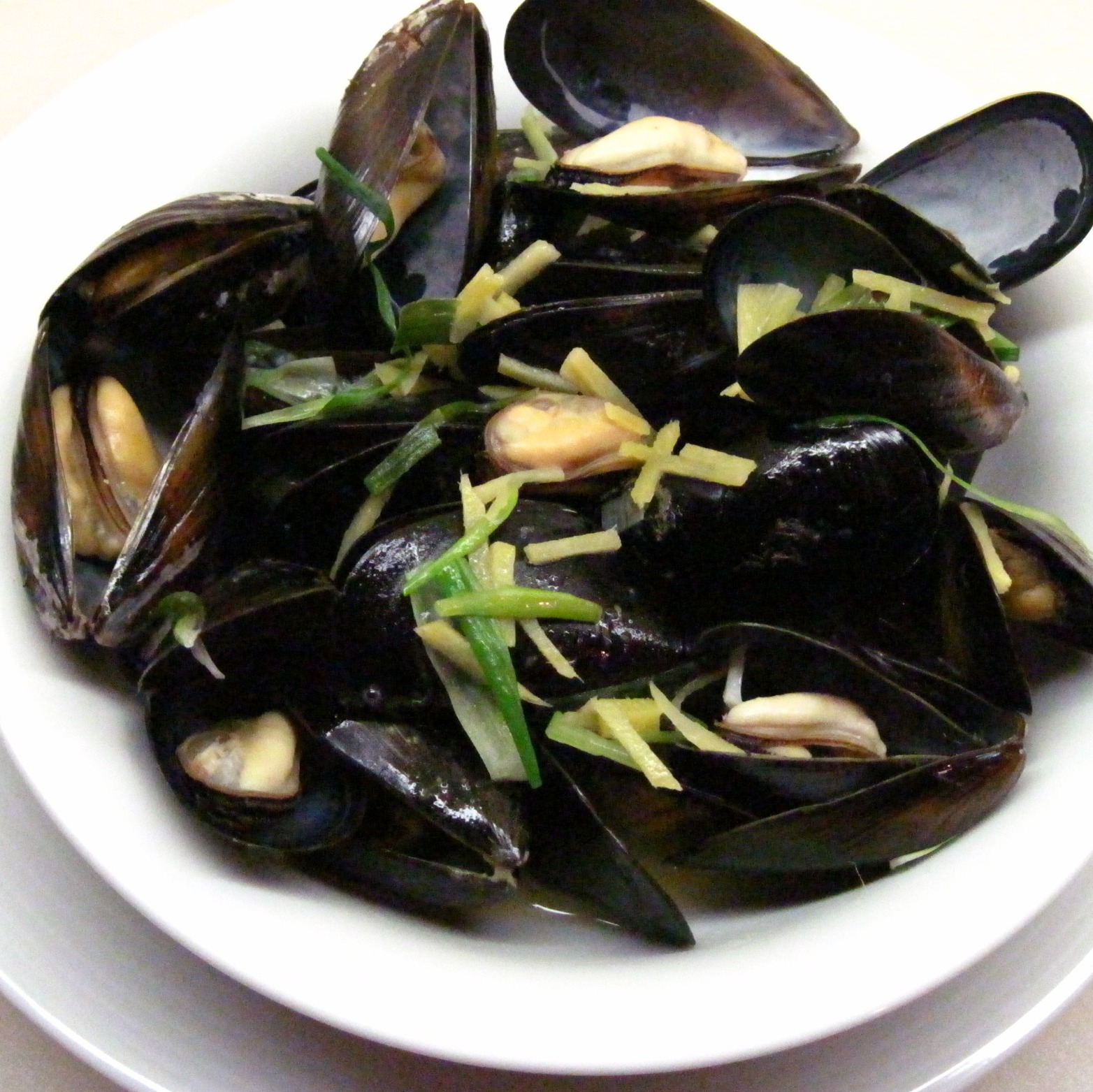
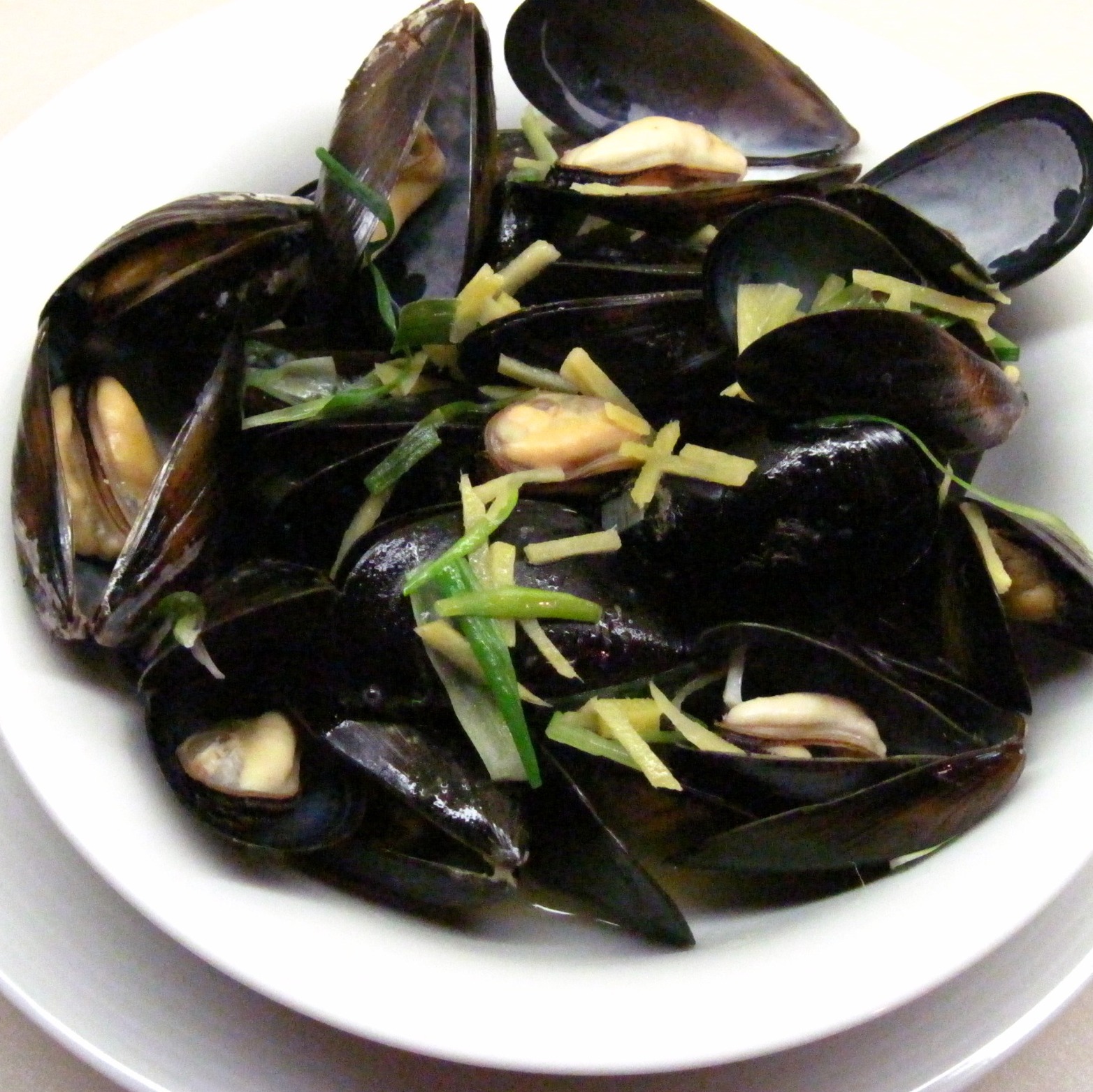
The mussels were fantastic, especially with a piece of crusty French bread to mop up the buttery sauce! Mussels with Sake-Ginger Butter served with a salad and bread is a quick, fabulous dinner for 2.
.
.
~
Mussels with Sake-Ginger Butter
(Adapted from Tom Douglas’ recipe in Tom Douglas’ Seattle Kitchen)
.
.
Serves 2 as a main course (serves 4 – 6 as an appetizer)
.

.
2 pounds mussels
¼ cup peeled and julienned fresh ginger
2 dried red chiles (like chiles de arbol or piquins)
½ cup sake
½ cup julienned green onions, white and green parts
6 tablespoons unsalted butter
1 teaspoon fresh lime juice
Salt
Pepper
~
1. Wash and scrub the mussels with a stiff brush. Pull off the beard. (Grasp it and pull it down towards the hinge.) Discard any mussels that will not close; they are dead.
The “beard” on a mussel
 ~
~
Cutting the sliced ginger into julienned strips

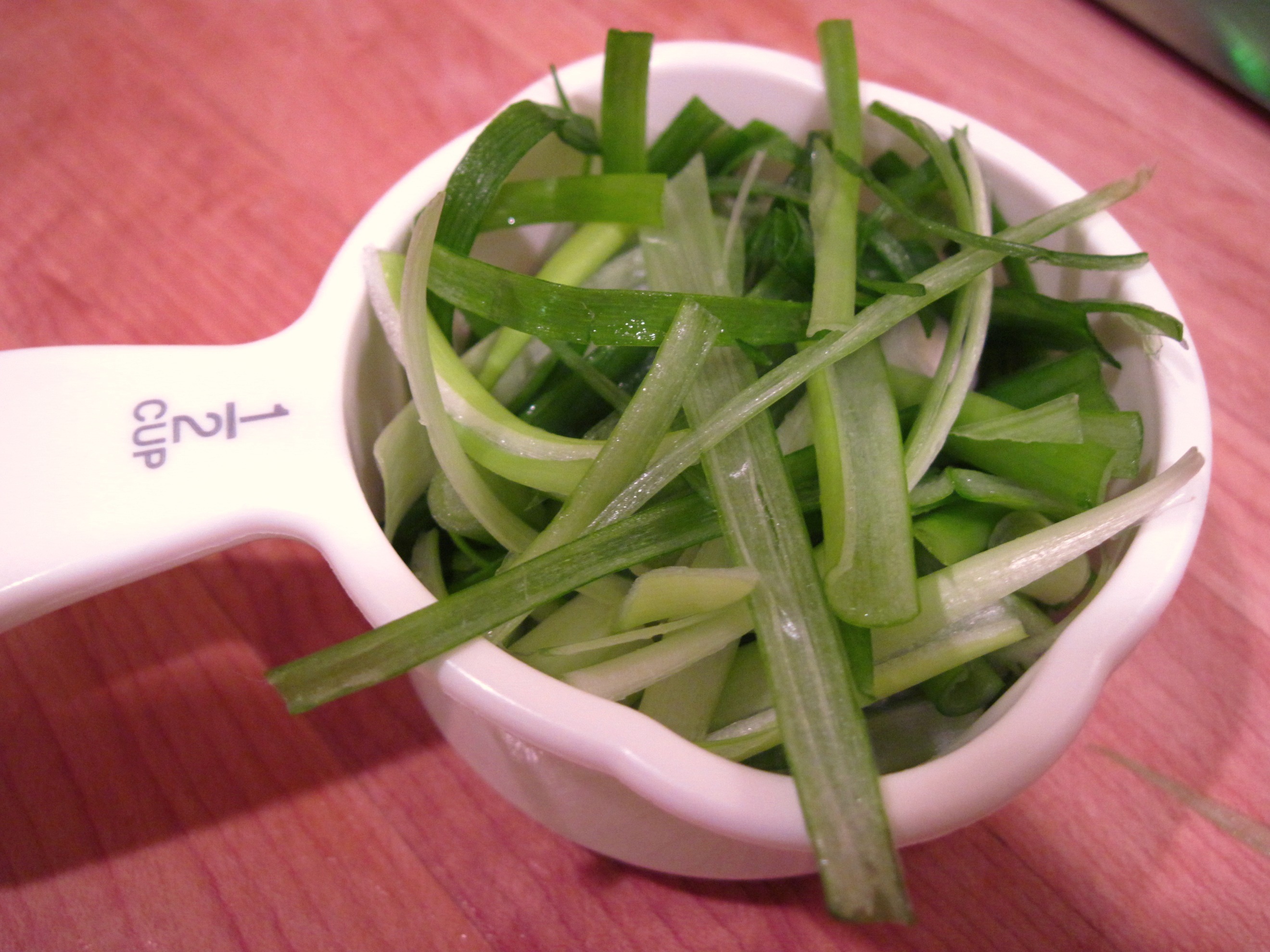
The green onions, cut into julienned strips
2. Put two wide soup bowls in the oven and preheat the oven to 200˚.
3. Assemble all of the ingredients for the recipe.
Sake, green onions, ginger, chiles de arbol, and lime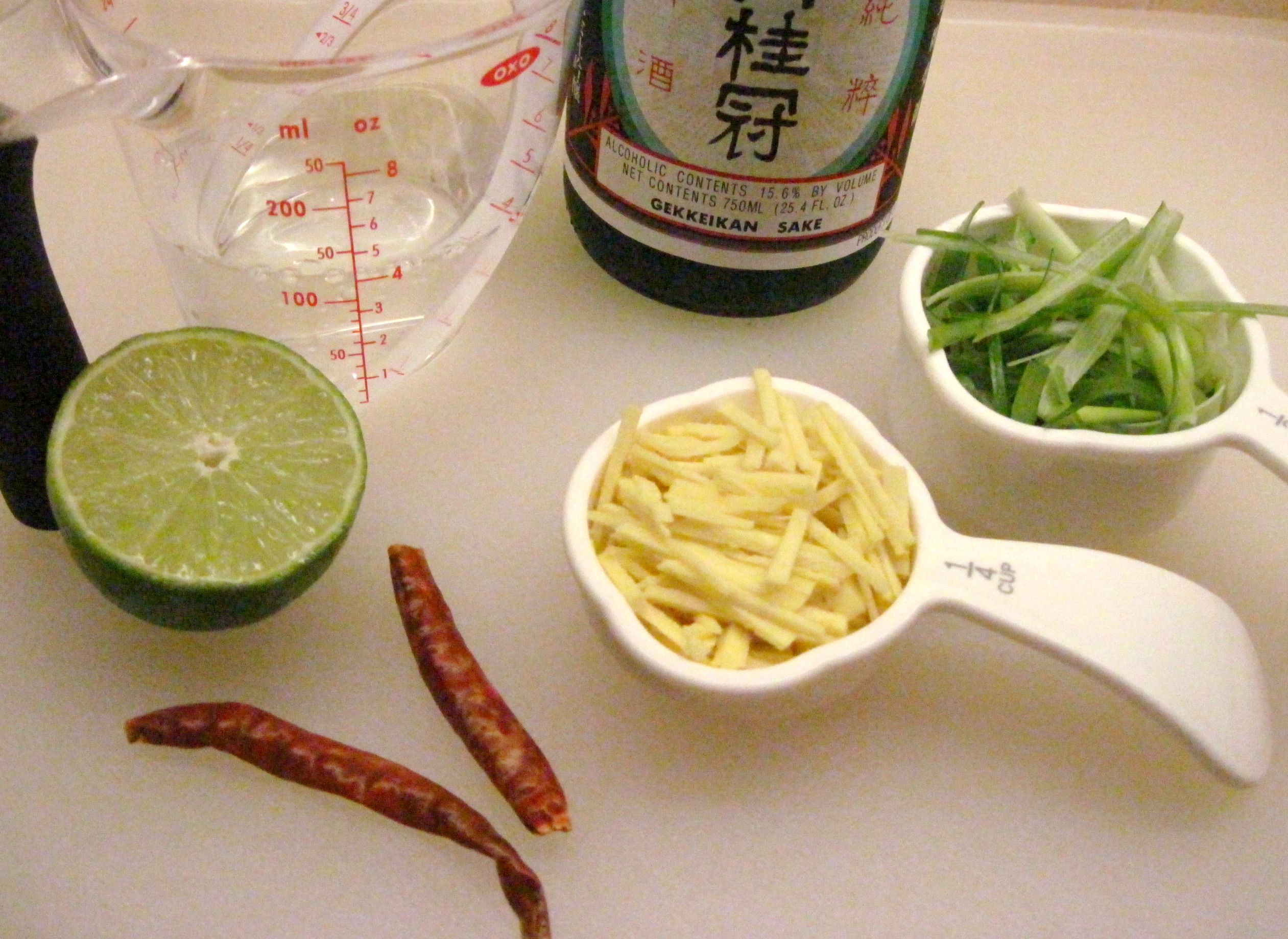
4. Heat a large skillet over high heat.
5. When the pan is hot, add the mussels, ginger, peppers, and sake to the pan. Cover and cook for 3 – 4 minutes, until the mussels have opened.
6. Add the green onions to the pan and then immediately remove the mussels and divide them between the two bowls in the oven to keep them warm. Leave the liquid in the pan.

7. Add the butter and lime juice to the pan and cook, stirring, until the butter is melted and blended in. Taste for seasoning, and add salt and pepper if needed.
8. Pour the sauce over the mussels in the bowls and serve immediately.


 In the kitchen with Kath